







Leadership
AI will redesign your enterprise: Infosys CHRO on what leaders often miss






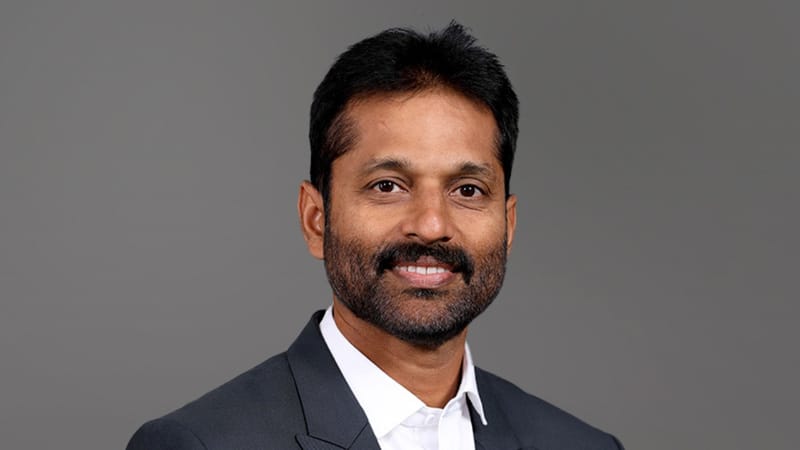
Shaji Mathew on why AI is not a software upgrade but a leadership test that will reshape skills, culture and accountability.
There is a comforting version of the AI story doing the rounds in corporate corridors.
It goes something like this: deploy a few copilots, automate repetitive work, trim costs, train employees on a new platform — and watch productivity climb.
Shaji Mathew is not buying that version.
“AI is not simply a technology shift; it alters skill architecture, leadership models, career progression, and organisational design,” says the Chief Human Resources Officer of Infosys.
He pauses only briefly before adding, in effect: if you think this is just about tools, you are missing the point.
This is not about faster code
At Infosys, Mathew’s role has expanded well beyond the familiar HR checklist. “The CHRO today operates at the intersection of talent strategy, technology governance, and long-term employability,” he says.
That sounds lofty. In practice, it means redesigning roles around skills instead of job titles that fossilise over time. It means embedding AI capability across the workforce rather than confining it to a specialist team. And it means planning for value that has not yet fully emerged.
But here is what leaders often underestimate: ethics scales as fast as technology.
As AI begins to influence hiring, development and performance insights, Mathew says HR must install “clear guardrails that uphold accountability, transparency, fairness and people wellness”.
The ambition is simple. Let progress move quickly. Do not let principles lag behind.
Human + AI: More than a slogan
Everyone likes the phrase “Human + AI”. It feels safe. Collaborative. Balanced.
Mathew insists it only works if it changes how organisations are built.
“A Human + AI approach at Infosys begins with the belief that AI should augment human potential, not simply automate tasks,” he says.
The real shift, he explains, is mental. Stop asking what can be automated. Start asking what can be enhanced — judgement, decision-making, client impact.
That requires moving away from task-based structures to outcome-oriented roles. AI becomes an intelligence layer. Humans remain accountable.
It also requires leaders to evolve. “Leaders must move beyond supervising activity to responsibly interpreting AI-driven insights and guiding teams through change with context and care.”
In other words: you cannot outsource judgement to a dashboard.
Personalised learning is not the same as opportunity
AI-powered learning platforms promise a democratised workplace — courses tailored to you, skill suggestions at your fingertips.
Mathew offers a reality check. “Personalised content alone does not constitute career democratisation.”
Access to learning is not the same as access to mobility. Unless skills are connected directly to evolving business demand — and unless the organisation is ready to move people accordingly — nothing truly shifts.
Infosys has built a skills-first architecture mapping capabilities across three horizons: Yesterday, Today and the Future. Its AI-powered learning ecosystem personalises journeys. Verified skill tags create portable identities. Structured transition pathways enable movement into consulting, specialist programming and architecture roles.
But Mathew measures success bluntly: internal mobility, faster redeployment cycles, sustained capability deployment.
If AI learning does not change where people can go, it has changed very little.
Innovation without anxiety? Not quite.
Every major technology shift carries a shadow: uncertainty.
“In periods of rapid technological change, cultural stability becomes as important as technical progress,” Mathew says.
He is clear that performance and well-being are not opposites. “We view performance and well-being not as competing priorities, but as interdependent conditions for sustained excellence.”
Employees need clarity — how transformation links to long-term growth and employability. Ambiguity fuels anxiety. Transparency builds focus.
Structured well-being programmes help. Engagement frameworks matter. But psychological safety ultimately comes down to leadership behaviour — open dialogue, consistent communication, the willingness to listen.
Expectations remain high. Outcomes remain non-negotiable. The difference lies in how people are brought along.
Values must live in systems, not speeches
Corporate values are easy to print. Harder to code.
“Values remain meaningful only when they are embedded into everyday systems and decisions,” Mathew says.
At Infosys, that means AI systems are tested for bias, built to be explainable and aligned with data privacy laws. Governance mechanisms review their use. Accountability stays human-led.
AI can recommend. Leaders decide.
If that line sounds obvious, it is worth repeating. In AI-driven environments, decision ownership can blur quickly.
Mathew insists it must not.
Inclusion is not automatic
Predictive talent systems promise to spot hidden potential. They can also quietly reinforce old hierarchies.
The safeguards, he says, are structural: balanced datasets, continuous monitoring for disparate impact, algorithmic explainability so recommendations can be challenged.
Decision-making must include diverse human panels applying structured criteria. AI should surface non-linear career paths, not merely validate traditional ones.
Without deliberate design, bias does not vanish. It scales.
The uncomfortable trade-offs
The future, Mathew suggests, will not be defined by who deploys AI fastest. It will be defined by who handles its trade-offs best.
Speed versus deliberation.
Automation efficiency versus employment impact.
Innovation ambition versus regulatory caution.
Data-driven optimisation versus human judgement.
“Accelerating AI deployment without parallel capability development creates fragility,” he says.
That word lands heavily. Fragility.
The organisations that succeed, he says, will integrate technology adoption with cultural evolution. Those that struggle will treat AI as technical deployment rather than organisational redesign.
In the end, the differentiator will not be algorithms. It will be trust. Leadership maturity. A sustained commitment to human value creation.
AI will redesign your enterprise.
The more interesting question, Mathew implies, is whether leaders are prepared to redesign themselves.
Topics
Author
Loading...