







Leadership
Boomers, millennials, Gen Z: Can they actually lead better together?





As workplaces become more age-diverse than ever, business leaders are discovering that generational differences may be less of a problem to solve and more of an advantage to harness.
For years, workplace conversations about generations have largely centred on conflict.
Older leaders are often portrayed as resistant to change. Younger professionals are frequently characterised as impatient, restless, and eager to challenge established ways of working. Across boardrooms and offices, differences in communication styles, work expectations, and leadership philosophies have fuelled endless debates about whether multiple generations can truly work together effectively.
Yet as organisations confront economic uncertainty, rapid technological disruption, shifting consumer behaviour and changing workforce expectations, a different question is beginning to emerge.
What if generational diversity is not a challenge at all? What if it is becoming a competitive advantage?
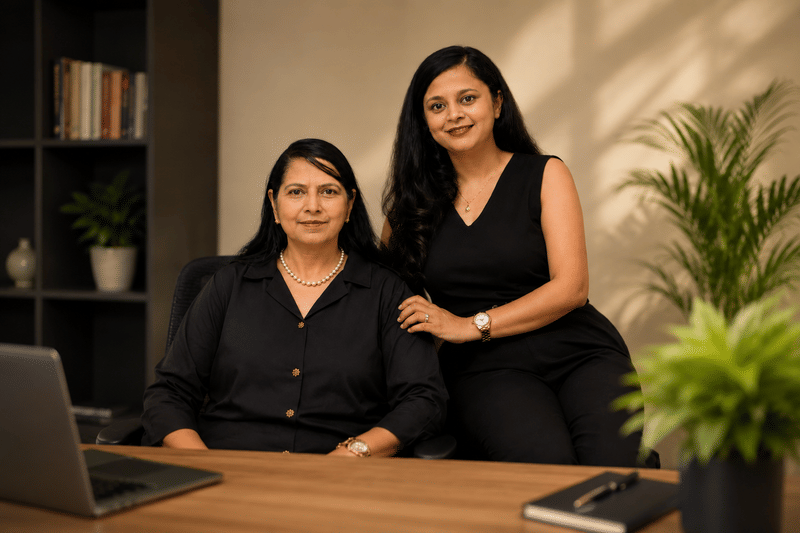
That is the perspective shared by Jyoti Goyal, Co-Founder of FountainEarth, and Akshita Mangal, Founder of FountainEarth, whose leadership partnership spans different generations and perspectives.
Their experience reflects a broader shift taking place across business. Increasingly, organisations are recognising that the combination of experience, institutional knowledge, digital fluency and cultural awareness may create stronger decision-making than leadership teams built around a single generation.
The hidden risk of leaders who think alike
Diversity discussions often focus on gender, geography, or professional background. Generational diversity receives less attention, despite its growing importance.
According to Goyal, one of the biggest advantages of intergenerational leadership is its ability to challenge assumptions.
"Experience brings a different kind of value. Over time, you develop instinct around customer trust, operational discipline, and sustainable growth. What makes intergenerational leadership powerful is not agreement on every decision, but the ability to question assumptions from different vantage points with same-generation teams may sometimes share similar instincts and blind spots and we see intergenerational leadership not as a family dynamic, but as a strategic advantage that encourages more balanced and durable decisions."
That observation highlights a risk many organisations face. Leadership teams made up of people with similar experiences often approach challenges in similar ways. While alignment can create speed, it can also create blind spots.
Mangal believes younger leaders contribute a different perspective that becomes increasingly valuable in fast-changing markets.
"I feel intergenerational leadership creates a wider and more dynamic lens for decision-making because businesses today move quickly, and while speed matters, so do adaptability and cultural relevance. Also younger leadership often brings digital fluency, evolving consumer insight, and comfort with experimentation. That perspective helps brands stay connected to changing conversations and behaviours."
Together, these perspectives point to a broader reality. Businesses need both stability and adaptability. Experience without innovation can create stagnation. Innovation without discipline can create volatility.
When growth meets discipline
One of the clearest differences between generations often emerges around growth strategies.
Younger leaders may naturally gravitate towards experimentation, rapid expansion and emerging opportunities. More experienced leaders frequently prioritise operational resilience, scalability and risk management.
Rather than viewing these approaches as competing philosophies, FountainEarth treats them as complementary lenses.
For Goyal, successful growth requires rigorous scrutiny before ideas move forward.
"My perspective is more grounded in execution and sustainability. Exciting ideas matter, but they must also work operationally and commercially. At FountainEarth, decisions pass through multiple filters before they move forward and evaluate not only whether something is new, but whether it is scalable, sustainable, and aligned with the brand’s long-term direction and growth becomes stronger when ambition and discipline coexist."
Mangal approaches growth from a different angle, focusing on consumer behaviour and emotional relevance.
"My instinct naturally leans toward innovation, storytelling, and understanding how consumer behaviour is evolving and even growth today is shaped not only by expansion but by emotional relevance and how authentically a brand connects with people and I often look at whether an idea feels culturally aligned and capable of building long-term engagement."
The combination reflects a wider challenge facing modern businesses. Consumers are changing faster than ever, but companies still need systems capable of supporting long-term expansion. Balancing those priorities increasingly requires multiple perspectives at the leadership table.
Why speed alone is no longer enough
The modern business environment rewards visibility, growth and momentum. Startups are often judged by how quickly they scale, while established businesses face constant pressure to reinvent themselves.
Yet both leaders emphasise that durability remains critical.
"I feel durability sits at the centre of business-building. At FountainEarth, sustainability is not limited to materials and also shapes how we build the company itself and decisions around sourcing, product quality, customer trust, and brand credibility are made with longevity in mind with speed may attract attention, but durability is what ultimately earns confidence and lasting relationships," says Goyal.
Mangal shares a similar view, particularly as brands compete for consumer attention in crowded digital markets.
"I think long-term thinking has become more valuable than ever. There is enormous pressure today to scale quickly and remain constantly visible, but visibility and longevity are not the same thing and brands that create meaningful relationships with consumers usually do so through consistency and clarity of purpose rather than short bursts of momentum."
The distinction is important. Many businesses focus on acceleration. Fewer focus on endurance. Intergenerational leadership may help organisations balance both.
The workplace culture divide
Generational differences are perhaps most visible inside organisations themselves.
Questions around flexibility, accountability, hierarchy and workplace culture continue to reshape employer-employee relationships worldwide.
Goyal sees value in combining traditional management foundations with modern expectations.
"Older generations often place greater emphasis on structure, accountability, and process because those foundations create stability. I do not think either approach is inherently better; they simply reflect different professional experiences because the opportunity lies in combining both. Strong teams are built when empathy exists alongside accountability and creativity is supported by discipline."
Mangal points to a significant shift in employee expectations.
"Workplace expectations are clearly evolving. Younger professionals often look for flexibility, transparency, purpose, and leadership that feels collaborative rather than hierarchical and want to contribute ideas, understand the larger vision, and feel genuinely connected to the work they do. I see this as a positive shift because culture today plays a significant role in how teams perform and grow."
For employers, the message is clear. Attracting and retaining talent increasingly requires understanding how different generations define meaningful work.
Turning disagreement into an asset
One of the most persistent myths about intergenerational leadership is that differing viewpoints inevitably create conflict.
Both leaders challenge that assumption.
Goyal believes productive disagreement often strengthens outcomes.
"Mutual respect is essential. Alignment does not require identical thinking, it requires trust, transparency, and shared goals. In our experience, healthy debate often improves decision quality because it forces stronger reasoning and greater clarity. Intergenerational leadership works best when people remain committed to the outcome rather than attached only to their own viewpoint."
Mangal highlights how differences in pace and communication styles often sit at the heart of generational tensions.
"Differences in pace and communication styles are natural. One generation may move quickly and prefer experimentation, while another may seek greater validation before committing to a decision and challenges usually emerge when these differences are interpreted as resistance rather than perspective. I accept the healthiest partnerships are those where disagreement is viewed as part of refinement rather than conflict."
That distinction may become increasingly important as businesses navigate more complex decisions in uncertain environments.
Building businesses for the next decade
As consumer expectations evolve and technological disruption accelerates, leadership models are also changing.
For FountainEarth, balancing traditional business fundamentals with modern consumer expectations has become part of its organisational approach.
"Legacy business wisdom brings its own importance. Customer trust, quality standards, and long-term relationships are not trends, they are fundamentals. At FountainEarth, we consciously avoid choosing between tradition and innovation, in place of integrating both perspectives. That balance influences product development, customer experience, communication, and how we think about sustainable growth," says Goyal.
Mangal adds that consumer expectations have shifted dramatically.
"Modern consumers evaluate brands very differently today. Design, storytelling, digital presence, and value alignment all shape how trust is built and my focus has always been on ensuring FountainEarth feels contemporary, emotionally relevant, and connected to how people engage with brands in a digital-first environment."
The future belongs to bridge-builders
As organisations face economic uncertainty, changing workforce expectations and technological disruption, leadership teams may need broader perspectives rather than narrower ones.
Both leaders believe intergenerational collaboration will become more important, not less.
"I feel its importance will only increase. Economic uncertainty requires both resilience and judgment. Also experience offers stability and perspective, while newer thinking encourages innovation and flexibility. Future-ready businesses cannot rely entirely on legacy thinking or disruption alone. The companies that thrive will be those capable of building bridges between generations. For us, that is not merely a leadership philosophy, it is a long-term competitive advantage," says Goyal.
Mangal agrees.
"Yes, absolutely. Businesses today operate in an environment shaped by rapidly changing consumer expectations and workplace cultures. Adaptability has become essential, and intergenerational collaboration brings a wider perspective into how organisations respond to change. It allows businesses to remain culturally aware while continuing to evolve."
The debate over generations in the workplace is unlikely to disappear. But as businesses confront increasingly complex challenges, the conversation may shift from managing differences to leveraging them. The companies that succeed may not be those led by one generation over another, but those capable of turning multiple perspectives into a shared advantage.
Topics
Author
Loading...