







Leadership
Frontline first: How Mahindra Finance’s CHRO builds leaders outside India’s cities






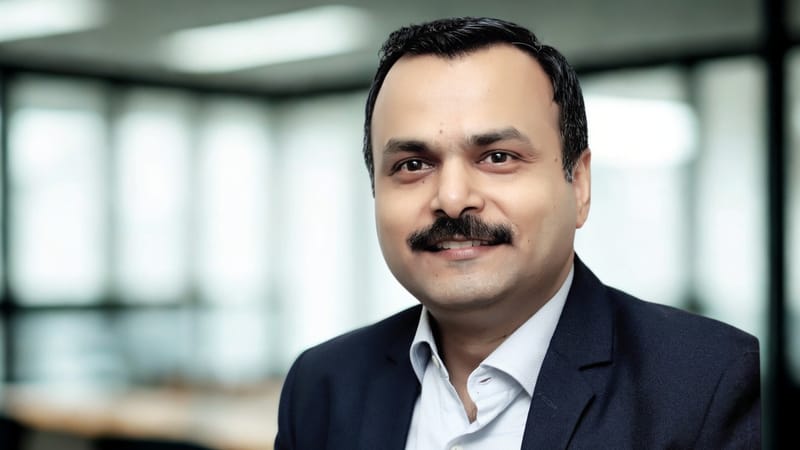
CHRO Manish Sinha on rural ambition, hidden attrition pressures, digital adoption and why AI must feel enabling, not threatening.
If you want to understand where India’s next generation of financial services leaders will come from, Manish Sinha suggests you look beyond the metros.
Mahindra Finance employs more than 25,000 people, many of them based in rural and semi-urban markets where infrastructure varies, ambition runs high and corporate playbooks often feel imported rather than embedded. For Sinha, the company’s Chief Human Resources Officer, the frontline is not a support layer. It is the strategy.
“Our understanding of talent is shaped by the realities of the markets we serve,” he says. In rural India, he argues, talent does not always resemble metro corporate prototypes. “Talent in those markets does not always fit conventional corporate definitions, but comes with resilience, resourcefulness, and a deep connection to community.”
That rootedness matters. “They understand local aspirations because they live them. They build trust naturally because relationships are central to how communities… are very strong in behavioural strengths.”
In a business built on distribution and local trust, those behavioural strengths carry weight. Success, Sinha says, is less about polish and more about judgement. “Success here is about navigating ambiguity, solving problems locally, taking ownership, and upholding the moral fabric of the communities we serve.”
Mahindra Finance codifies this into what it calls the PROMPT framework — Purpose-driven, Relationship-led, Ownership-oriented, Moral-centric, People-focused, and Transparent. But Sinha is quick to stress that it is not a branding exercise. “These values are not abstract ideals; they reflect how our people work every day.”
When ambition outruns geography
If rural leadership is an asset, it also carries tension.
“One of the most complex people challenges is balancing individual aspiration with market reality,” Sinha says. Frontline employees want to grow — faster, broader, further. But a branch in a small town can only expand so much. “When aspirations rise faster than local opportunity, it can create frustration and over time, attrition.”
It is the kind of challenge that rarely appears in quarterly dashboards but quietly shapes retention.
Mahindra Finance’s response has been to widen the path rather than widen the branch. Structured mobility, leadership acceleration through the Young Leadership Development Program (YLDP), and recognition via Mahindra Rise aim to ensure that geography does not become destiny.
“In the end, sustaining frontline performance isn’t just about targets and systems,” Sinha says. “It’s about listening carefully, understanding aspirations, and creating an environment where ambition finds direction.”
Digital confidence in unexpected places
Digital transformation is often framed as a metro story. Sinha disagrees.
“Digital transformation hasn’t just improved how we engage with customers, it has fundamentally changed how our people work, learn, and lead.”
He points to a shift in baseline capability across the organisation. Rural teams, he says, have embraced digital processes with striking speed. “The speed at which our frontline teams have embraced digital processes speaks volumes about their agility.”
In a deliberate inversion of the usual rollout model, Mahindra Finance pilots new digital products in rural markets first. “Whether it’s a new acquisition app, a data-enabled workflow, or a digital lending journey, our frontline teams and managers are the first to test and refine it.”
The effect is twofold: sharper product-market fit and stronger managerial confidence before national scale-up.
From HR’s vantage point, digitalisation has brought smoother onboarding, real-time performance visibility and more data-backed decisions. For frontline teams, it has simplified documentation and reduced turnaround times. “The real impact,” Sinha says, “is how digital transformation has made our people more capable, more confident, and better prepared for the future, at scale.”
Inclusion as lived behaviour, not optics
In a geographically diverse, rural-focused organisation, inclusion cannot rely on optics alone.
“Inclusion for us starts with everyday awareness and behaviour, not only representation metrics,” Sinha says. “True inclusion is about people feeling respected, heard, and supported on a daily basis.”
He tracks progress less by headlines and more by continuity. “Our matrix of progress is primarily by how many women stay, grow, and move into larger roles.” The women’s acceptance score, he notes, has improved from 4.19 to 4.30 — a small numerical shift, but in his view, a cultural one.
Programmes such as Prarambh, focused on hiring and training frontline women, and the Mahindra World of Women (MWoW) network aim to strengthen pipelines. Policy changes — from parental benefits to menstrual leave flexibility — are designed with local realities in mind.
“For us, inclusion is about ensuring that every employee has the opportunity, support, and confidence to build a meaningful career with us,” he says.
ESG where it actually lives
Sinha’s remit extends to ESG-linked priorities, and he frames sustainability as operational, not ornamental.
“Metrics such as prevention of sexual harassment, effectiveness of grievance redressal, employee satisfaction, productivity, attrition, and overall workplace well-being are direct reflections of how responsibly we operate.”
A Human Rights Due Diligence exercise aligned with SEBI’s BRSR framework and global principles assessed 12 areas across business and supply chain, from fair wages to data privacy and mental health.
“Our role is to enable, measure, and guide. True ESG performance is collective,” Sinha says — a subtle reminder that HR cannot carry sustainability alone.
The AI moment, handled carefully
Looking ahead, Sinha sees the next inflection point in AI literacy.
“The next big shift in rural financial services will be AI readiness and technology literacy across roles.” Digital adoption was phase one. Understanding how AI-enabled systems support credit decisions and productivity is phase two.
But he tempers ambition with realism. “As AI evolves over the next three to five years, roles will inevitably change.” Some will be redesigned. Some simplified. Others augmented.
The priority, he argues, is reskilling without fear. “Our responsibility is to create an environment where transformation feels enabling, not threatening.”
For Sinha, the goal is clear. “We want every employee, regardless of geography, to feel confident growing alongside the technology shift and to see AI as a tool that strengthens their capability, not replaces their value.”
In an era where corporate narratives often orbit headquarters towers, Mahindra Finance’s HR thesis runs in the opposite direction: start at the frontline, trust the grassroots, and scale leadership from where India actually lives.
Topics
Author
Loading...