







Leadership
Godrej Enterprises CHRO on redefining digital readiness as culture, not tech






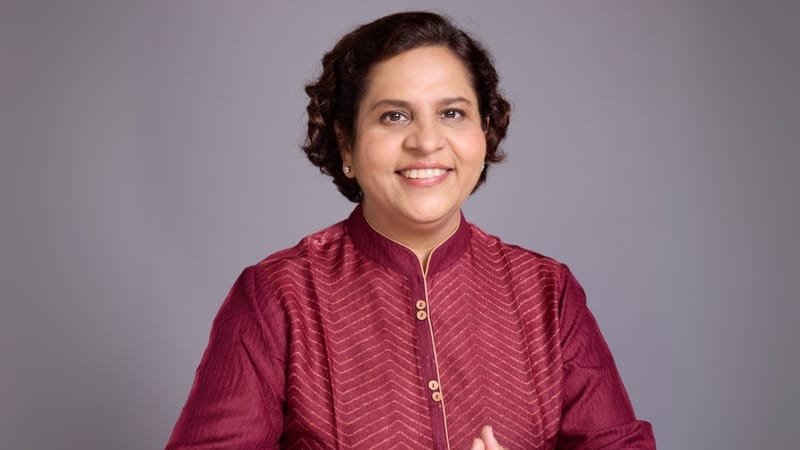
Harpreet Kaur explains why digital readiness at Godrej Enterprises Group is less about technology adoption and more about embedding culture and learning.
When the Godrej family formally restructured its businesses in 2024, creating the Godrej Enterprises Group, it placed the new entity at the intersection of tradition and transformation. Drawing on the 127-year-old Godrej legacy, Godrej Enterprises Group was tasked with carrying forward a wide portfolio across aerospace, intralogistics, construction, and energy transition, while reimagining how people, culture, and technology could define its future.
For Harpreet Kaur, Chief Human Resources Officer at Godrej Enterprises Group, the question of how to achieve digital readiness is not just one of software rollouts or smart factories. It is, above all, about embedding a cultural shift. In a conversation with People Matters, Kaur explained why digital readiness is best understood as a way of working — agile, people-first, and rooted in continuous learning — rather than a checklist of tools.
“Digital readiness at Godrej Enterprises Group is about empowering every employee to thrive in an ever-evolving landscape,” Kaur said. “It’s not just about technology adoption. It’s about building a workforce that is agile, continuously learning, and empowered to innovate.”
This reframing reflects a broader trend across Indian industry, where digital transformation is no longer confined to IT departments but runs through every layer of an organisation. For Godrej Enterprises Group, this means designing a workplace where intrapreneurship is rewarded, innovation is constant, and employees are trained to think beyond immediate functions.
The Sprint programme is one example. It encourages employees to develop ideas with the potential to reshape both processes and products, supported by mentorship and cross-functional collaboration. Here, intrapreneurship is not framed as an HR initiative but as a business necessity.
“We’re creating a dynamic workplace by emphasising innovation, digital adoption, and design-led engineering,” Kaur noted. “Digital readiness is about embedding agility and learning into our DNA.”
Inclusion at the frontline
The language of digital transformation often gravitates towards boardrooms and IT strategies. At Godrej Enterprises Group, however, Kaur stresses that frontline and shopfloor employees are central to the process.
“Our frontline and shopfloor teams are the backbone of our operations, and empowering them digitally is absolutely non-negotiable,” she said.
The company’s Factory 360 platform is central to this approach. At its Chennai plant — a showcase of smart manufacturing — employees interact with technology in real time. Handheld devices, kiosks, and digital dashboards allow workers to access data, report issues, and collaborate seamlessly across functions. Predictive maintenance powered by AI reduces downtime, while automation ensures efficiency.
Importantly, the shift is also cultural. By enabling workers to engage directly with digital tools, the company positions them as active participants in transformation, not passive recipients. “Digital transformation must be truly inclusive,” Kaur explained.
To reinforce this inclusivity, Godrej Enterprises Group has invested in a blended learning model: classroom sessions, e-learning modules, and partnerships with institutes such as ITIs. Programmes like Disha and DigiNXT complement these efforts, alongside awareness workshops on generative AI, prompt engineering, and data science. Out of a target of 600,000 training hours, around five per cent have already been completed.
Learning as a reflex, not a task
For Kaur, the most significant breakthrough has been moving learning out of the classroom and into the flow of work.
“We’ve moved away from one-off training sessions to creating a dynamic ecosystem where learning is accessible, relevant, and continuous,” she said. “Learning is no longer a checkbox — it’s a shared value that energises our people every day.”
This shift is underpinned by leadership development programmes and innovation platforms, ensuring that employees at every level are encouraged to experiment and share knowledge. In practice, that means embedding digital skilling into everyday processes rather than treating it as an add-on.
The investment is considerable: more than 600,000 training hours have been committed across functions, with content spanning technical subjects like data analytics and generative AI as well as softer skills such as adaptability and collaboration.
Godrej Enterprises Group’s approach to leadership development reflects a deliberate rejection of the binary between “digital” and “human”. Instead, its programmes emphasise fluency in both.
“The future demands leaders who can seamlessly blend digital fluency with a strong sense of purpose and human connection,” Kaur argued.
To that end, initiatives such as Drive Future Readiness and DigiNXT are designed to build advanced analytics and digital capabilities, while the Sprint intrapreneurship programme gives future leaders opportunities to test ideas and deliver solutions with societal impact.
By embedding innovation and continuous learning into leadership journeys, Kaur says the company is ensuring leaders emerge as innovators rather than administrators. The goal is a leadership culture that is both technologically adept and empathetically grounded.
Breaking silos in digital skilling
One recurring challenge in many organisations is the siloed ownership of digital skilling: is it the remit of HR, L&D, IT, or business units? At GEG, Kaur emphasises that this divide has been deliberately dismantled.
“We see digital skilling as a core business priority, not just an HR or L&D initiative,” she said. “By making digital skilling a shared responsibility, we foster a culture where learning is continuous, progress is visible, and success is celebrated across the organisation.”
Cross-functional teams co-create learning journeys, ensuring they remain aligned with business objectives. Feedback loops are built into the process, allowing friction points to be identified early and addressed collaboratively. This shared accountability has helped scale digital skilling initiatives across diverse business units, from aerospace to construction.
The non-negotiable: continuous upskilling
When asked to identify the single most important investment for sustainable digital capability, Kaur’s answer was unequivocal: continuous upskilling.
“Empowering employees with ongoing learning opportunities doesn’t just help them keep pace with change, it enables them to lead it,” she said.
This investment extends beyond technical knowledge to include adaptability, critical thinking, and collaboration. By embedding a growth mindset across teams, Godrej Enterprises Group aims to increase job satisfaction, build belonging, and strengthen retention.
“When learning becomes embedded in culture, its impact is transformative,” Kaur reflected. “Teams become more agile, leaders emerge organically, and the organisation is better equipped to seize new opportunities.”
The larger picture
The creation of Godrej Enterprises Group in 2024 marked a significant restructuring of the Godrej family’s holdings. While Godrej & Boyce, founded in 1897, remains the historic flagship, Godrej Enterprises Group was carved out to house a portfolio of high-growth sectors, from aerospace to intralogistics. This new entity carries forward the broader Godrej ethos of innovation and industrial scale, but with a sharper mandate for reinvention.
Against this backdrop, Kaur’s emphasis on culture as the cornerstone of digital readiness reflects both the challenges and opportunities facing Indian conglomerates. For legacy groups, the imperative is not simply to adopt technology but to ensure their workforces can adapt, innovate, and sustain transformation at scale.
In Godrej Enterprises Group’s case, digital readiness is deliberately framed as a people-first project. It is about the agility of intrapreneurs on the shopfloor, the inclusivity of digital skilling, and the continuous embedding of learning into the fabric of work.
As Kaur put it: “Investing in our people’s growth is the most sustainable way to build digital capability — not just for today, but for the future.”
Topics
Author
Loading...