







Leadership
Holding shape in flux: Building organisations that strengthen through change






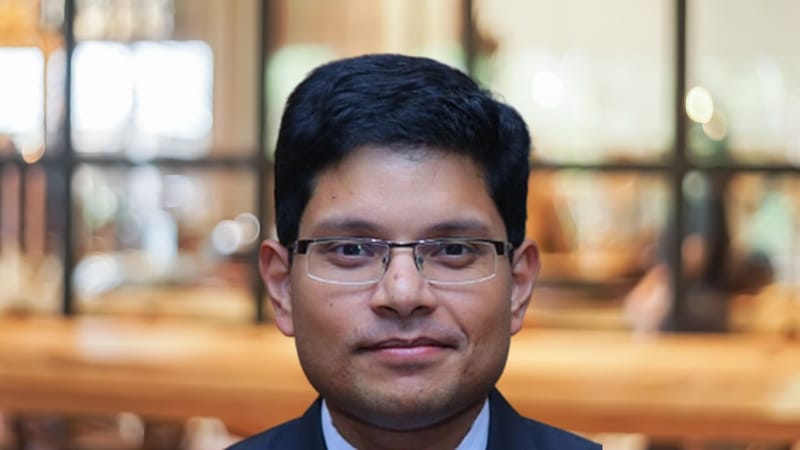
In this piece, Deloitte’s Anandorup Ghose shares his perspective on how organisations can translate purpose, culture and agility into lasting capability. He outlines the leadership disciplines that help CHROs turn rapid transformation into sustained performance.
The CHRO’s mandate continues to centre on assembling a workforce with the skills, motivation and alignment required to deliver sustained organisational performance while remaining anchored in purpose and principles. The rising premium on speed and clarity is reshaping expectations: CHROs are now expected to embed ESG considerations into daily talent and leadership choices, institutionalise behaviours that reflect organisational values and make accountability visible in ways that reinforce trust and coherence across the enterprise.
In our conversation with Anandorup Ghose, Partner at Deloitte India, he emphasises that the CHRO’s influence during transformation hinges on the ability to convert restructuring, digital adoption, and role redefinition into enduring organisational capability. This demands a sharp articulation of purpose, operating systems that can adapt to volatility and a culture resilient enough to hold its shape as the organisation evolves.
In our conversation with Anandorup Ghose, Partner at Deloitte India, he emphasises that the CHRO’s influence during transformation hinges on the ability to convert restructuring, digital adoption, and role redefinition into enduring organisational capability. This demands a sharp articulation of purpose, operating systems that can adapt to volatility and a culture resilient enough to hold its shape as the organisation evolves.
Here are a few excerpts from our conversation:
Q. From your vantage point, advising boards and CHROs, what is the single biggest shift you are seeing in how CHROs define value creation today?
I don’t think there is a shift in the definition of value insofar as the role of the CHRO is concerned. The CHRO drives value creation through enabling the organisation to have the right skills at the right place and time, with the motivation to deliver on goals and expectations. And this, while ensuring that the organisation remains true to its principles and purpose. These fundamental expectations have not altered – what may have is the relative importance across some of them and the expectation of agility and faster response time to changes and requirements.
Q. How can CHROs embed ESG considerations into workforce strategy in a way that influences decisions on talent investment, leadership expectations, and everyday organisational behaviour?
ESG, in many ways, reflects the principles that an organisation needs to live by. The role of HR is to uphold these principles and ensure that the organisation creates fail-safe mechanisms to ensure these principles are adhered to in all circumstances. This is driven through both how HR and organisational policies are defined and implemented, and how HR can set role models and examples of these principles in action. Communication is most effective when people see examples of reward and reprimand.
Q. As enterprises accelerate transformation agendas, what design principles help CHROs ensure organisational restructuring, digitisation, and role reconfiguration translate into lasting capability rather than short-term cost outcomes?
While not wanting to sound cliched, there are really two things for organisations. Firstly, to define what the organisation stands for as its purpose and vision and secondly, by ensuring that processes are built to be agile. In a scenario of enhanced volatility, organisations need to be nimble to change along with circumstances, while remaining true to purpose. It is perhaps the most difficult thing to put into action, particularly as companies become larger, and there are many examples of companies not being able to exemplify these two principles. Companies that exemplify a constant and unerring commitment to culture in every action are the ones that are able to make it happen.
Q. In sustaining organisational growth, what workforce metrics are becoming most critical for future readiness, especially in sectors where scale, agility, and trust must be managed simultaneously?
I am not sure if there is a metric for this, but the ability of an organisation to effectively build, reinforce and deploy skills while remaining cost competitive is perhaps the core marker for this.
Q. Looking ahead to the next two to three years, which specific CHRO capabilities will be decisive in translating purpose and ESG commitments into measurable commercial and organisational performance?
The best CHROs are the ones who:
1. Have travelled the path from “understanding” to “living” the business
2. Have earned the right from the business to challenge decisions that are not aligned to people's needs.
3. Have the organisational respect and capability to be a constant and continuous advocate of the foundational principles, and finally
4. Have imagination – to build and rebuild – based on how business and people's needs change
Topics
Author

Loading...