







Leadership
How regulated industries are reshaping talent strategy around trust and compliance






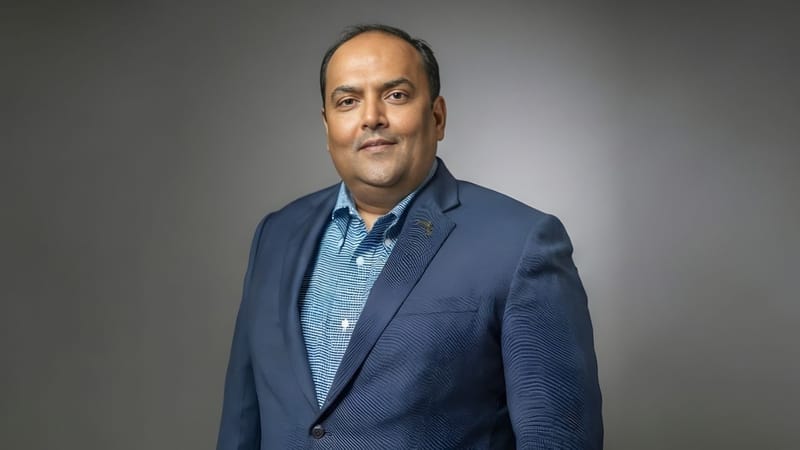
360 ONE’s CHRO Navin Upadhyaya outlines how regulated firms are reshaping talent strategies around trust, compliance and long-term capability building.
In highly regulated sectors such as financial services, talent strategy is undergoing a fundamental shift—away from speed and short-term agility towards trust, compliance and long-term stewardship.
That shift is structural, not cosmetic. As Navin Upadhyaya, CHRO at 360 ONE, puts it: “Our talent strategy within a regulated, trust-driven environment is rooted in integrity. Every people-related decision carries fiduciary responsibility, and maintaining client trust is paramount.” In contrast to less regulated sectors that prioritise speed, he says, the emphasis here is on endurance and continuity.
At the core of this model is a reordering of priorities. “Compliance is not an afterthought. It is the bedrock of our operations,” Upadhyaya says. Hiring, therefore, begins with values alignment rather than technical capability, which is built later through structured development. This includes rigorous background checks and continuous ethical training, designed to reinforce accountability across the organisation.
The approach extends to how firms build talent pipelines. At 360 ONE, in-house academies and immersive bootcamps are used to create compliance-aware professionals with strong regulatory understanding. “These initiatives help shape professionals who are not only compliance-conscious but also equipped with sound regulatory insight,” he says. The outcome, he adds, is a more resilient workforce, reflected in a diversity ratio of around 30%, above industry averages.
Skills, not roles, are becoming the organising principle
Beyond compliance, financial services firms are also rethinking how they define and develop capability. The shift towards skills-based workforce planning, seen across industries, takes on a different character in regulated environments.
“A measured or cautious approach does not hinder agility. In fact, it empowers it,” Upadhyaya says. In practice, this means combining deep domain expertise with adaptability within regulatory boundaries.
At 360 ONE, capability building is structured around the 70–20–10 learning model, blending on-the-job exposure, peer learning and formal training. The firm has also built role-readiness pathways to support internal mobility and leadership development. “This approach has enabled us to grow critical talent internally… by merging financial acumen with modern competencies such as digital enablement and applied AI,” he notes.
The result is a workforce that is both technically equipped and compliance-conscious, an increasingly necessary combination as wealth management firms navigate digital transformation alongside regulatory scrutiny.
Reframing compliance as a driver, not a constraint
One of the more nuanced shifts is cultural. Governance and compliance, often viewed as restrictive, are being repositioned as enablers of performance.
“Rather than being limitations, governance and compliance serve as catalysts for enduring performance,” Upadhyaya says. HR, in this context, acts as a “multiplier of trust”, embedding ethical behaviour into everyday decision-making.
This is achieved through scenario-based learning, where employees engage with real-world regulatory dilemmas, and through systems that encourage transparency, including anonymous feedback channels. Ethical conduct is also actively recognised and incentivised.
Leadership plays a central role. “Leaders demonstrate extreme ownership by setting examples and accepting accountability for results,” he says. The balance, he argues, lies in maintaining discipline without stifling initiative—using data to track behavioural patterns while reinforcing trust.
Balancing evolving employee expectations with operational discipline
As employee expectations shift towards flexibility, growth and purpose, regulated firms face a more complex challenge: adapting without weakening control frameworks.
Upadhyaya says organisations are responding by restructuring career pathways rather than loosening standards. Structured bootcamps, internal mobility and lateral moves are being used to create purpose-driven careers while maintaining accountability.
“Accountability is instilled through realistic training scenarios, and leaders are expected to embrace results via a culture of extreme ownership,” he says. Recognition systems are also evolving to reward not just outcomes, but integrity and ethical behaviour.
Regular leadership engagement—through direct interactions and exposure to senior executives—helps align individual purpose with organisational priorities, while internal job marketplaces allow employees to grow without relying solely on vertical progression.
The expanding role of HR—and the limits ahead
The transformation has also elevated the role of the CHRO. “The CHRO drives the most significant impact by synchronising talent with strategic growth objectives, cultivating organisational culture, and managing risk,” Upadhyaya says.
In financial services, HR’s influence now extends beyond talent management to risk mitigation and reputation building, particularly through the reinforcement of ethical leadership. “Trust stands as our most critical asset, and HR is essential to safeguard and enhance it,” he adds.
Leadership credibility, in turn, is anchored in transparency, empathy and accountability. Upadhyaya emphasises that leaders must communicate candidly, take ownership of decisions and link performance directly to client outcomes.
Looking ahead, he sees adaptability as the defining trait of HR leadership. This includes integrating AI, advancing skills-based models and aligning talent strategies with sustainability goals. However, constraints remain.
“Talent shortages in niche areas pose a considerable hurdle… where demand is expanding at nearly 30% CAGR while the availability of skilled professionals stays restricted,” he says.
The implication is clear: as regulation tightens and expectations rise, the competitive advantage will increasingly lie in building trust-centric, future-ready talent ecosystems—not just faster ones.
Topics
Author
Loading...