







Leadership
How Tata Chemicals is redefining responsible innovation for a global business






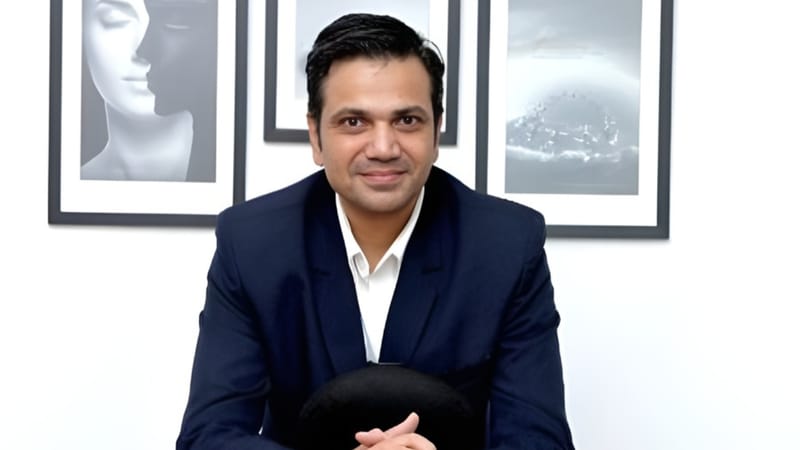
Dr Richard Lobo on why innovation without ethics is “just motion”, and how Tata Chemicals balances speed, science and stewardship.
In most companies, innovation is a KPI. At Tata Chemicals, it is a question of conscience.
Dr Richard Lobo does not speak of innovation as a race for patents or product launches. He speaks of it as governance. As Global Head – Innovation, R&D and Business Excellence, and Chief Ethics Counsellor at Tata Chemicals, he sits at the intersection of velocity and values — a position that demands both ambition and restraint.
“I firmly believe that true innovation isn’t measured by what we invent but rooted in the purpose and by the positive change it unlocks,” he says.
That definition shifts the centre of gravity. In a multi-geography enterprise, innovation is not merely about developing greener technologies or sharper business models. It must also ensure that processes keep people safe, that environmental impact improves, and that diverse teams are empowered. “To me, this forms the discipline of governance,” he adds.
Purpose over process
Global companies often struggle with scale. What begins as a crisp transformation agenda can dissolve into bureaucracy across markets.
Lobo is wary of that drift. “Purpose is always at the core of excellence and serves as the sparkplug for innovation,” he says. The danger arises when frameworks morph into “rulebooks rather than enablers of, what I call, ‘liberated ownership’.”
He is blunt about the alternative: trust.
Instead of layering control, he argues for empowering local teams to interpret and execute within their contexts. “We need to empower and trust our teams to interpret, adapt, and execute in ways that fit their context.”
That trust is anchored in shared values — the Tata code of conduct and the principles of integrity, responsibility and unity.
His philosophy can be distilled into three ideas:
-
Purpose must anchor performance.
-
Frameworks should enable ownership, not enforce compliance.
-
Shared values create coherence across markets.
Too little oversight risks fragmentation. Too much suffocates initiative.
Speed, scrutiny and the moral compass
If innovation is about motion, ethics is about pause. The tension is structural.
“Ethical actions are measured by intent, not outcomes while the world we know of lays emphasis on outcomes-oriented Innovation, the faster the better,” Lobo says. “Innovation without a moral compass is just motion and not growth.”
That sentence lands heavily. In sectors grappling with AI acceleration and climate urgency, the pressure to move is intense.
Lobo does not suggest slowing innovation. He suggests shaping it.
He speaks of “clear, intelligible guardrails that invite debate, discourse, respect for opposing points of view and acceptance that we might not always be right.” These guardrails, he argues, protect curiosity rather than restrain it.
At Tata Chemicals, that philosophy translates into commitments such as the 12 principles of Green Chemistry and internal missions like “Zero Harm” and “Science for Good”. These act as decision filters rather than slogans.
“To me, it is the pursuance of not just Karma but Dharma.”
Business excellence frameworks, he concedes, carry their own risks. Models such as TBEM, EFQM and Deming drive rigour. Applied too rigidly, they can create compliance cultures. The solution, in his view, is to treat them as learning systems — encouraging “discovery”, creating a “safe space” for “Dare to Try Innovations”, and rewarding learning, not merely results.
Trust in the age of AI
Few corporate conversations today avoid artificial intelligence or climate mandates. Lobo sees both as reshaping risk at a foundational level.
“AI and the emerging Climate challenges are redefining every known aspect of our socio-economic fabric,” he says.
The response, he argues, is capability-building rooted in trust: digital governance, AI literacy, transparent decision-making and responsible data practices. Ethics must be embedded in design. Sustainability must move from reporting to strategy.
“AI frameworks can deliver the assurance for remaining competitive, but people will always remain central to the soul of the organisation.”
At one point, Lobo turns to history. He recalls Chanakya shaping a narrative that unified fragmented kingdoms under Chandragupta Maurya. He invokes the Ship of Theseus — rebuilt plank by plank yet retaining identity through story.
“Without a narrative, change feels like effort. With the right narrative, change becomes a calling.”
As the conversation closes, his conclusion is direct: “We must focus on Purpose driven Culture.”
Innovation without values risks fragility. Capability without creativity becomes routine. Enterprises that integrate innovation, ethics and people capability will endure longer than those that treat them as parallel agendas.
In an era obsessed with speed, Tata Chemicals’ framing of responsible innovation offers a different proposition — one grounded in intention, restraint and stewardship.
The future, as Lobo sees it, will not belong to the fastest alone. It will belong to those who move with purpose.
Topics
Author
Loading...