







Leadership
How Tata Communications fills 60% of roles with internal talent: CHRO explains
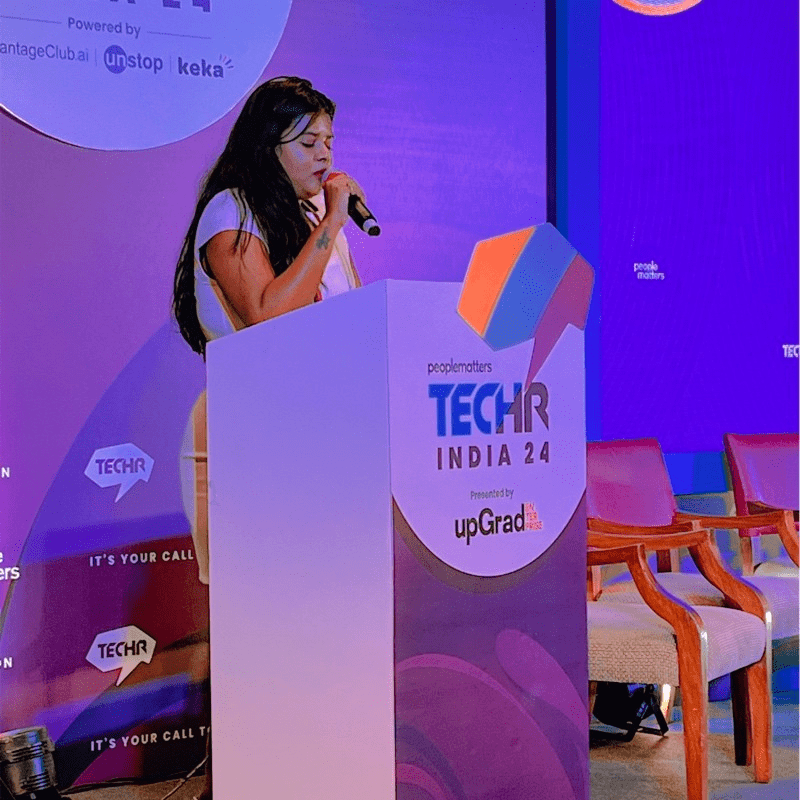






Tata Communications’ CHRO argues internal mobility is not about moving people around — it’s about reshaping careers.
In an era where the shelf life of skills is shrinking and projects increasingly dictate how work gets done, companies face a familiar dilemma: how to redeploy talent without stifling ambition. Internal mobility, often invoked in HR boardrooms, risks becoming a buzzword unless it is tied to career growth and business outcomes.
For Aman Gupta, Chief Human Resources Officer at Tata Communications, mobility only creates value when it’s skill-led and employee-driven. “Internal mobility in its truest sense is the democratisation of the career journey,” he told People Matters. “It requires a shift from role-based paths to skill-first development, where employees thrive in a mobility-friendly culture.”
That shift is already visible inside Tata Communications. In FY2024–25, over 60% of open positions were filled by internal candidates. Gupta calls it proof that mobility, when designed to align individual aspiration with organisational need, can serve both sides of the equation.
Breaking cultural deadlocks
The obstacles are not procedural alone. The harder battle, Gupta admitted, lies in mindset. “Managers fearing losing their best employees, and employees being afraid to abandon their comfort zones, are the most usual consequences,” he said.
To break the deadlock, Tata Communications has reframed the role of line managers. Through its Coaching Conversation framework, managers are asked to act as career enablers rather than gatekeepers. Employees, in turn, are urged to have candid dialogues about skills and aspirations.
“Unless the culture encourages mobility as growth, it can be seen as disruption,” Gupta said. “Our leadership believes in leading by example. That makes talent rotation part of our living culture to build a future-ready workforce.”
A key pillar of this approach is skills adjacencies: identifying how existing capabilities can feed into new and emerging roles. For Gupta, this is not about oversimplifying career paths but about recognising potential where it already exists.
An integrated career marketplace and learning ecosystem supports the process. Employees can benchmark their skills against high-demand roles and take up personalised learning journeys. In the last financial year, more than 3,800 employees engaged with the platform.
As Gupta pointed out, “With the half-life of skills shrinking, career lattices — not ladders — are the evolved way of mobility.” In practice, that means moving laterally into projects, short-term gigs and adjacent roles, not waiting years for vertical promotions.
Where AI helps — and where it doesn’t
Technology has accelerated this model. AI-led internal marketplaces are now mainstream across global corporations, and Tata Communications is no exception. Gupta explained how the company uses AI-ready roles and predictive tools to help employees chart future career routes.
“Through our marketplace, employees can assess their current skills against high-demand roles,” he said. “AI then provides personalised learning journeys as a compass to career aspiration.”
But Gupta is clear-eyed about the limits. Technology can recommend training or match profiles at scale, yet certain judgements — such as cultural adaptability, team dynamics or leadership potential — remain firmly human. “While technology sets up the scenarios, humans choose to march forward,” he said.
Beyond technology, Tata Communications has introduced programmes to embed agility into its workforce. Initiatives like Future Role Development Journey and Future Forward prepare employees for emerging jobs, while Shape the Future encourages intrapreneurship and agile problem-solving. Role academies are tailored to areas of high demand.
The company’s Project Marketplace complements this by allowing employees to take on gig-style assignments internally. It is a deliberate nod to the project economy and, Gupta argued, a practical way to broaden skills.
The employer brand equation
If internal mobility once lived in the shadows of hiring strategy, today it is increasingly a frontline issue in employer branding. Employees want evidence that organisations invest in long-term capability building, not just short-term staffing.
“Internal mobility is gradually shaping the reputation of organisations in the eyes of the best talent,” Gupta said. “Only those who invest in their people’s sustained career path will be the employer of choice.”
For HR leaders, this means positioning mobility not as a back-office HR exercise but as a strategic differentiator. It signals resilience, agility and a genuine commitment to shared growth.
The pressures on companies to adapt are unlikely to ease. Demand for digital, AI and sustainability skills is growing, while attrition cycles remain volatile. Against this backdrop, internal mobility has become less about optional flexibility and more about organisational survival.
Gupta is pragmatic about the balance between tools and culture. AI will continue to drive scale and efficiency, but trust, transparency and leadership behaviour will decide whether employees see mobility as opportunity or disruption.
“Internal talent mobility is about growing together rather than a mere job change,” he said. “For organisations, the task is to embed it into culture and systems so it becomes a natural part of how work and careers progress.”
Topics
Author
Loading...