







Leadership
In a high-traffic airport, how do you protect staff? CHRO shares the strategy


 ||
||

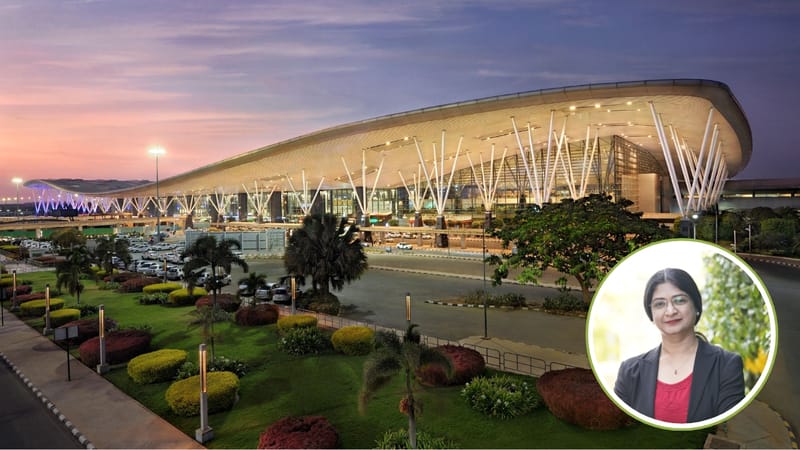
CHRO Nalini George outlines how the airport operator is rethinking workplace design, leadership behaviour and support systems to build a resilient workforce.
Bangalore International Airport Limited is placing well-being and resilience at the centre of how it designs work, as rising operational complexity and a 24x7 aviation ecosystem reshape the demands placed on employees. In an interview, Nalini George, Chief Human Resources Officer at Bangalore International Airport Limited, said the airport’s workforce requires more than standard wellness programmes, with support structures that address the realities of high-pressure, multi-stakeholder operations.
Ms George said the airport functions as “a business of businesses,” with employees engaging daily with airlines, government agencies, ground handlers and commercial partners. In such an environment, she said, “it is crucial for employees to have a solid support system,” supported by policies, platforms and practices designed to strengthen well-being.
Well-being beyond programmes
Ms George said BIAL’s approach begins with helping people integrate into the organisation smoothly. New joiners undergo structured 30-60-90 day interactions with People Partners, who remain closely connected with employees throughout their tenure and act as first-line support.
The company provides employee assistance programmes, annual health check-ups and an expansive leave framework, which includes 30 days of paternity leave and dedicated medical exigency leave. Financial assistance is extended to staff experiencing bereavement to reduce immediate financial pressures.
Mental health receives equal emphasis, with on-site access to a psychologist and training for managers to lead with empathy. BIAL also runs regular education sessions on health topics and financial literacy. Its crèche and day-care facilities aim to ease the burden on working parents, while hobby clubs and community engagements build connection beyond job roles.
Workplace design for recovery
Given the physical and cognitive demands of airport work, BIAL has focused on creating spaces that support recovery and rest. Its campus includes a gym, indoor stadium, meditation rooms, recreation areas and large green zones designed to help employees decompress.
The company operates a five-day work week — unusual for the aviation sector — and ensures transport support so shift staff can return home safely and on time. Ms George said the intention is to avoid long hours and “ensure employees get the rest they deserve.”
Resilience, the leader said, extends beyond infrastructure to everyday discipline. The company conducts continuous operational checks and anticipatory reviews to identify risks. Every employee, from interns to senior leaders, is trained in business continuity and emergency response protocols.
She said the organisation emphasises incremental progress, “believing that small improvements each day lead to transformative change.” Internal audits and “third-eye reviews” aim to expose blind spots and reinforce a culture that learns from disruptions rather than reacting to them.
Tailoring support for diverse roles
With employees ranging from security personnel to corporate teams, BIAL recognises that well-being needs differ widely. The company runs app-based health challenges to promote participation and maintains a psychologically safe environment where employees are encouraged to seek help.
Professional growth is positioned as a core component of well-being. Ms George said upskilling increases relevance and confidence, serving as an essential form of resilience in a fast-changing sector.
Reflecting on recent crises, including the pandemic, the CHRO said employee resilience is shaped by organisational intent. BIAL avoided salary cuts and layoffs during the pandemic, setting up makeshift hospitals and testing centres to support staff. She said the company’s ability to maintain business continuity, despite the complexity of its operating model, was strengthened by its workforce’s commitment.
Ms George believes workplace design will become a decisive factor in attracting and retaining talent in aviation. Employees increasingly seek environments that enable collaboration, creativity and purpose.
BIAL is finalising plans for a new office designed around biophilic principles, intended to bring its workforce under a single roof and foster cross-functional interaction. The aim, she said, is to build a workspace that reflects the organisation’s ethos while supporting the capabilities needed to deliver consistent, world-class passenger experiences.
Topics
Author
Loading...