







Leadership
India’s BFSI sector has a 42% AI skills gap so who is actually ready for the jobs being created






As hiring accelerates across India’s BFSI ecosystem, a widening gap between demand and capability is raising a sharper question: who can actually do the jobs being created.
India’s banking, financial services and insurance sector is hiring at scale. But the jobs being created are not the ones the current workforce is ready for.
According to Quess Corp BFSI GCC Talent Report 2025, the sector is facing a 42% skill gap in AI and data roles. At the same time, demand for these capabilities is accelerating as global capability centres expand and move up the value chain.
The result is a structural mismatch. Roles are growing. Capability is not.
From back office to core engine
The shift is most visible in India’s global capability centres. Once seen as execution hubs, they are now central to how global financial institutions operate.
The same Quess Corp report notes that India’s BFSI GCC market, valued at around $40 billion in 2023, is projected to reach $125–135 billion by 2032, reflecting sustained double-digit growth. These centres employ roughly 540,000 professionals across nearly 190 GCCs, accounting for a significant share of the global workforce.
But the nature of work has changed.
Where the gaps are widening
The talent shortage is not uniform. It is concentrated in areas where BFSI is transforming fastest.
Key pressure points emerging across the sector:
- AI and data roles show the highest gap at 38–42%.
- Platform engineering and cloud skills face shortages of 28–36%, signalling broader infrastructure capability gaps.
- Cybersecurity and compliance-tech roles are commanding salary premiums of 1.5x to 4x, reflecting scarcity in critical areas.
- Replacement hiring accounts for 40% of recruitment activity in GCCs, indicating retention challenges alongside hiring demand.

The complexity of new roles
Part of the challenge lies in how BFSI roles themselves are evolving.
A role in fraud detection, for instance, now combines data science, regulatory understanding and real-time analytics. A payments specialist is expected to understand cloud infrastructure, cybersecurity and user experience. Even compliance functions are increasingly intertwined with AI-led monitoring and identity systems.
The IBM Institute for Business Value’s 2026 outlook reinforces this shift. It finds that 71% of banking executives report talent deficiencies, with 14% calling them profoundly limiting. The issue is not just hiring. It is whether organisations can build capability fast enough to match structural change.
Despite the gaps, hiring activity remains strong.
Data from IANS shows 12–14% quarter-on-quarter growth in GCC hiring in FY26, reflecting renewed expansion. Yet this growth is uneven. Around 88–90% of hiring remains concentrated in Tier-1 cities, even as Tier-2 locations begin to emerge as alternative talent hubs.
At the same time, workforce dynamics are shifting. Shorter employee tenures, particularly among younger workers, are driving higher replacement hiring. Organisations are forced to hire continuously while also trying to build deeper capability.

So who is ready
The answer is not straightforward. It is also not limited to those with formal AI expertise. The roles being filled today increasingly favour professionals who can operate across domains.
Three characteristics stand out:
1. Hybrid capability: Professionals who combine financial knowledge with technology fluency are better positioned than specialists in either domain alone.
2. Systems thinking: As workflows become interconnected, roles require an understanding of how data, risk, compliance and customer experience interact.
3. Continuous learning: Static skill sets are quickly becoming obsolete. The ability to adapt is becoming as important as the skill itself.
What makes the current moment different is that the gap is not cyclical. It is structural.
The IBM report highlights that only 8% of banks have a strategic approach to AI, while 78% remain at a tactical stage. This suggests that capability building is still fragmented, even as demand accelerates.
At the same time, core transformation programmes are struggling to keep pace. The same study notes that 94% of core banking modernisation projects miss their timelines, often due to technical and organisational complexity.
Why the BFSI Talent & Tech Summit 2026 matters now
The scale of the gap suggests this is not a problem organisations can solve in isolation. It requires a shift in how the industry collectively approaches capability building, leadership design and workforce transformation.
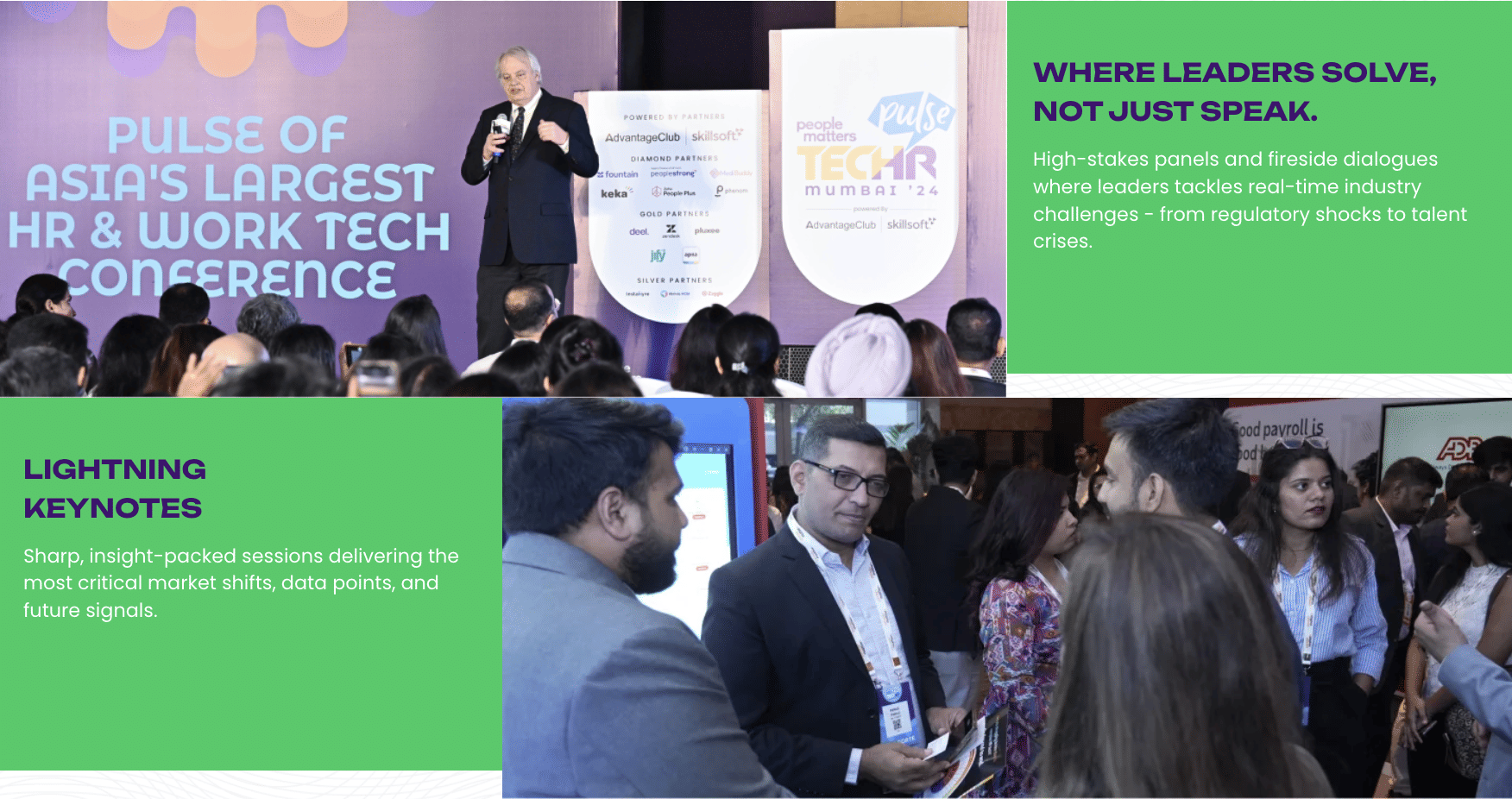
This is where the BFSI Talent & Tech Summit 2026 comes in. Taking place in June at Taj Santacruz, Mumbai, the summit brings together senior HR and business leaders to address a question the industry is already grappling with.
The agenda reflects the pressure points emerging across the sector. From skills transformation and job redesign to leadership evolution and governance, the focus is on moving beyond intent to execution. Sessions are designed to unpack what it takes to build AI-ready teams, embed accountability into digital workflows and create workforce models that can sustain speed without compromising trust.
With over 170 delegates, 20 plus speakers and a curated group of decision-makers, the format is built for working discussions rather than broad narratives. Workshops, panels and closed-door conversations aim to translate strategy into practical approaches that organisations can apply immediately.
The underlying premise is simple but urgent. In a sector where capability is becoming the primary currency, competitive advantage will depend on how quickly organisations can align talent with evolving roles.
For leaders navigating this shift, the question is no longer whether to act, but how fast they can move. The summit offers a space to engage with that question directly, alongside others facing the same challenge.
Author
Loading...