







Leadership
India’s GCC model must move from cost arbitrage to capability depth: KPMG's Shalini Pillay





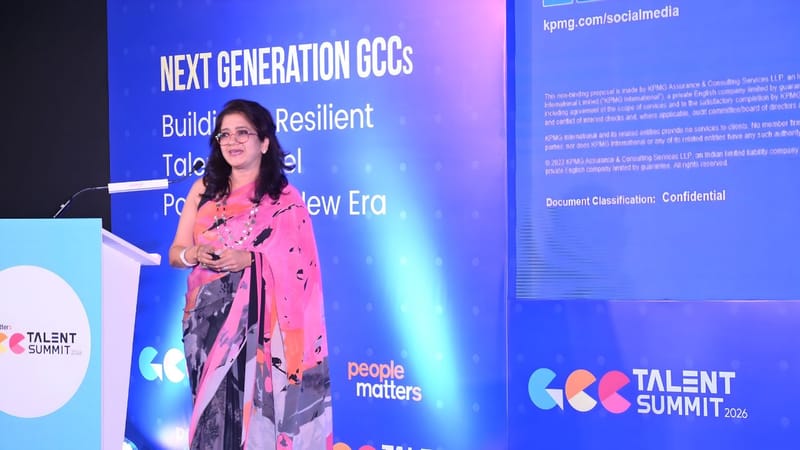
KPMG’s Shalini Pillay says India’s GCCs must shift from cost efficiency to capability depth as AI, talent gaps, and global pressures reshape the model.
India’s global capability centre (GCC) ecosystem is entering a decisive phase. What began as a model built on cost advantage must now evolve into one defined by deeper capabilities, domain expertise, and measurable value creation.
That was the central message from Shalini Pillay, India Leader – Global Capability Centres at KPMG in India, speaking at the People Matters GCC Talent Summit in Hyderabad on Thursday.
According to Pillay, the model that propelled India’s GCC expansion over the past two decades is rapidly changing under the pressure of artificial intelligence, global economic headwinds, and rising expectations from multinational headquarters.
“What got us here is not going to get us there,” she said, arguing that GCCs must shift decisively away from transactional work and towards high-value, capability-driven operations.
An industry at an inflexion point
India’s GCC sector has grown into one of the most important pillars of global enterprise operations. Thousands of centres now support multinational firms across technology, finance, engineering, and analytics functions.
Yet Pillay said that the model is reaching an inflexion point.
Global organisations are facing new pressures—from geopolitical tensions and tariff risks to rising operational costs. In such an environment, the traditional appeal of offshore centres built primarily on labour cost advantage is weakening.
“If you are doing largely transactional work, the model will not sustain,” she said. “The focus has to move to value creation and outcomes.”
Those pressures are forcing companies to examine whether their offshore centres are delivering strategic impact or merely replicating commoditised tasks.
For GCC leaders, the implication is clear: capability depth—not headcount scale—will determine long-term relevance.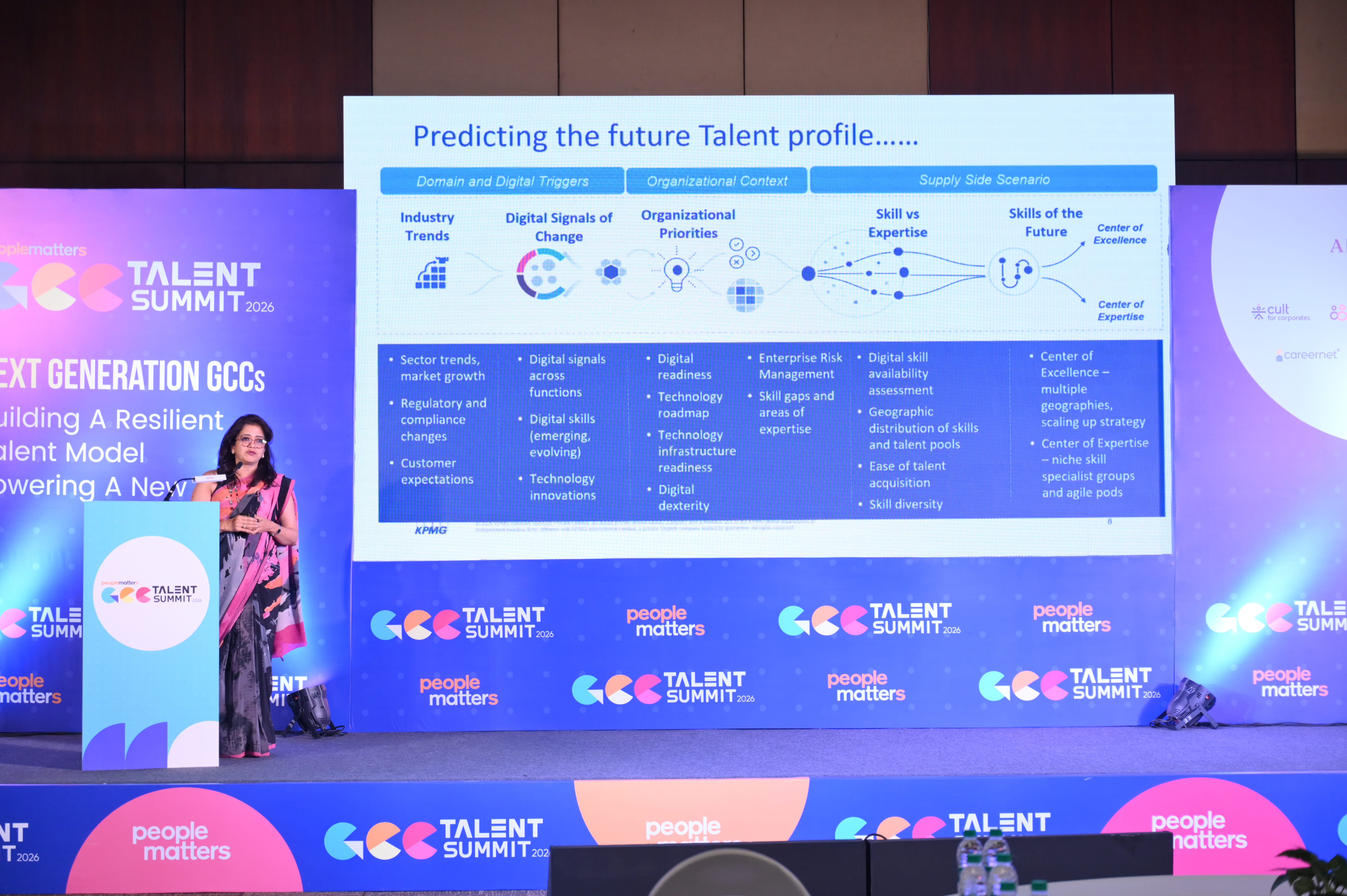
AI is reshaping work itself
The acceleration of artificial intelligence is further reshaping the operating model.
Pillay argued that organisations must first understand how work itself is changing before attempting to redesign skills or workforce strategies.
“Work will not look the same as it did before,” she said, noting that many companies are still experimenting with AI through pilots and sandbox environments.
But despite the enthusiasm, she cautioned that maturity remains uneven. In informal industry assessments she referenced, leaders often rate AI maturity levels in their organisations between two and six on a ten-point scale, reflecting persistent challenges around data integration and process intelligence.
Data fragmentation across global enterprises remains a significant obstacle. Until organisations resolve those structural issues, AI deployments may struggle to scale.
The next wave: techno-functional talent
At the centre of the transformation lies talent.
Pillay argued that the next stage of GCC evolution will be driven by “techno-functional” skills—professionals who combine deep domain knowledge with advanced technology capabilities.
Digital skills alone will not suffice, she said.
“We have focused a lot on digital skilling, but the next wave of GCC growth will come from deep domain expertise combined with AI capability.”
That shift reflects the changing role of GCCs within multinational organisations. Rather than acting solely as execution hubs, many centres now operate across entire value chains, requiring employees who understand both technology and the underlying business functions.
Such roles may involve integrating sector knowledge—such as life sciences, aviation, or financial services—with data science, automation, and AI capabilities.
The leadership gap
The transformation also exposes a leadership deficit.
Industry forecasts suggest thousands of global leadership roles could eventually emerge from GCCs. Yet Pillay argued that the pipeline remains insufficient.
Many leaders have experience building and scaling offshore centres, she said, but far fewer possess the deep domain and functional expertise needed to run global operations.
“That is the gap we need to address,” she said.
Without that capability, GCC leaders may struggle to move into enterprise-level decision-making roles within global organisations.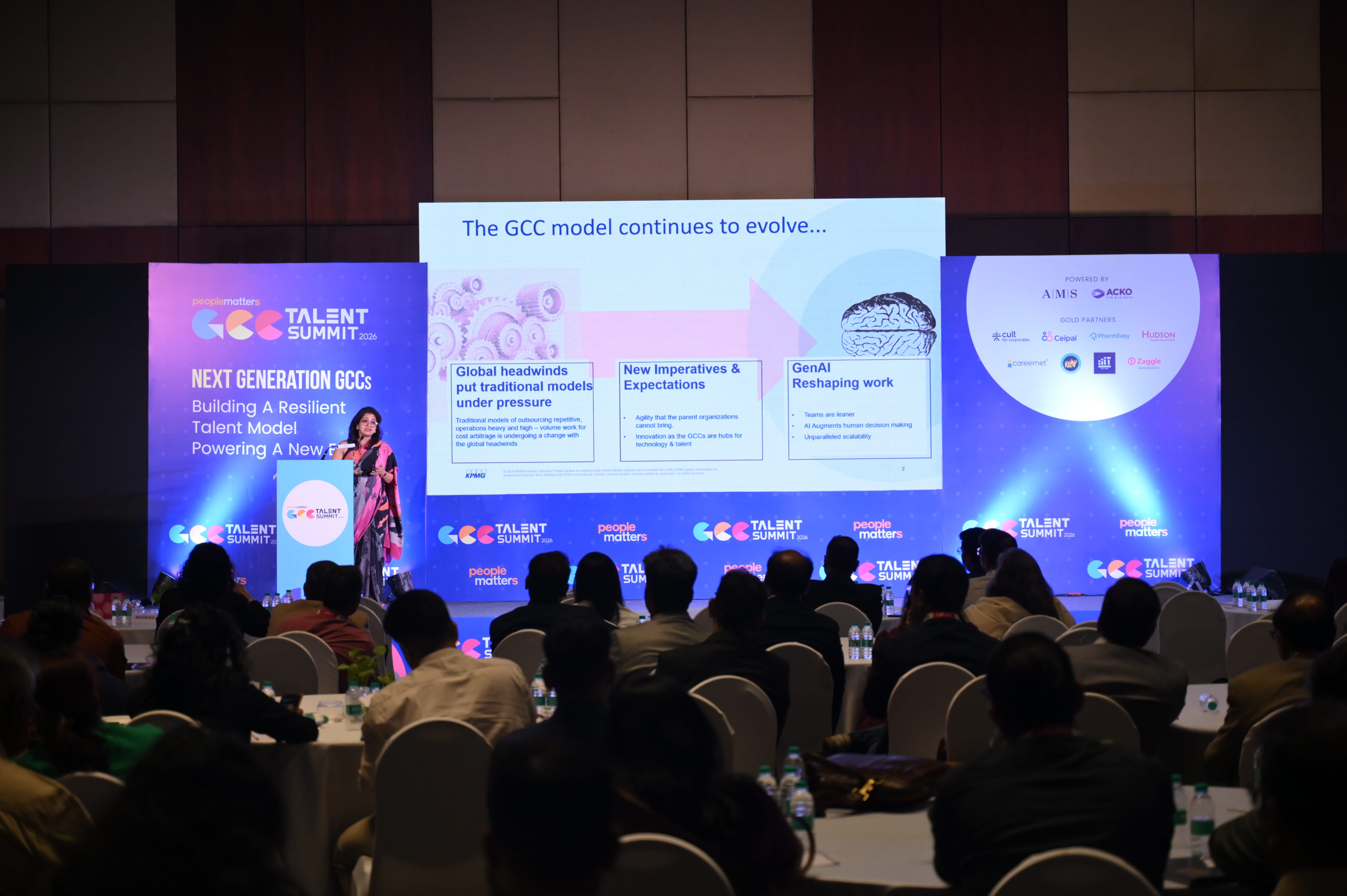
Talent strategy under pressure
Talent management has already emerged as the single biggest concern among GCC leaders.
In a survey of industry executives conducted by KPMG, Pillay said 70 per cent of leaders identified talent as their top risk, ahead of technology adoption, regulatory compliance, and operational challenges.
The issue extends beyond hiring.
Availability, capability, and employability of talent remain persistent concerns, even in a country that produces millions of graduates each year.
Many GCCs are therefore working more closely with universities and state governments to shape future skill pipelines.
Several states—including Telangana, Karnataka, Andhra Pradesh, and Gujarat—have begun launching programmes aimed at aligning academic curricula with industry requirements.
Such efforts reflect growing recognition that India’s demographic advantage alone will not guarantee employable talent.
Rethinking workforce models
Pillay urged organisations to adopt more flexible approaches to workforce planning as technology reshapes job roles.
Instead of filling vacancies automatically, she said companies should analyse how automation, new platforms, and AI tools will change their workforce needs over the next several years.
That requires a shift towards forward-looking talent modelling, including assessing which roles may become redundant and which new capabilities will be required.
“It is not about hiring for the here and now,” she said. “You must understand what your talent pool will look like three years from today.”
To support that transition, organisations must adopt more agile workforce strategies—combining permanent hiring with partnerships, temporary expertise, and collaborative innovation ecosystems.
The ecosystem advantage
Another defining feature of the GCC model, Pillay argued, is the broader ecosystem in which centres operate.
Rather than functioning in isolation, GCCs increasingly rely on a network of service providers, technology partners, startups, and universities.
This hybrid ecosystem allows organisations to experiment with emerging technologies without permanently increasing cost structures.
Companies exploring new AI applications, for example, may initially build experimental environments with external partners before scaling successful models internally.
That approach helps organisations remain flexible as technologies evolve.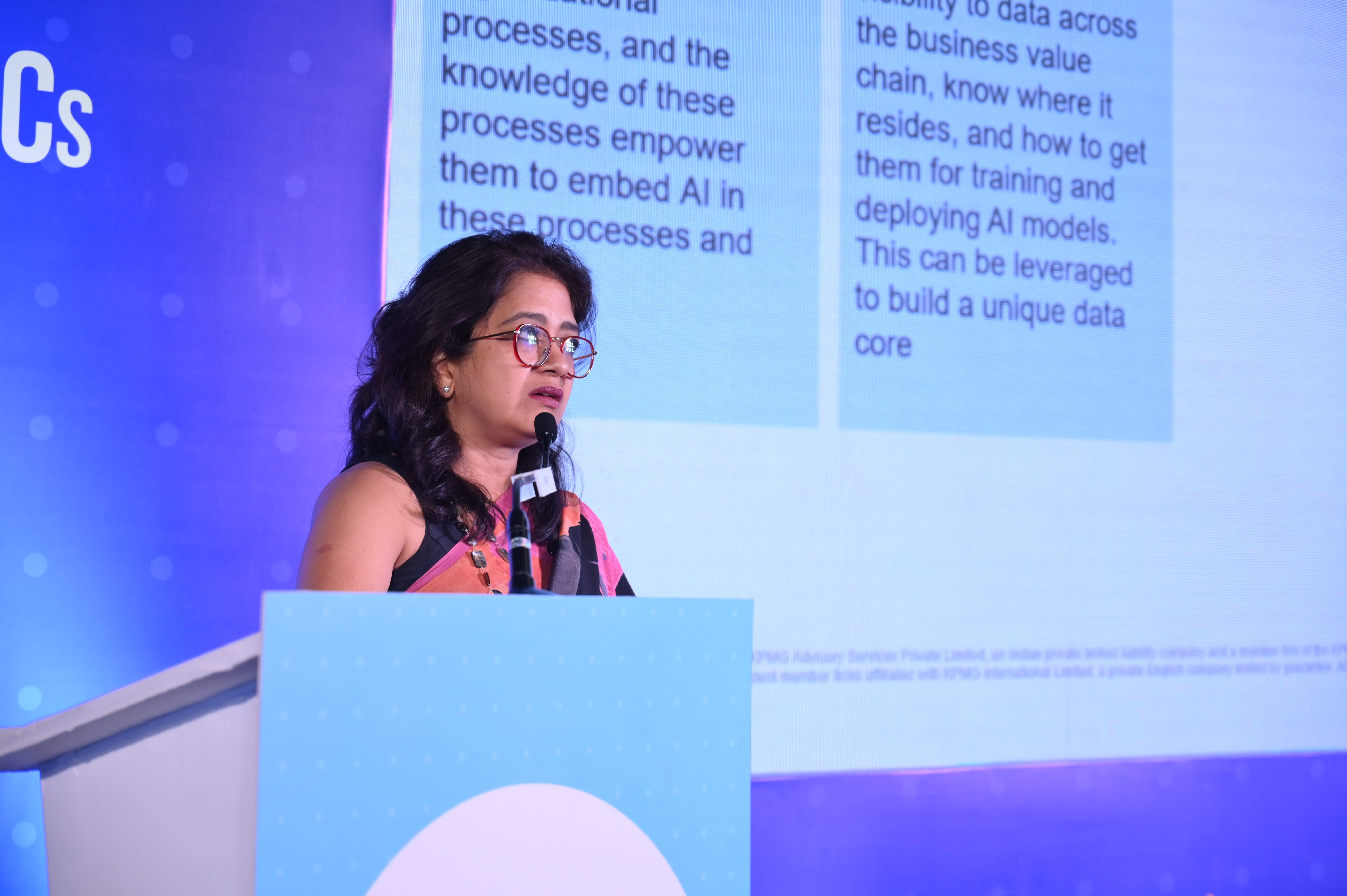
The cost reality
Despite the emphasis on value creation, Pillay warned that cost discipline remains fundamental to the GCC proposition.
The rapid race to adopt AI has already increased costs in some centres, particularly where companies have hired expensive data specialists without clear visibility on returns.
“Value assumes cost,” she said. “If you lose sight of cost entirely, you create an existential risk.”
In other words, the shift from cost arbitrage to capability depth does not eliminate cost considerations—it reframes them around productivity and outcome.
A rapidly evolving model
For all the changes underway, Pillay believes the GCC model will remain central to global enterprise strategy.
But it will not look the same in the near future.
Artificial intelligence, new operating models, evolving talent demands, and intensifying global competition are collectively reshaping the industry.
“Two years from now, the GCC model will look very different from where we are today,” she said.
For India, that transformation represents both a challenge and an opportunity.
If GCCs succeed in building deeper domain expertise, stronger leadership pipelines, and more sophisticated talent strategies, they could move firmly into the role of global capability engines rather than cost-focused delivery centres.
But if they fail to evolve, the very forces that created the GCC boom—automation, digital platforms, and global connectivity—may begin to erode the advantages that once fuelled it.
Loading...