







Leadership
'Reconstruct work, not just systems': Pushkar Bidwai opens TechHR India 2026






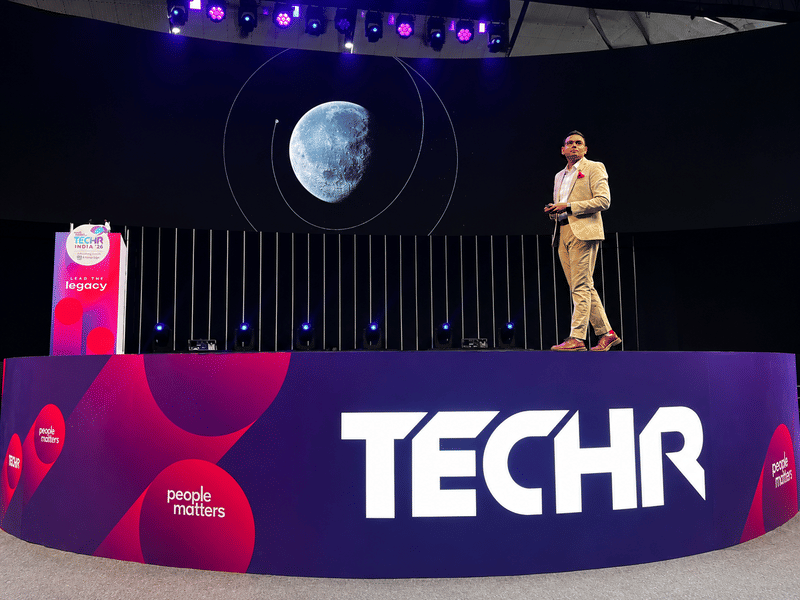
People Matters CEO calls on organisations to redesign work around human judgement, skills and AI, positioning CHROs as the custodians of enterprise transformation.
For more than a decade, organisations have approached disruption by investing in new technologies, redesigning organisational structures and reshaping workforce strategies. According to Pushkar Bidwai, CEO of People Matters, the AI era demands a more fundamental shift. The starting point is no longer technology or workforce planning. It is work itself.
Opening TechHR India 2026, Bidwai urged business and HR leaders to move beyond implementing AI tools and instead reconstruct how work is designed, distributed and delivered across organisations. His keynote established the intellectual agenda for the two-day conference, positioning work reconstruction as the defining leadership challenge as AI evolves from a productivity tool into an active participant in enterprise operations.
"Now more than ever is the time to reconstruct work, not just systems and costs," Bidwai said, adding that organisations risk applying temporary fixes to operating models that are already becoming obsolete.
The keynote drew extensively from the People Matters SHRPA HR Tech & Transformation 2026 framework, which describes 2026 as a pivotal moment in enterprise transformation. According to the framework, AI adoption is no longer the differentiator. The organisations that outperform will be those that redesign work to create stronger foundations for human judgement, collaboration and long-term business value.
A lesson in redesign, not recovery
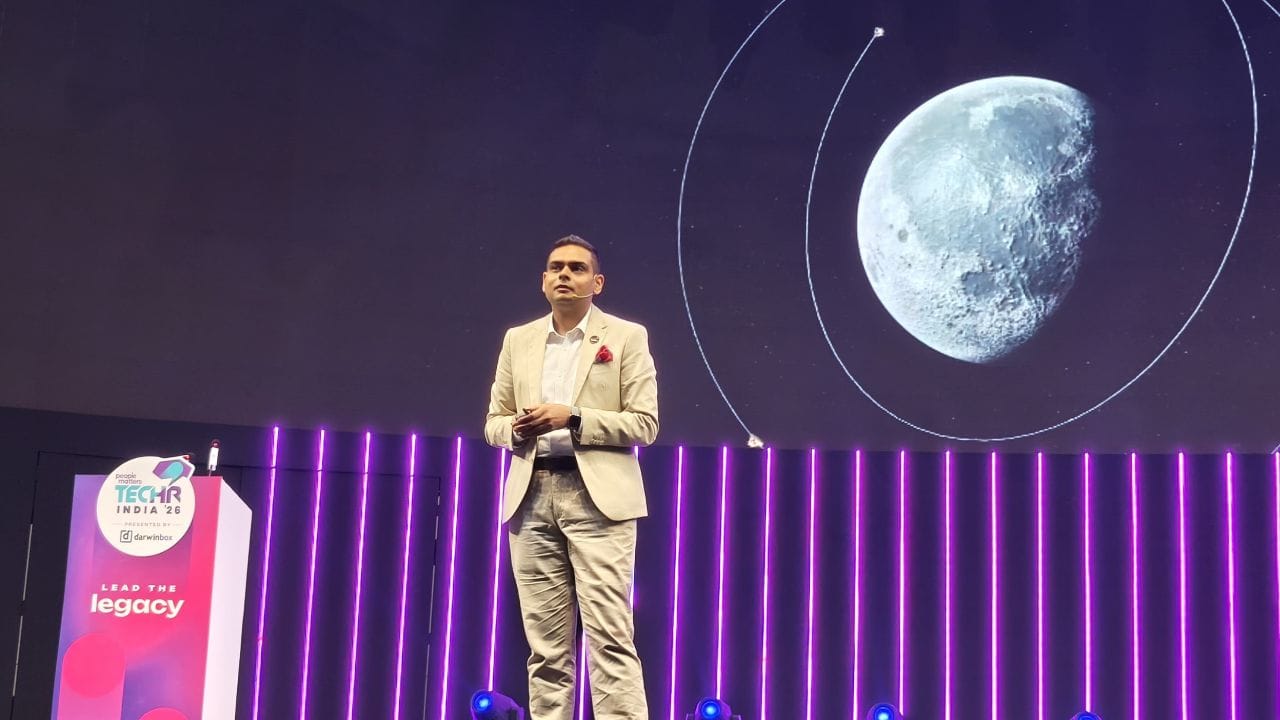
Bidwai opened the conference with the story of Chandrayaan-2, revisiting the tense final moments before the Vikram lander lost communication during its descent to the Moon in September 2019.
He recalled how the country's attention focused on those minutes of silence and the emotional images that followed. Yet, he suggested, the real lesson lay elsewhere. It emerged over the four years that followed.
Rather than viewing the mission solely as a setback, ISRO revisited every assumption behind the landing sequence. Engineers examined each task, every decision point and every contingency before redesigning the mission. The objective shifted from creating a system that assumed success to building one capable of responding when things did not go according to plan.
Bidwai used the example to draw a parallel with organisations navigating rapid advances in AI.
Many enterprises, he suggested, are introducing increasingly autonomous technologies while continuing to rely on operating models built for a different era. Sustainable transformation will require leaders to question the design of work itself rather than simply adding new technology to existing processes.
Why work, not workforce, should become the starting point
A central theme of the keynote was the distinction between work transformation and workforce transformation.
According to Bidwai, many organisations begin transformation by forecasting workforce requirements or deciding which roles should be automated. He believes the sequence should be reversed.
Leaders should first understand how work creates value, where human judgement remains essential, which tasks can be augmented through AI and which activities no longer contribute to business outcomes. Only after those decisions are made should organisations redesign roles, develop new skills and undertake workforce planning.
He described incremental improvement as insufficient for the current pace of change.
"Incremental growth is where organisations get stalled. Exponential growth happens where people are able to reimagine what it truly means," he said.
This shift also reflects a broader evolution in how work itself is changing.
The SHRPA framework traces the progression from the Industrial Revolution through the internet, the gig economy, hybrid work and generative AI. The next phase, it suggests, is fundamentally different because AI is moving beyond supporting work to participating in it. Future stages will increasingly make work judgement-led, orchestrated, adaptive and intent-driven.
For organisations, the implication is significant.
If AI becomes another participant in work, the challenge is no longer limited to introducing new tools. Leaders must redesign how work is organised between people and intelligent systems.
SHRPA reframes the enterprise mandate
The keynote also introduced the central ideas underpinning People Matters SHRPA HR Tech & Transformation 2026.
Rather than positioning AI adoption as the primary goal, the framework identifies three priorities organisations must address to remain competitive:
- Enterprise AI transformation depends on strong organisational foundations rather than additional technology.
- Human judgement becomes the primary source of competitive advantage as AI capabilities mature.
- Transformation should be measured through realised business value and people impact, not technology deployment alone.
Bidwai suggested these priorities require organisations to shift their attention away from AI implementation metrics towards organisational capability.
"If our mandate is to orchestrate survival and growth," the framework asks, "growth of what?" Its answer is the human edge, built through judgement, creativity, collaboration and capabilities that become more valuable as AI becomes more accessible.
Most organisations have yet to become AI-native
Bidwai also shared findings from the SHRPA AI Maturity Path, which groups organisations into three stages of enterprise AI maturity.
According to the framework:
- 22% of organisations are classified as Progressives.
- 32% are Adopters.
- 46% remain Laggards.
He noted that while many organisations have progressed through experimentation and functional adoption, relatively few have reached enterprise-wide transformation.
The next stage, he suggested, is becoming AI-native, where organisations decide where AI belongs at the level of work rather than simply introducing AI into existing workforce structures.
From workforce redesign to work reconstruction
To explain what work reconstruction looks like in practice, Bidwai challenged several assumptions that have traditionally shaped organisational design.
He said most enterprises still begin transformation with workforce planning, determining future headcount before examining whether the work itself should change. Instead, he proposed a framework that starts by deconstructing work into individual activities, identifying where AI should automate, augment or support work, mapping emerging skills, redesigning roles and only then planning the future workforce.
He outlined five organisational shifts that he believes will separate AI-native organisations from those merely adopting AI:
- From workforce redesign to work redesign
- From when and where work happens to what and how work happens
- From role-first to skills-first people planning
- From deploying AI to onboarding AI
- From communicating change to embedding change into culture
"Deployment is what the technology world taught us. Onboarding is human," Bidwai said, emphasising that organisational adoption requires changes in behaviour, capability and culture, not simply technology implementation.
Why technology alone cannot redesign work
To reinforce the argument, Bidwai pointed to examples where organisations discovered the limits of technology-first transformation.
He referred to Ford, which introduced AI-powered quality inspection systems across its manufacturing operations. While the technology improved defect detection, the company later recognised that automated systems lacked the judgement and experience of veteran engineers.
Ford subsequently rehired experienced quality inspectors to train AI systems, mentor younger engineers and improve decision-making. The result, Bidwai noted, was a stronger combination of machine precision and human expertise rather than one replacing the other.
He also highlighted IKEA's approach to customer service transformation.
Instead of treating AI as a cost-cutting exercise, the company analysed the customer interactions its chatbot could not resolve. Those conversations required design advice, contextual understanding and personal recommendations. Rather than reducing its workforce, IKEA reskilled around 8,500 customer service employees into remote interior design consultants, transforming what had been considered a cost centre into a revenue-generating capability.
For Bidwai, both examples illustrate the same principle.
The objective is not replacing people with AI. It is redesigning work around capabilities that technology cannot easily replicate.
Introducing work intelligence
Beyond the keynote, Bidwai unveiled a practical initiative designed to help delegates apply the ideas discussed on stage.
In partnership with a Work Intelligence company, People Matters created personalised work intelligence reports for conference attendees.
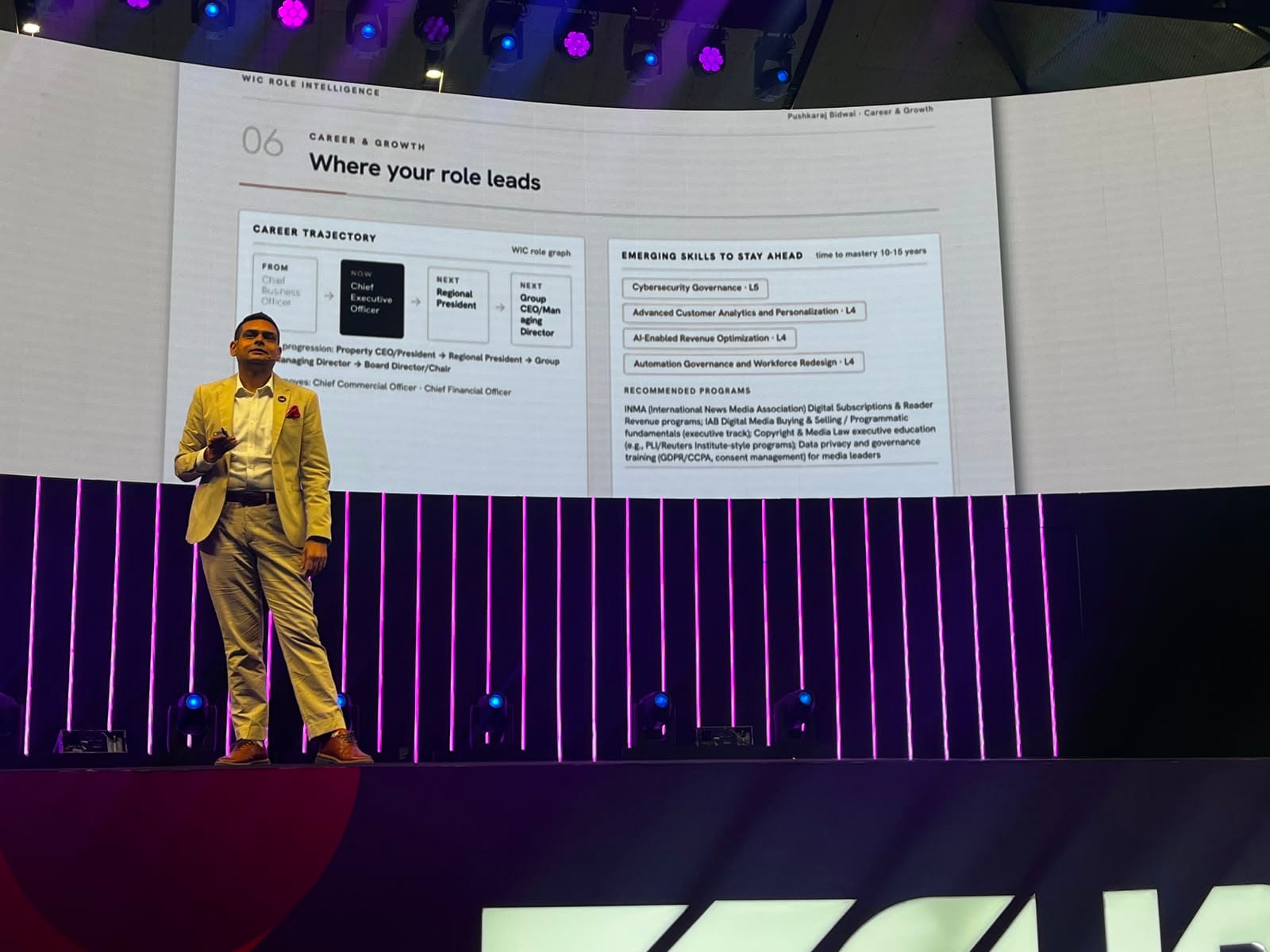
Built on data spanning more than 53,000 roles across around 50 countries, the reports analyse role expectations, automation potential, emerging skills, global demand, career pathways and areas where human judgement remains the strongest differentiator. More than 5,000 personalised reports were generated for delegates attending the conference.
Using his own role as CEO of People Matters, Bidwai demonstrated how the reports distinguish between tasks AI can perform and responsibilities requiring editorial judgement, commercial balance and strategic decision-making.
He encouraged delegates to use the reports to identify their own "human edge" before deciding how AI should augment their work.
"The question I want you to think about is: what's my true human edge?" he said.
Why CHROs should lead the next phase of transformation
The keynote concluded with a broader proposition for HR leaders.
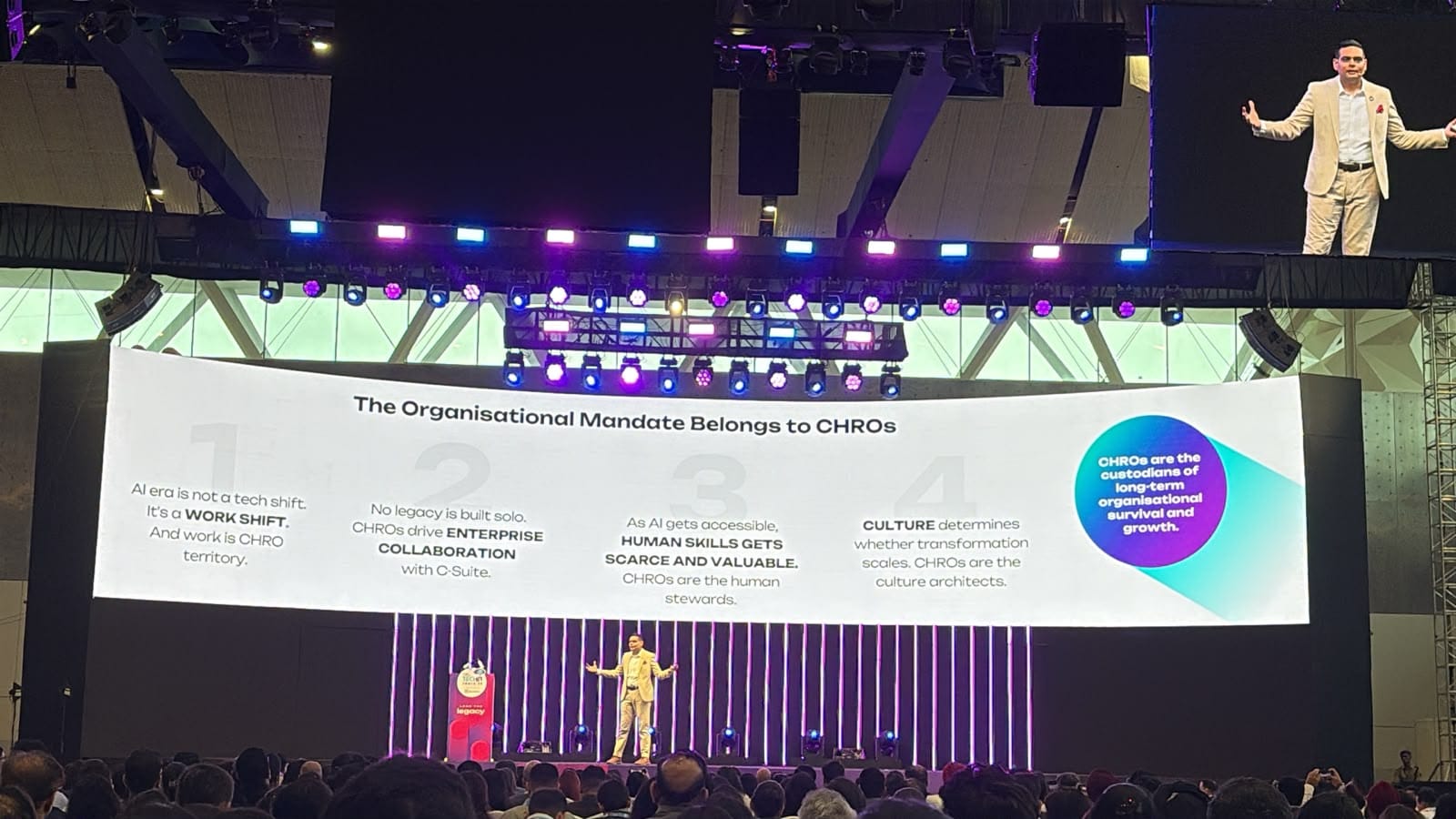
Bidwai said the AI era should not be viewed as a technology transformation but as a work transformation, placing CHROs at the centre of enterprise-wide change.
According to the SHRPA HR Tech & Transformation 2026 framework, CHROs are uniquely positioned to orchestrate future growth because they sit at the intersection of business strategy, workforce capability, technology and organisational culture. As AI becomes increasingly accessible, human capabilities become scarcer and more valuable, making HR leaders custodians of long-term organisational resilience.
During the keynote, Bidwai urged HR leaders to expand their role beyond talent management.
"Work is CHRO territory. We are custodians of work in our organisations. We are not there to manage HR and people. We are there as custodians of work," he said.
He called on CHROs to lead work deconstruction and reconstruction, strengthen collaboration across the C-suite, build future-ready skills and create organisational cultures capable of sustaining transformation.
Building organisations with a human edge
Closing the opening keynote, Bidwai returned to the conference theme of "Orchestrating Growth with a Human Edge."
He urged organisations to avoid viewing AI adoption as the destination, describing it instead as an enabler of a broader transformation centred on work, judgement and culture.
"In the process of industrialising AI, let's not forget the human edge. Can we truly build organisations that are human by design, but AI by default?" he said.
The keynote positioned work reconstruction not as another HR initiative, but as a business imperative. As AI becomes embedded across the enterprise, Bidwai's message was clear: competitive advantage will depend less on how quickly organisations adopt technology and more on how deliberately they redesign work to unlock human potential.
Author
Loading...