







Leadership
Skills are the new currency, liquidity is how they create value: Pushkar Bidwai opens LLC 2026






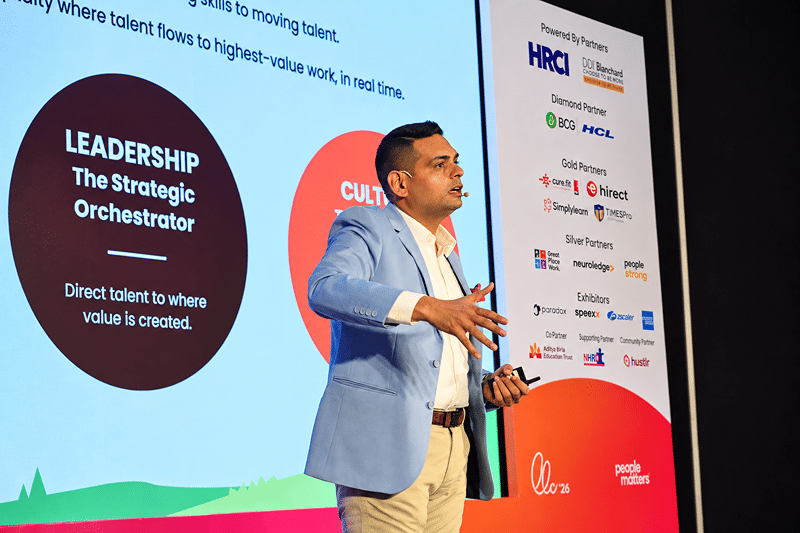
Opening the People Matters Leadership, Learning & Culture Conference 2026, CEO Pushkar Bidwai used findings from the latest SHRPA research to challenge organisations to move beyond skills inventories and build workforce liquidity as a strategic business capability.
The future of work may be powered by skills, but the future of business performance will depend on how effectively those skills move.
That was the central message from Pushkar Bidwai, CEO of People Matters, as he opened the Leadership, Learning & Culture Conference (LLC) 2026. Setting the tone for a day focused on workforce transformation, Bidwai urged organisations to rethink how they define skills intelligence in an environment shaped by artificial intelligence, shifting business priorities and growing pressure to remain agile.
For years, enterprises have invested heavily in identifying skills, mapping capabilities and building learning ecosystems. Yet many continue to struggle with a more pressing challenge: translating workforce capability into business outcomes.
According to Bidwai, the next chapter of workforce strategy will be defined not by what organisations know about their skills, but by how effectively they can mobilise those skills when business needs change.
“Skills are the new currency. Liquidity is how they create value,” he said, framing a theme that would underpin both the conference and the broader conversation around workforce transformation.
Why the skills conversation is changing
The keynote drew extensively on findings from SHRPA 2026, People Matters' flagship research examining talent, technology and business priorities across the region.
One of the clearest messages emerging from the research is that organisations have become increasingly sophisticated in understanding workforce capabilities.
However, many still rely on skills intelligence systems designed primarily for workforce planning, learning and development, and career progression. According to the research, these systems often struggle to capture skills in motion, changing business realities and the broader context in which talent decisions are made.
Bidwai positioned this gap as a growing business risk.
As AI accelerates change across industries, workforce requirements are evolving faster than traditional planning cycles. In such an environment, static skills inventories offer limited value if organisations cannot rapidly deploy talent to emerging priorities.
The challenge, therefore, is no longer visibility. It is velocity.
India's workforce priorities are becoming more nuanced
The research presented during the keynote highlights how workforce expectations are evolving alongside technological change.
Indian organisations increasingly require a combination of technical expertise, AI capability and distinctly human strengths. According to SHRPA 2026:
- 37% of Indian leaders identified demand for deep expertise combined with AI fluency in leadership roles
- 21% highlighted the growing importance of human judgement capabilities across the workforce
The findings suggest that organisations are moving beyond narrow conversations around digital skills. Leaders are now looking for employees who can combine domain knowledge with technological understanding while applying critical thinking and judgement in increasingly complex environments.
For business leaders, this represents a significant shift. Competitive advantage is no longer being shaped solely by access to technology. It is increasingly determined by how effectively people work alongside it.
AI adoption is advancing, but transformation remains uneven
Artificial intelligence featured prominently throughout the keynote, reflecting its growing influence on workforce strategy.
The SHRPA findings show that AI adoption has gained traction across several HR functions, although progress remains uneven:
- Recruitment: 50%
- HR Operations: 43%
- Learning and Development: 39%
- Performance Management: 34%
- Employee Experience: 29%
The data points to an interesting pattern. Organisations have moved fastest in areas focused on efficiency and process optimisation, while adoption within employee development and experience functions remains comparatively slower.
More revealing, however, were the barriers identified by the research.
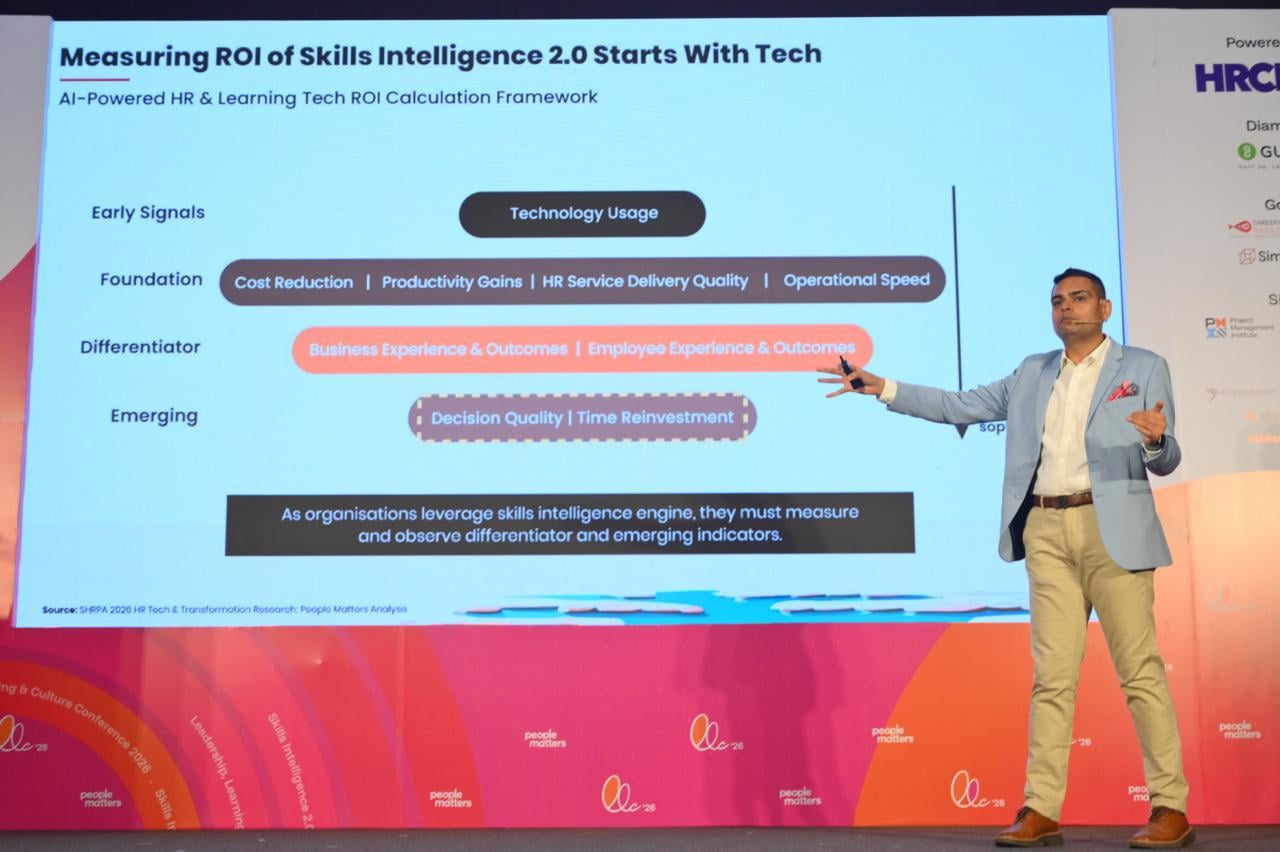
According to SHRPA, leadership understanding of AI and its business implications, leadership trust in AI, and the ability to measure return on investment continue to be among the biggest challenges organisations face when scaling adoption.
Organisations are investing in skills, but not necessarily in careers
Among the strongest insights shared during the opening address was a growing contradiction in workforce investment priorities.
The research indicates that organisations plan to increase spending on areas such as agentic AI workflows, talent attraction and workforce upskilling. At the same time, they anticipate lower investment in career growth and succession planning, onboarding effectiveness and personalised employee experiences.
This disconnect raises important questions about how organisations intend to realise value from their learning investments.
Building skills remains essential. However, employees also require opportunities to apply those capabilities, move into new roles and contribute to emerging business priorities. Without those pathways, capability-building efforts risk delivering limited organisational impact.
The research highlights workforce liquidity as the mechanism that connects learning with business outcomes. Skills development alone cannot close capability gaps if organisations lack the structures needed to redeploy talent effectively.
A blueprint for Skills Intelligence 2.0
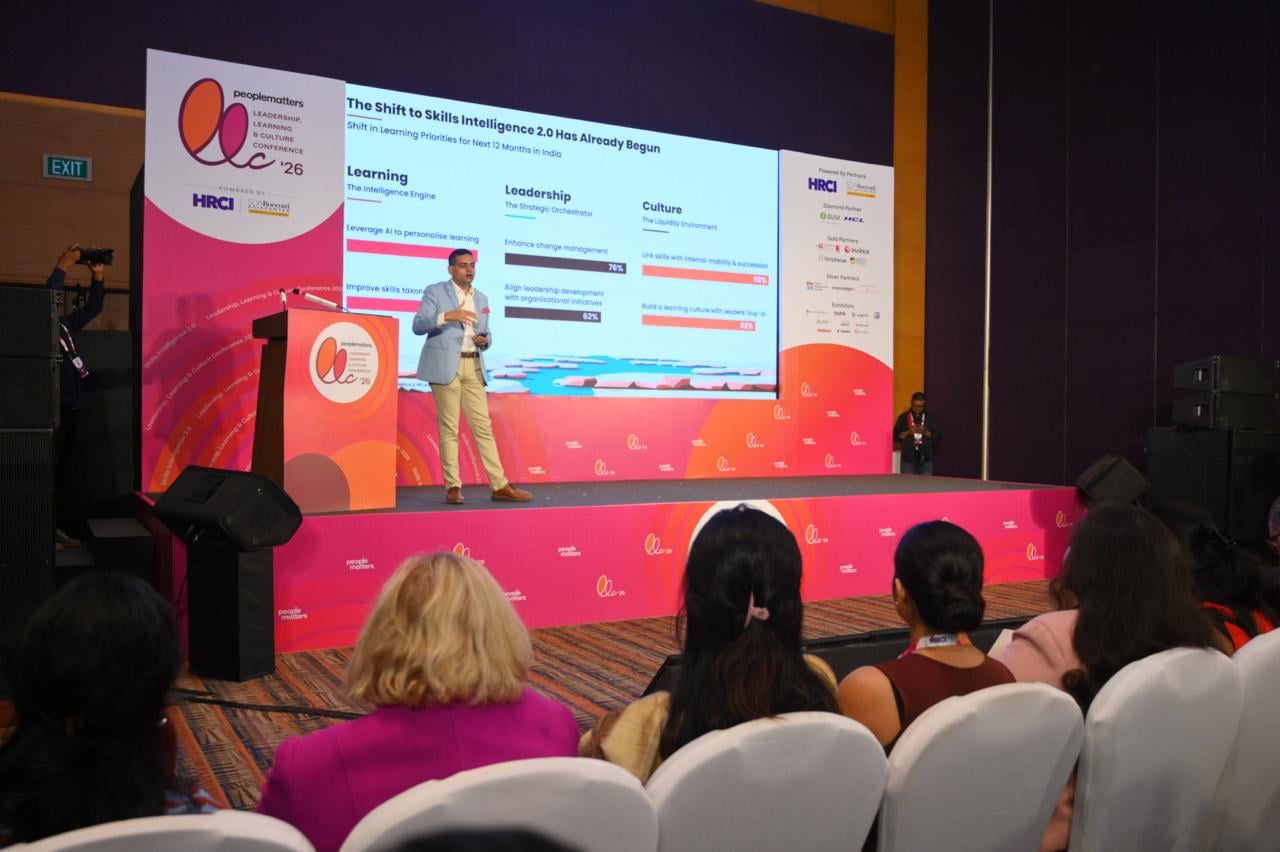
Against this backdrop, Bidwai introduced what People Matters describes as Skills Intelligence 2.0, an evolution of traditional skills strategies designed to support workforce liquidity.
The framework rests on three interconnected pillars:
- Learning, which functions as the intelligence engine capable of anticipating future skills requirements.
- Leadership, which acts as the orchestrator directing talent towards areas where value is being created.
- Culture, which enables mobility, learning and adaptability to become embedded organisational behaviours.
Rather than treating skills as static assets, the model encourages organisations to view talent as a dynamic resource that can be deployed, redeployed and developed in line with changing business needs.
Supporting this shift, the research identified several emerging priorities for organisations over the coming year, including AI-powered personalised learning, stronger skills taxonomies, leadership alignment and closer integration between skills and internal mobility.
The next frontier is real-time workforce intelligence
The keynote also highlighted a capability gap that many organisations continue to face.
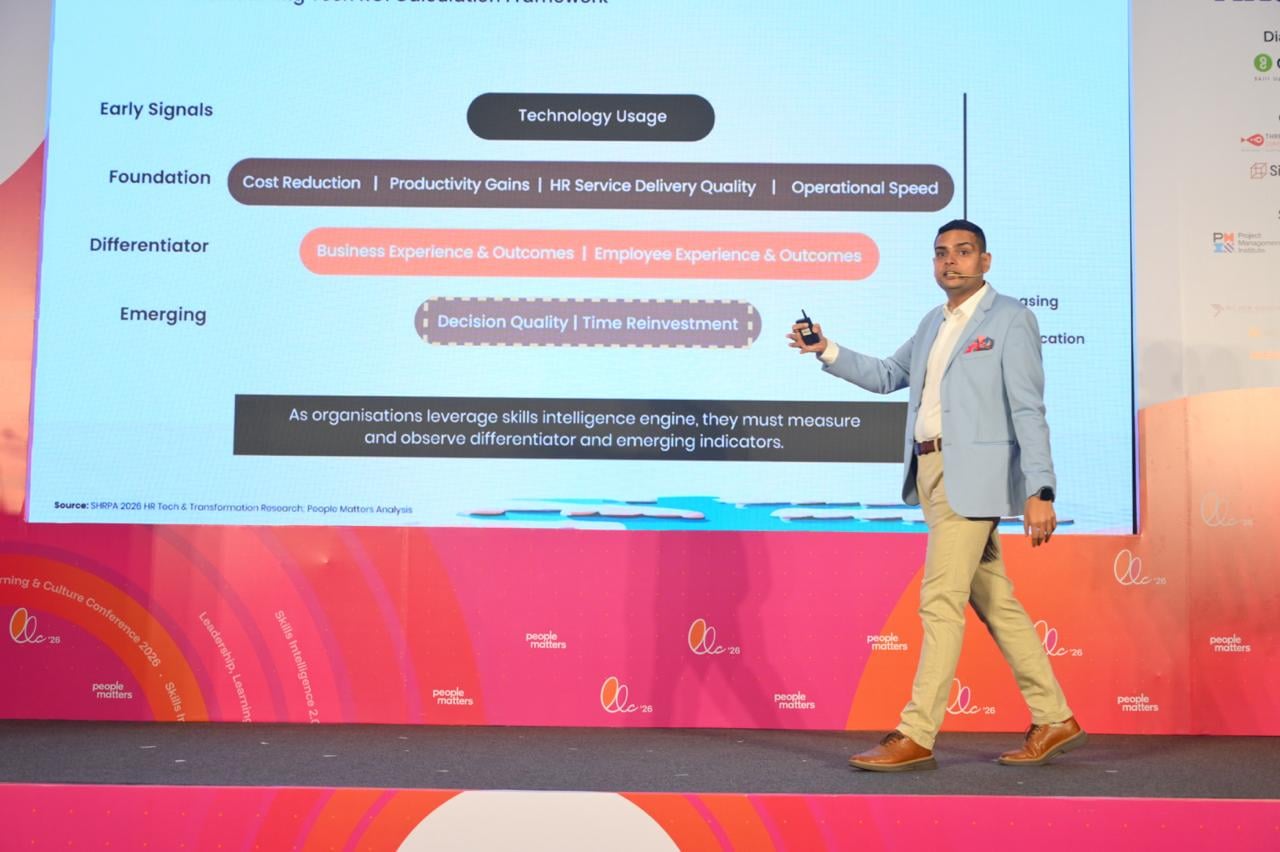
According to SHRPA 2026, more than half of HR and business leaders in India believe current HR technology platforms are not adequately addressing skills intelligence and real-time skill mapping needs.
This finding underscores a broader challenge confronting enterprises. As workforce demands evolve more rapidly, organisations need more than periodic assessments and static databases. They require continuous visibility into capabilities, emerging gaps and opportunities for redeployment.
Without that visibility, workforce liquidity becomes difficult to achieve at scale.
From capability building to capability movement
The opening keynote was less a discussion about skills and more a discussion about organisational adaptability.
Throughout the session, Bidwai returned to a recurring theme: future-ready organisations will not be defined by the size of their talent pools or the sophistication of their learning platforms. They will be defined by how effectively they move capability across the business when circumstances demand it.
As organisations navigate AI disruption, economic uncertainty and evolving workforce expectations, the ability to connect skills, leadership and mobility is becoming increasingly important.
The conversation launched at LLC 2026 suggests the next phase of workforce transformation has already begun. The focus is shifting from understanding skills to activating them. In that environment, workforce liquidity is no longer an HR aspiration. It is emerging as a business imperative.
Author
Loading...