







Leadership
Tata Power bets on local talent ecosystems to power India's energy transition





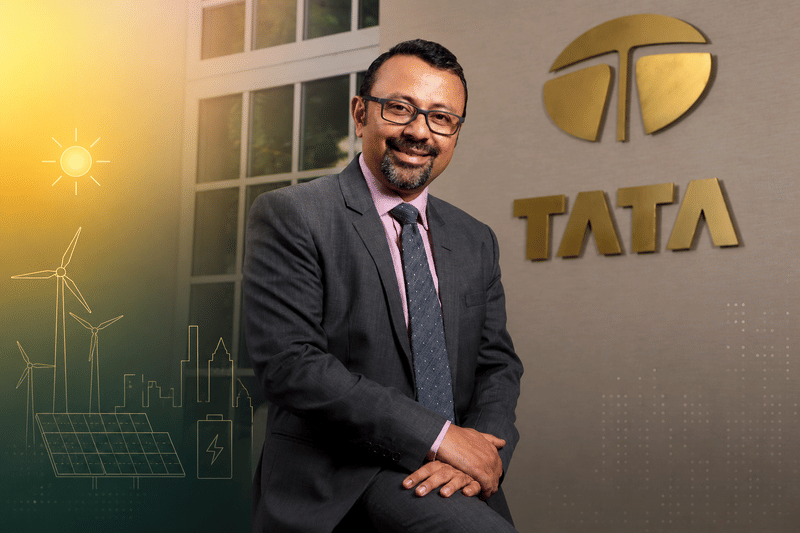
As India's clean energy ambitions accelerate, Tata Power's Himal Tewari says the real challenge may not be building solar parks or deploying new technologies, but ensuring the workforce is ready to support them.
India's energy transition is creating a new workforce challenge.
The conversation around clean energy often revolves around gigawatts, investments, policy incentives and technological breakthroughs. Less attention is paid to the people required to make those ambitions a reality.
Who will install solar systems in emerging markets? Who will maintain decentralised energy networks? Who will operate increasingly sophisticated storage technologies? And perhaps most importantly, where will that talent come from?
For Himal Tewari, CHRO, Chief Sustainability & CSR at Tata Power, the answer lies in building local talent ecosystems rather than relying on traditional approaches to workforce development.
As renewable energy projects expand across the country, he believes talent availability is becoming a strategic issue for the sector, one that could directly influence the pace of India's clean energy transition.
"Skilling in the clean energy transition is intrinsically strategic because it directly impacts our ability to deliver on large-scale renewable ambitions and project timelines."
The statement reflects a growing reality across industries experiencing rapid technological change. Infrastructure can be built. Capital can be deployed. Technology can be acquired. Developing a workforce capable of supporting transformation at scale often takes significantly longer.
At Tata Power, Tewari says skilling has therefore moved beyond the realm of HR programmes and training interventions.
"At Tata Power, skilling is therefore embedded into business strategy, not treated as a downstream HR intervention."
The talent challenge hiding behind clean energy growth
The clean energy sector is expanding at a pace that few industries have experienced in recent years.
New technologies continue to emerge. Existing roles are evolving. Entirely new occupations are beginning to take shape.
Yet workforce readiness has not always kept pace.
According to Tewari, one of the sector's biggest challenges is the widening gap between industry requirements and the capabilities available in the talent market.
"One of the biggest challenges is the pace at which the clean energy landscape is evolving often outstripping the readiness of the available talent pool."
The gap is particularly visible in specialised areas such as:
• Solar PV systems
• Hi-tech manufacturing
• Battery storage
• Energy analytics
These are not traditional power sector disciplines. They sit at the intersection of engineering, technology, analytics and sustainability, creating demand for skills that many educational and vocational systems are still adapting to.
The challenge becomes even more complex because renewable energy projects rarely operate from a single location.
Unlike conventional industries that concentrate talent in major hubs, clean energy projects are often distributed across multiple regions.
"Building a talent pipeline at the required scale across geographies is complex."
As a result, companies need workforce solutions that extend beyond metropolitan talent pools.
"Clean energy projects are often distributed, requiring localised skill ecosystems that can support installation, operations, and maintenance in diverse regions."
Why Tata Power is focusing on ecosystems rather than interventions
Many skilling initiatives focus on training individuals for immediate employment opportunities.
Tewari believes that approach alone is insufficient.
"Sustainable impact in skilling lies in building ecosystems rather than interventions."
The distinction is important.
An intervention addresses an immediate requirement. An ecosystem creates long-term capability.
For Tata Power, that means investing in infrastructure and partnerships designed to support workforce development over an extended period.
Among the initiatives highlighted by Tewari are:
• Establishing Solar Centres of Excellence within ITIs
• Empanelling industry experts for content creation and training delivery
• Deploying mobile skilling units to expand access
• Aligning programmes with national frameworks and certifications
According to him, the objective is not merely to train workers for Tata Power's projects.
"Our approach goes beyond training individuals, where we build local talent pools that support not only our projects but also the broader energy ecosystem, including contractors, channel partners, and communities."
The emphasis on local capability reflects the realities of a sector where installation, operations and maintenance activities often occur close to the communities they serve.
"This helps create self-sustaining employment ecosystems, ensuring that skilling efforts translate into enduring livelihoods rather than short-term project engagement."
At a time when many industries continue to debate the long-term impact of automation and AI on jobs, the clean energy sector presents a different challenge: creating enough skilled workers to meet growing demand.
The industry-academia disconnect remains a hurdle
The workforce challenge is not simply about numbers.
It is also about relevance.
As new technologies reshape the energy landscape, educational institutions face pressure to evolve curricula and training frameworks at a similar pace.
Tewari points to a persistent disconnect between industry needs and traditional academic pathways.
"Another challenge lies in aligning traditional vocational and academic institutions with evolving industry needs."
While various government initiatives have attempted to narrow that gap, he believes deeper collaboration is required.
"Bridging this gap requires deep industry-academia collaboration and continuous curriculum evolution to ensure relevance and employability."
The observation mirrors concerns raised across multiple sectors, where employers increasingly prioritise job-ready skills while educational institutions work to keep pace with changing market demands.
The future power sector workforce will look very different
The workforce emerging from the clean energy transition may bear little resemblance to the one that powered the industry in previous decades.
Traditional job roles are already beginning to change.
"The clean energy transition is fundamentally reshaping the talent landscape of the power sector."
According to Tewari, future roles will require a combination of capabilities that historically existed in separate disciplines.
"Traditional roles are evolving into more integrated, multi-disciplinary functions that combine engineering expertise with digital, analytical, and systems thinking capabilities."
Alongside evolving roles, entirely new jobs are emerging.
"We are also seeing the emergence of entirely new roles across solar manufacturing, installation, and decentralised energy systems, driven by policy incentives and technological advancements."
The shift is also altering expectations of leadership.
Leaders must now navigate transformation while balancing existing operations and future growth opportunities.
"Leaders will increasingly need to collaborate across ecosystems and drive change in a highly dynamic environment, making adaptability and strategic foresight as critical as technical excellence."
The message is clear: future leadership in the power sector will require far more than operational expertise.
Beyond technical skills, purpose may become a differentiator
While discussions about future jobs often focus on technical capabilities, Tewari believes the defining traits of the next generation workforce may be distinctly human.
"While technical expertise will remain foundational, the future clean energy workforce will be defined by its adaptability, learning agility, and purpose-driven mindset."
As technologies evolve and operating models continue to shift, continuous learning becomes a necessity rather than a career advantage.
"Continuous learning will be essential to remain relevant."
Equally important, he says, is a commitment to sustainability and impact.
"Individuals are not just executing roles but are aligned to the larger objective of creating environmental and societal impact."
Collaboration, safety, ethics and quality will also play increasingly important roles, particularly in operational environments where risks remain significant.
At Tata Power, Tewari notes that workforce preparation includes both skill development and safety training through the Tata Power Skill Development Institute.
Building the workforce behind India's energy ambitions
India's clean energy transition is frequently measured through capacity additions, investments and policy milestones.
Yet every renewable energy target ultimately depends on people.
The engineers designing systems. The technicians maintaining assets. The installers working in remote locations. The leaders navigating transformation. The communities supporting new infrastructure.
For Tewari, creating that workforce requires a shift in thinking, from short-term training initiatives to long-term talent ecosystems.
The challenge facing the sector is not simply creating jobs. It is ensuring the right skills exist in the right places at the right time.
And as the clean energy transition gathers pace, that workforce question may become just as important as any technology or infrastructure milestone.
As Tewari puts it: "Ultimately, it is the combination of skill, adaptability, and purpose that will define the workforce powering the clean energy transition."
Topics
Author
Loading...