







Leadership
What every exit taught Tata Consumer’s Global CHRO about internal mobility






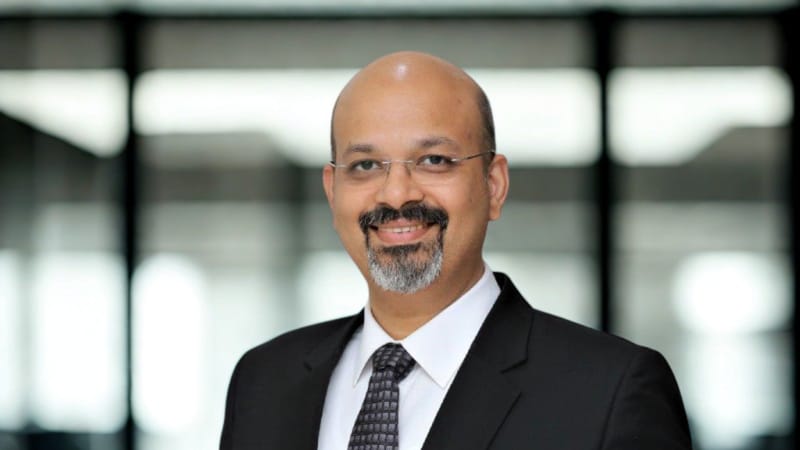
Amid disruption and transformation, Tata Consumer Products turned attrition into an engine of internal mobility and innovation.
When Tata Consumer Products recorded a 26% attrition rate, it didn’t trigger a panic response—it triggered a plan. In a business environment where disruption is constant and the war for talent is unrelenting, the company’s HR leadership turned inward for answers. What emerged was not just a strategy for retention, but a system-wide shift that positioned internal mobility as a lever for transformation.
Tarun Verma, Global Chief Human Resources Officer at Tata Consumer Products, shares how a robust people agenda—deeply embedded in the company’s business strategy—has enabled the organisation to treat attrition not as a failure, but as a fulcrum for growth.
From People Strategy to People Agenda
"We don’t have a ‘people strategy’—at least not a stand-alone one," says Verma. Instead, what Tata Consumer has built is a tightly integrated people agenda aligned with its six strategic business pillars and executed through 11 core people processes. This fusion ensures HR doesn’t operate in a silo but becomes a lever of organisational resilience.
In practical terms, this means investing in leadership development and cross-functional mobility as much as in performance metrics or operational efficiency. Initiatives such as Aarohan, Leadership Voyages, and Leadership Horizons support this effort across different life stages and organisational levels.
"Ultimately, we’re not just reacting to change—we’re designing for it," Verma affirms. "Our people are at the heart of our transformation into a premier global FMCG company."
Reframing Attrition: The #ForBetterOpportunities Approach
At a time when many organisations seek to contain attrition, Tata Consumer Products has chosen to understand it. Using analytics to distinguish between aspirational exits and regrettable losses, the company takes a clear-eyed view of talent movement.
Their response? The launch of the #ForBetterOpportunities initiative—not as a retention band-aid but as a systemic solution. Instead of trying to prevent exits at all costs, Tata Consumer focuses on creating better opportunities internally. Talent has transitioned across functions and geographies, from regional sales to e-commerce, and from plant HR to corporate OD. Each of these shifts is recognised through the 'Trailblazer Tracks' programme.
"We’re proud that our talent is sought after—it reflects their strength and readiness," Verma notes. "But retention, for us, is not about holding people back—it’s about inspiring them to stay."
Internal Mobility as a Growth Engine
One of the cornerstones of Tata Consumer’s HR philosophy is what Verma describes as a "Buy and Build" approach to talent. The 'build' component centres on creating meaningful pathways for internal growth, and it's here that internal mobility becomes both a cost-saving measure and a cultural catalyst.
Programs like Skill Up offer employees access to personalised learning journeys aligned with their functional aspirations—be it digital marketing, sustainability, or AI. Leadership development is embedded across levels through curated programmes, and global roles are surfaced internally before external hiring is considered.
For roles that are transformation-critical, such as leading e-commerce initiatives, external hiring is selective and strategic. The priority, however, remains internal capability-building.
"Internal growth is not just cost-effective—it’s culture-strengthening," Verma explains. "And we track the return on these investments carefully to ensure long-term workforce productivity."
Merging Legacy with Next-Gen Talent
In the last few years, over 650 professionals have joined Tata Consumer in emerging functions such as AI, category marketing, and e-commerce. Integrating this influx of next-gen talent into a legacy organisation could have led to culture clashes or siloed teams—but Tata Consumer has navigated the challenge with intentional design.
"We’ve created cross-functional squads that combine seasoned expertise with new-age capabilities to solve business challenges," says Verma. One example is the Tata Simply Better product line, where digital experts and legacy category managers co-created a health-forward innovation that remains rooted in the company’s brand promise.
The secret? A shared language of growth mindset behaviours and a recognition platform called MORE that celebrates collaborative success. “Innovation without friction,” as Verma puts it, is made possible by leadership that acknowledges both heritage and innovation.
Confronting Cultural Blind Spots
Growth, however, is never automatic. One of the blind spots Tata Consumer encountered was the assumption that scaling would naturally bring about a growth mindset. It didn’t. That had to be built.
The company responded by introducing five Growth Mindset Behaviours, embedding them in performance and recognition systems. Transparency was prioritised through frequent townhalls and feedback forums. And safe spaces were created for employees to navigate change, speak up, and experiment.
Leadership role-modelling has been instrumental in this shift. As Verma puts it, "Our CEO reminds us we’re only 15 minutes into a three-hour movie—the ambition is there, but the story is still unfolding."
Measuring the Leadership Dividend
At the core of internal mobility lies a deeper commitment to building leaders—not just managers. Through its North Star framework, Tata Consumer ensures every employee connects to a broader purpose. Leadership development isn’t reserved for the top echelons—it is democratised across levels through programmes like ACE Teams and Leadership Horizons.
"The leadership dividend we’re after is not just about business acumen," Verma says. "It’s about creating clarity and confidence in the face of uncertainty—leaders who empower, listen, and act with empathy."
Psychological safety, in this context, becomes a business driver. When teams feel safe to fail, innovate, and challenge norms, transformation accelerates. This is how Tata Consumer sustains a high-change environment without disengagement or burnout.
Moreover, embedding leadership into the ethics and sustainability agenda ensures that purpose is not performative. It becomes part of how teams think, lead, and make decisions.
Continuous Learning Without Fatigue
To be future-ready is to be learning-ready—and Tata Consumer is conscious of the difference between being a learning organisation and simply being training-heavy.
Learning is tied to progression and purpose, not compliance. Employees can access peer learning circles, gamified modules, and open libraries tailored to business needs. Recognition for learning achievements is built into platforms like MORE, and programmes such as Aarohan or Leadership Horizons align with business strategy.
Importantly, Verma emphasises that employees do not see learning as an obligation, but as a tool for career advancement. This mindset shift is crucial in maintaining momentum without fatigue.
Strategic alignment also ensures that learning is not abstract. Tata Consumer taps into Tata Group-wide resources such as TMTC (Tata Management Training Centre), enabling cross-company learning and exposure that strengthens both individual capability and group cohesion.
A Blueprint for Enduring Workforce Strategy
All of these efforts—internal mobility, continuous learning, cultural introspection, and leadership development—converge on one goal: building a workforce that doesn’t just survive disruption but is designed to thrive within it.
"Resilience isn’t about systems alone—it’s about people who are inspired and empowered," Verma concludes. In a world where transformation is the only constant, Tata Consumer’s internal mobility model offers a playbook worth examining: listen to talent, move them meaningfully, and let growth follow.
It’s not just attrition that they’ve reframed—it’s how they’ve made change work for them.
Topics
Author
Loading...