







Leadership
Why expertise succession is as important as leadership succession: GE Aerospace CHRO






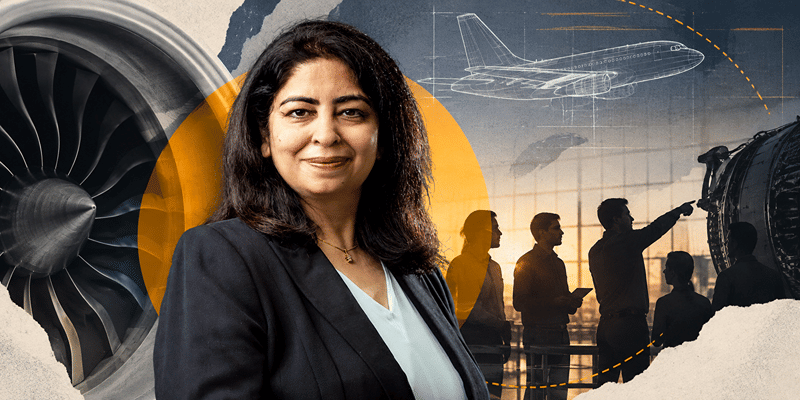
As organisations confront retiring workforces, accelerating technology shifts and growing AI adoption, GE Aerospace's South Asia CHRO Neerja Bhardwaj explains why preserving expertise has become as critical as developing future leaders.
For decades, succession planning has largely focused on leadership pipelines. Yet as organisations become more technology-driven and specialised knowledge grows harder to replace, a different challenge is moving into focus.
How do companies preserve expertise that has taken years, sometimes decades, to build?
In a conversation with People Matters, Neerja Bhardwaj, Chief Human Resources Officer, South Asia, GE Aerospace, states that organisations must start thinking about expertise succession alongside leadership succession, particularly in industries where institutional knowledge, technical judgement and accumulated experience underpin long-term performance.
Her perspective comes at a time when many sectors are facing demographic shifts, rapid technological change and increasing pressure to capture knowledge before experienced professionals retire.
Why knowledge transfer cannot be left to chance
In aerospace, product lifecycles often extend far beyond typical business planning horizons.
According to Bhardwaj, engines can remain in service for thirty or forty years, while many careers in the sector span multiple decades. As a result, engineering know-how must be deliberately passed from one generation to another.
She describes critical knowledge as infrastructure that needs to be built and transferred intentionally rather than relying on informal handovers.
Key elements of this approach include:
- Learning from experienced subject matter experts.
- Using digital tools to accelerate knowledge transfer.
- Capturing engineering decisions through digital systems.
- Building global networks that distribute expertise across teams and locations.
Bhardwaj notes that documentation alone is insufficient. Instead, organisations need collaborative networks that allow knowledge to flow across geographies, programmes and generations.
She cites the contribution of GE Aerospace's India Technology Centre in Bengaluru, which has supported programmes including GEnx, GE9X and LEAP, while also contributing to future technologies such as CFM RISE and hybrid electric aviation initiatives.
Moving beyond traditional succession planning
As products become more technologically sophisticated, Bhardwaj believes succession planning must extend beyond leadership roles.
"The most valuable engineering knowledge is often the hardest to write down," she says, describing expertise as pattern recognition developed over decades of experience.
Rather than viewing succession as replacing a single individual, she suggests organisations should focus on preserving what she calls a capability network.
At GE Aerospace, this involves:
- Mapping where critical knowledge resides.
- Building technical talent benches alongside leadership benches.
- Creating dual-career pathways for technical experts.
- Supporting structured mentorship programmes.
- Designing rotational assignments and early-career development opportunities.
The objective is not only to transfer expertise but also to create environments where experienced professionals and younger talent learn from one another.
Bhardwaj points out that younger engineers often bring strong digital capabilities and familiarity with emerging technologies, creating opportunities for mutual learning and innovation.
Why institutional memory still matters in the age of innovation
The tension between innovation and institutional memory is a challenge many organisations face.
Bhardwaj rejects the idea that accumulated knowledge slows progress.
"In aerospace, institutional memory is not a brake on innovation. It is the guardrail that lets you innovate safely," she says.
She explains that programmes focused on next-generation technologies continue to draw upon decades of engineering experience, historical data and lessons learned.
Modern digital systems have strengthened this process by allowing organisations to maintain traceability around decisions while continuing to innovate at speed.
Within GE Aerospace, these principles are embedded through FLIGHT DECK, the company's proprietary lean operating system, which emphasises safety, quality, delivery and cost while supporting continuous improvement.
Leadership's role in preventing expertise silos
Technology alone cannot solve the expertise challenge.
Bhardwaj places significant responsibility on leaders to create environments where learning is continuous and knowledge sharing becomes part of organisational culture.
She identifies several leadership priorities:
- Recognising and rewarding mentorship.
- Encouraging senior leaders to remain active learners.
- Creating communities of practice.
- Building cross-functional and cross-site collaboration.
- Protecting time for learning and development.
According to Bhardwaj, expertise silos often emerge from organisational structures and habits rather than deliberate behaviour. Leaders therefore play a critical role in building mechanisms that allow lessons learned in one part of the organisation to benefit others.
She adds that continuous learning must be planned and prioritised rather than treated as an activity employees pursue outside working hours.
Lessons for organisations beyond aerospace
While aerospace has unique characteristics, Bhardwaj believes many of its workforce challenges are becoming increasingly relevant across industries.
She points to workforce ageing trends affecting sectors including:
- Energy
- Healthcare
- Advanced manufacturing
- Infrastructure
According to industry estimates cited by Bhardwaj, roughly one-third of the aerospace and defence workforce is over the age of fifty-five.
As experienced professionals retire, organisations face growing pressure to protect institutional knowledge and maintain continuity.
She identifies four key lessons:
- Treat knowledge continuity as a business continuity risk.
- Build talent pipelines before capability gaps emerge.
- View redundancy in expertise as resilience rather than inefficiency.
- Prioritise deliberate knowledge transfer mechanisms.
The message is straightforward: expertise cannot be rebuilt overnight once it disappears.
Why CEOs need to think differently about expertise
Looking ahead, Bhardwaj believes expertise may become both an organisation's most valuable and most vulnerable asset.
"I would put it plainly: your most valuable asset is your talent," she says.
For business leaders, she recommends treating knowledge continuity with the same seriousness typically applied to supply chain disruptions or cybersecurity risks.
Her advice centres on four priorities:
- Establish ownership and metrics around knowledge continuity.
- Continue investing in talent development pipelines.
- Use AI and digital tools to augment human judgement rather than replace it.
- Create cultures where employees want to stay, learn and mentor others.
As AI transforms industries and workforce demographics continue to shift, organisations may increasingly find that competitive advantage depends not only on attracting talent but also on preserving the expertise already within their walls.
For Bhardwaj, the future belongs to organisations that can successfully convert individual knowledge into institutional capability.
Topics
Author
Loading...