







Leadership
Women start strong in biopharma — so what holds them back midway up? Bharat Serum CHRO explains






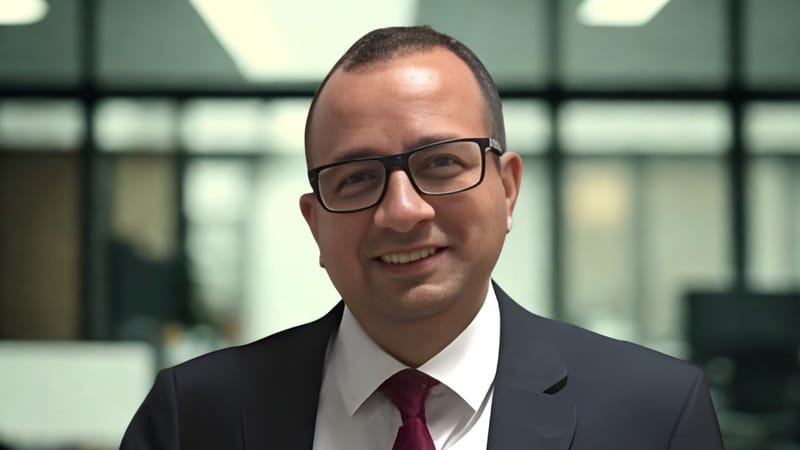
Bharat Serum and Vaccines CHRO Nilesh Kulkarni on the real reasons women drop off mid-career — and what workplaces must redesign to fix it.
Women don’t exactly avoid biopharma. In fact, they enter the sector in solid numbers, often with the same ambition and credentials as their male peers.
And yet, somewhere between the early career buzz and the senior leadership table, the pipeline starts to thin. Quietly. Gradually. Predictably.
So what’s going on?
For Nilesh Kulkarni, Chief Human Resources Officer at Bharat Serums and Vaccines (BSV), the reasons aren’t mysterious — they’re structural, cultural, and frankly, very familiar.
“While some of the common reasons appear to be the additional responsibilities of family and motherhood, sometimes even lack of Sponsorship & Mentorship could also be the reason for the plateau at senior levels,” he said.
The issue, in other words, isn’t that women don’t start. It’s that the system doesn’t always let them stay — or rise.
The mid-career cliff is real
Biopharma is one of those industries where the entry-level picture looks encouraging. Women join, contribute, perform.
But as careers move into the messy middle — the stage where leadership pathways start narrowing — the drop-off becomes visible.
Kulkarni’s focus, he said, has been on building environments where women don’t just enter, but succeed.
“As a HR professional who has been associated with this industry, my focus has been on how to create a culture wherein women colleagues can succeed,” he said.
At BSV, he noted, the shift has been intentional.
“In my current role as the CHRO at BSV, I am proud to share that our gender diversity ratio has doubled in the last five years,” he said, pointing to leadership commitment and progressive people practices.
As a women’s health company, he added, BSV has seen “first hand, the power of diversity as a strategic accelerator for our business.”
Mentorship is not a nice-to-have
One of the biggest reasons women plateau, Kulkarni argued, is the absence of sponsorship and structured mentoring — the kind that actually moves careers forward.
BSV’s answer has been an initiative called WOMENTORING.
“Every woman colleague is assigned a mentor (male or female) to guide her in her professional journey,” he said.
The results, he added, have been tangible: “today we have a 3x rise in women in senior leadership roles.”
Importantly, the programme doesn’t treat mentoring as casual career advice over coffee. Mentors themselves are trained, with the goal of creating “gender-agnostic mentors” who can support women’s growth paths with seriousness and skill.
Sales roles: where the challenges get real
If mid-career progression is one pressure point, field-facing roles are another.
“Sales and field-facing roles remain particularly challenging for women,” Kulkarni acknowledged.
“In our line of work, front-line medical representatives primarily due to the nature of the work, face the challenge of meetings later in the day,” he said.
And then there’s the part companies often don’t talk about loudly enough: “the infrastructure on the field is not too gender friendly.”
“These challenges are often underestimated,” he said.
At BSV, one response has been a customised travel allowance structure designed for “safety, security and convenience” for women colleagues in sales.
The policy–reality gap
Most organisations today have diversity policies. Many have glossy decks. Some even have targets.
But Kulkarni’s point is sharper: the real difference shows up in daily experience — and culture is the deciding factor.
“I believe that the culture of an organization has a very critical role in shaping the everyday experience of employees,” he said.
At BSV, he described a values-based approach built on “Transparency, Accountability, Agility and Collaboration.”
Culture, in this framing, is not a slogan. It’s the operating system.
Life-stage support is not optional anymore
Women’s decisions to stay or step away, Kulkarni said, are shaped by practical realities — not lack of ambition.
“It is our responsibility to provide workable and practical everyday solutions,” he said.
That includes taking care of travel challenges, designing workloads with balance and flexibility, and supporting women through different stages: “from marriage to pregnancy, and from motherhood to menopause.”
Managers can make — or break — progression
If culture is the backdrop, managers are the main characters in the everyday workplace story.
“Inclusive Leadership is now a KPI,” Kulkarni said.
Managers, he added, must understand that diversity “can no longer be seen as a mere tick-box activity. It is an integral part of the business strategy.”
He pointed to sponsorship, constructive feedback and objective succession planning as critical levers for helping women move from middle management into senior leadership.
At BSV, managers are also trained to have “feed forward conversations” — designed to strengthen performance while increasing empathy.
An internal survey, he said, showed managers demonstrating “increased empathy while expressing feedback, making their team members feel valued.”
What works — and what just looks good on paper
Plenty of interventions exist: allowances, flexibility, wellbeing support.
But Kulkarni believes the real shift comes when organisations stop asking women to adapt to systems built without them in mind.
“When we stop mentoring women to ‘fit’ a male-designed system and instead redesign the system to fit talent — irrespective of gender — it will make a real impact,” he said.
BSV’s diversity practices include leadership programmes for women, enhanced travel allowances, paternity leave, menstrual leave, referral incentives for women hiring, and childcare support through a creche facility.
The future: shifting the needle where it’s hardest
Kulkarni is clear that progress cannot stay cosmetic.
“Meaningful progress over the next few years will be defined by shifting the needle where it is hardest,” he said.
That could mean “walking into an all-woman pharma manufacturing plant in India” or building sustainable returnship programmes for women on sabbaticals.
“It is no longer about just being nice to women, it is about institutionalizing inclusion,” he said.
The message for biopharma is simple: women aren’t disappearing because they lack capability.
They’re disappearing because the middle of the pipeline still needs redesign — and the companies that get serious about fixing it will shape the future of the industry.
Topics
Author
Loading...