







Leadership
World EV Day: The toughest EV upgrade? Mindsets, says Hyundai HR chief





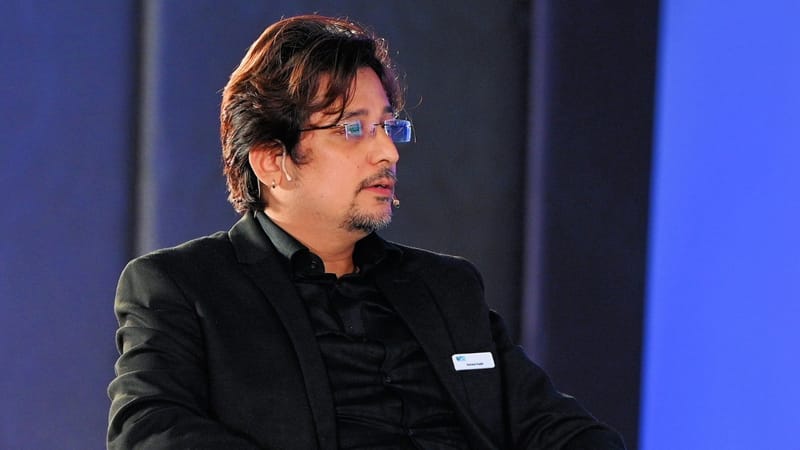
Hyundai’s Natwar Kadel argues that culture, not hardware, is the real accelerant of India’s EV future.
Every September, World EV Day reignites familiar debates: how fast lithium prices are swinging, how many charging stations have been built, or which subsidies will survive the next budget. But inside Hyundai Motor India, the conversation isn’t about volts or kilowatts. It’s about people.
“EVs are as much a cultural shift as a technical one,” says Natwar Kadel, Vertical Head – Human Resources at Hyundai Motor India. “The mindset, skills and knowledge of our people will ultimately drive success.”
That reframing matters in India, where EV adoption is rising but the human dimension of the transition often goes under-examined. Hardware can be imported and policies rewritten; what can’t be outsourced is adaptability. For Hyundai, the real bottleneck isn’t chemistry or infrastructure. It’s whether millions of employees can unlearn what they know about combustion-era manufacturing and relearn the skills of an electric future.
At its Indian plants and offices, Hyundai has declared EVs “the new normal.” That philosophy translates into training regimes that touch every layer of the organisation. Shop-floor workers are schooled in high-voltage safety and battery management. Engineers study sustainable manufacturing and data analytics. Even executives are put through systems thinking and cross-functional collaboration exercises. Crucially, training is delivered in phases. “We’ve analysed how people learn,” Kadel explains, “and we gradually disseminate information so they don’t feel overwhelmed or obsolete.”
It’s a reminder that technological transformation is experienced first and foremost as cultural change. Hyundai marks “safety champions” on the shop floor, encourages “green workspace” competitions in offices and integrates sustainability into employee engagement. These small cultural signals, Kadel says, matter as much as the formal curricula: “Technology can only go so far — it’s culture that accelerates transformation.”
From reskilling to rewiring culture
Globally, electrification is redrawing the skill map of the auto industry. In Europe, Volkswagen has retrained tens of thousands as EV platforms need 30 per cent fewer parts than combustion models. In the US, strikes at Ford and General Motors have revolved around fears that electric platforms will hollow out traditional union jobs. And in India, NITI Aayog has repeatedly warned that skill gaps in battery engineering, EV design and digital integration could slow adoption.
Hyundai is positioning itself against that backdrop. Kadel says the company is shifting from a role-based organisation to a skill-based one. Instead of rigid hierarchies, it is piloting self-organising teams and flatter structures, where continuous learning is treated as infrastructure rather than an optional add-on. “Rigid hierarchies don’t survive transformation,” he argues. “The task for HR is to create conditions where change itself becomes capability.”
In practice, this means embedding new baselines: systems thinking, digital fluency and sustainable manufacturing are treated as standard competencies. Agile, empathetic leadership is being promoted over command-and-control. The company’s partnerships with IIT Madras and Great Lakes Institute provide advanced certification in EV technologies and AI/ML. Engineers from production, manufacturing and quality functions are being trained to use machine learning for real-time diagnostics on the shop floor.
The programme is both offensive and defensive. On one side, it creates an in-house pipeline of talent able to apply AI and data tools in everyday manufacturing. On the other, it reduces dependence on a volatile external labour market. Hyundai has already reskilled production planners into data analysts and line engineers into automation specialists. “This isn’t about replacement,” Kadel says, “it’s about unlocking new potential.”
Global exposure supplements domestic training. High-potential employees rotate through Hyundai hubs in Korea and Europe, gaining hands-on experience with EV diagnostics and feasibility testing. “We are cultivating a culture of intelligent curiosity,” Kadel says, “where empathy and data co-lead innovation.”
India’s workforce test in the EV decade
The stakes are high. India’s auto industry sustains more than 37 million jobs directly and indirectly. If even a fraction of traditional roles disappear as EVs spread, the labour disruption will dwarf anything seen in recent decades. Already, sales are rising: EV registrations crossed 1.5 million units in FY24, according to the Economic Times. Yet policy incentives and consumer enthusiasm will falter if the workforce isn’t prepared.
Sustainability, too, is no longer treated as a parallel initiative. Hyundai has begun embedding environmental metrics into performance scorecards, measuring supply chain emissions and office energy efficiency alongside revenue. For employees, this signals that sustainability is a leadership behaviour, not just a corporate report.
For Kadel, these trends converge on a simple message: HR cannot afford to play catch-up. “If there’s one shift HR leaders must make,” he says, “it’s to stop treating transformation as a temporary initiative — and start recognising it as the norm.”
That conviction shapes Hyundai’s trajectory from a role-based to a skill-based organisation. The company has launched talent accelerators in green and digital domains, partnered with Coursera for mandatory learning programmes, and begun using analytics to spot “skill adjacencies” — the hidden potential to redeploy a planner into data, or an engineer into automation.
Whether this bet pays off will depend not just on Hyundai but on the broader ecosystem of suppliers, training institutes and policy frameworks. NITI Aayog has urged public-private partnerships to expand EV skill pipelines, warning that without them adoption targets will be missed.
On this World EV Day, Kadel frames the moment not as a marketing milestone but as a cultural checkpoint. “Empathy is no longer optional — it’s a leadership imperative,” he says. “Culture is not soft stuff; it’s the foundation of resilience.”
EV batteries will improve, charging networks will spread and governments will continue to subsidise adoption. But none of this will deliver if the workforce isn’t ready to unlearn and relearn at speed. As India’s auto sector heads into the electric decade, the toughest upgrade is not measured in volts or kilowatts. It is measured in mindset.
Topics
Author
Loading...