







Organisational Culture
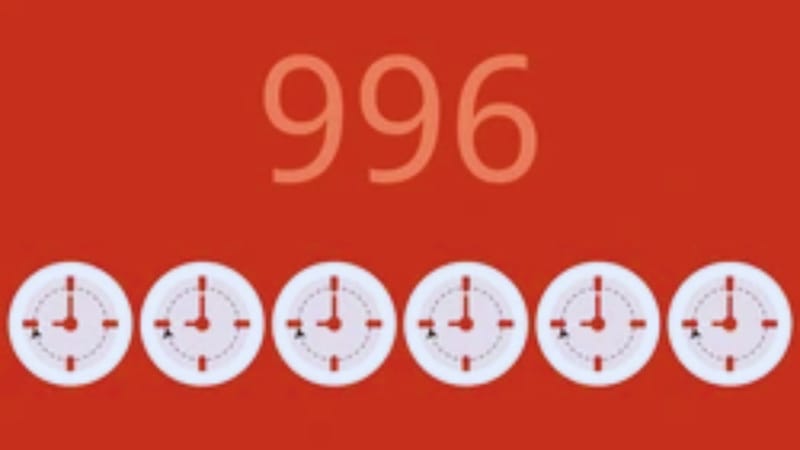
996 work culture: What it is and why leaders are talking about it





The controversial 72-hour workweek is back in leadership conversations. Here's why the 996 model is drawing attention—and concern—once again.
Would you work 12 hours a day, six days a week?
That’s the premise behind the “996” work schedule—short for 9 am to 9 pm, six days a week—a model that first gained traction in China’s tech industry and is now surfacing again in leadership circles globally. At 72 hours per week, the 996 model far exceeds standard 40- or 48-hour norms. Once seen as a hallmark of relentless startup ambition, it is now being debated for its relevance, risks and repercussions in a post-pandemic, productivity-obsessed world.
What is the 996 model and where did it come from?
The term 996 originated in China’s tech sector during the late 2010s, particularly among high-growth companies like Alibaba and Huawei. Executives like Jack Ma, co-founder of Alibaba, controversially defended it as a “blessing,” claiming that only those who could embrace such discipline could find success.
But the model sparked backlash. By 2021, China’s Supreme People’s Court declared 996 illegal under labour laws, following reports of employee burnout and overwork-related deaths. Protests such as “996.ICU” (a campaign that claimed if you work 996, you’ll end up in the ICU) went viral on GitHub and other global platforms.
Yet, three years on, the idea is reappearing in a different context.
Why are leaders talking about 996 again?
In July 2024, Bloomberg reported that some startups in the US are quietly testing hiring practices that imply or explicitly require a 996-style commitment. Several venture-backed companies, facing tightened funding cycles and urgent profitability pressures, are hiring only candidates willing to commit to extended hours.
This has reignited debate over workforce expectations, productivity, and leadership ethics—especially among HR heads and CXOs trying to balance performance with well-being.
In a high-output, AI-accelerated environment, some leaders feel the pressure to revert to time-on-task as a proxy for dedication. The idea: fewer people, more hours, faster results.
Is 996 even effective? What research says
Productivity experts have long challenged the assumption that longer hours mean better outcomes. A Stanford University study found that employee output drops significantly after 50 hours per week, and productivity beyond 70 hours is virtually zero.
The World Health Organization (WHO) has linked long working hours—particularly beyond 55 per week—with increased risk of stroke and heart disease. In 2016 alone, WHO estimated that overwork led to 745,000 deaths globally.
Still, 996 persists in discourse, not because it is healthy or proven, but because it symbolises a leadership crossroad: how far can companies push for results before culture breaks?
What should leaders be asking?
The return of 996 to the leadership conversation is not just about hours—it’s about intent.
Are we romanticising hustle at the cost of strategic focus?
Do we know the difference between urgency and unsustainable pressure?
Are we creating cultures that reward performance or presenteeism?
In the context of AI-driven transformation and hybrid work realities, the answer may not lie in clocking more hours but in rethinking what meaningful output truly looks like.
Leadership today must grapple with a paradox: You can demand commitment without endorsing burnout. And you can pursue agility without reverting to practices already proven harmful.
So what now?
As labour laws tighten and employee expectations evolve, the 996 conversation is unlikely to become mainstream policy. But its return to the executive radar highlights a deeper anxiety: the tension between speed and sustainability.
For leaders, the question isn’t just whether 996 works—it’s whether clinging to it signals a failure of imagination.
Topics
Author
Loading...