







Organisational Culture
Culture by design: Inspiring performance through meaningful recognition





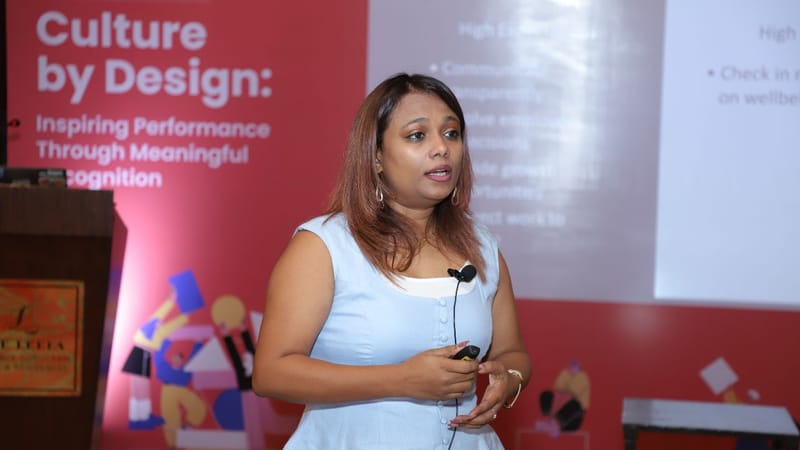
The code for building a culture of recognition that sustains high performance and productivity was unravelled at our roundtable series with O.C. Tanner.
In today’s high-performance economy, the traditional levers of workplace culture are being constantly tested. Stability has given way to rapid transformation, and while performance remains a non-negotiable constant, the way employees experience work has shifted fundamentally over the last few years. The gap between corporate intent and employee reality remains significant, with many professionals describing their experience of culture as momentary rather than foundational.
To explore how organisations can bridge this gap, People Matters, in association with O.C. Tanner, hosted a series of executive roundtables across Bengaluru, Mumbai and Delhi. Bringing together senior HR leaders and rewards experts, the sessions, led by Candy Fernandez, Director – People & Great Work, IMEA, O.C. Tanner, delved into the mechanics of building a ‘Culture by Design’; one where inspiration, hope and inclusive recognition act as catalysts for sustainable performance.
The need to curate a thoughtful culture
The insights gathered from the roundtables reflect a broader global shift in the employee-employer relationship, heavily informed by the data within the O.C. Tanner 2026 Global Culture Report. This research, which surveyed nearly 38,000 professionals across more than 500 companies globally, provides a stark backdrop to the experiences shared by leaders in Bengaluru, Mumbai and Delhi. The report suggests that while many companies struggle with a hopelessness epidemic, as only 16% of surveyed employees are thriving in their role, organisations that intentionally design their culture see a transformative impact on their bottom line:
The inspiration factor: Inspiration is now a measurable driver of output; employees who feel inspired are 6x more likely to produce great work and 14x more likely to stay with their organisation.
The role of hope: Hope acts as a practical engine for innovation. When employees feel they have both a clear path and the agency to move forward, they are 5x more likely to innovate and 7x more likely to be engaged.
The authoritative advantage: A healthy performance culture hinges on a specific balance. Environments that provide both high expectations and high support see an 88% reduction in burnout.
The inclusion multiplier: Inclusion remains a primary catalyst for success. In inclusive environments, employees are 10x more likely to be thriving and 7x more likely to believe in their senior leadership's vision.
Integrated recognition: The probability of great work increases by 18x when recognition is integrated into the daily flow of work, yet only 21% of workplaces have successfully embedded it in their lived experience, according to the 2023 Global Culture Report.
Moving beyond the ‘Purpose’
A recurring theme across the three discussions was the disconnect between high-level corporate purpose and the daily employee experience. While most organisations have well-defined values on their websites and posters, participants noted that these often feel abstract or ‘hollow’ to the average employee.
One leader observed that while purpose was a priority during the pandemic, it has since become distant for many. The challenge for HR practitioners is to move purpose from a presentation to a ‘lived experience’. To do this, organisations are reframing inspiration not as a fleeting emotion, but as a measurable force that propels innovation. When employees see a clear link between their daily tasks and a larger impact, they move from mere compliance to active contribution. "When we are able to reframe inspiration from a fleeting emotion to a catalyst that propels innovation, we make it a measurable force that connects people to a deeper sense of purpose that promotes outcomes," says Candy Fernandez, Director – People & Great Work, IMEA, O.C. Tanner.
The practical framework of hope
One of the most profound insights from the discussions was the application of ‘Hope Theory’ in a professional setting. In an era of ‘quiet quitting’ and burnout, hope is often dismissed as wishful thinking. However, leaders explored a practical framework involving two mindsets: Pathway Thinking (the ability to see a way forward) and Agency Thinking (the belief that one can get there).
Participants discussed how invisible barriers, such as small, recurring administrative or operational hurdles, often erode hope more effectively than large-scale crises. One executive shared that in their exit interviews, they now specifically ask about the trigger moments that led an employee to look elsewhere, identifying these as invisible barriers that need to be eliminated. By providing the right resources and psychological safety, leaders can foster an environment in which obstacles are viewed as solvable, thereby significantly improving the quality of work.
Inclusion as a daily micro-practice
The conversations on inclusion revealed a stark reality: despite decades of diversity and equity initiatives, a large percentage of the workforce still feels invisible or lonely. This is particularly true for digital natives who, despite being constantly connected, report high levels of workplace isolation.
The consensus among the cohorts was that inclusion cannot be a standalone programme. It must be embedded into the natural flow of work through five core behaviours: emotional intelligence, respect for boundaries, shared goals, a safe environment for learning and the empowerment of employee voice.
A rewards leader highlighted the importance of moving from ‘telling’ to ‘asking’. By co-creating goals with employees rather than imposing them, organisations build shared ownership. This sense of belonging is a powerful driver of retention, with research suggesting that inclusive teams are significantly more likely to make smarter business decisions and maintain financial health.
Balancing high expectations with high support
The relationship between productivity and well-being has evolved into a partnership. Leaders across the roundtables agreed that high performance is an outcome of two specific factors: clear expectations and robust support.
Workplaces can often be categorised into four quadrants based on these variables. The ‘Authoritarian’ quadrant (high expectations but low support) was identified as the primary breeding ground for burnout. Conversely, the ‘Authoritative’ quadrant, where both support and expectations are high, is where employees thrive.
One participant noted that ‘people first’ is often misused. True care involves being strict yet supportive, much like a coaching relationship. High support does not mean lowering the bar; it means providing the empathy, training and tools required for the employee to reach that bar. A leader remarked that empathy in the workplace is not just about understanding a crisis, but actively asking, "What can I do to help you meet this deadline?"
Recognition: The strategic lever for performance
If hope, inclusion and support are the building blocks of culture, recognition is the mortar that holds them together. However, for recognition to be effective, it must move beyond the traditional framework of annual awards.
Leaders discussed the need for a holistic approach, high in both frequency and visibility. Several organisations shared how they have democratised recognition by empowering peer-to-peer appreciation. One executive noted that giving a junior analyst a small budget to reward a colleague creates a culture of instant gratitude that is far more impactful than a delayed year-end bonus. "When we integrate recognition into each employee’s everyday experience by plugging it in, not just into processes, but into each employee’s lived experiences, we see so much more power in the organisation," notes Fernandez.
Key takeaways for HR leaders
Across the three discussions, the following key lessons emerged for HR leaders in India:
Eliminate invisible barriers: Use feedback loops and exit interviews to identify small operational hurdles that erode employee hope and agency.
Democratise recognition: Shift from top-down awards to peer-to-peer models that allow for high-frequency, in-the-moment appreciation.
Co-create performance: Move from assigning goals to co-authoring them. This builds the shared ownership necessary for an inclusive culture.
Prioritise cultural nuance: Recognition must be relevant to the local context, whether it is a simple thank-you in a team meeting or involves an employee's family in celebrations.
Measure beyond engagement: Track the impact of recognition by looking at behavioural shifts, innovation rates and long-term retention, rather than just programme adoption rates.
Building a culture by design requires a shift from viewing employees as resources to seeing them as individuals seeking purpose. As the sessions across Bengaluru, Mumbai and Delhi concluded, it became clear that while the tools of the trade, such as technology and budgets, are important, the human element remains paramount in shaping the cultural DNA of any organisation. By fostering hope, implementing radical inclusion and leveraging meaningful recognition, organisations can create a sustainable ecosystem where high performance is not just expected, but inspired.
Topics
Author
Loading...