







Organisational Culture
The seniority trap can kill culture: Dalmia’s CHRO on how to break free





Dalmia’s CHRO warns that the seniority trap can silently kill culture—and reveals how merit, mobility, and values can drive lasting transformation.
In most legacy organisations, careers have traditionally resembled an escalator ride: step on, stay steady, and eventually, you’ll arrive at the top. Tenure was the ticket, and years of service the proof of loyalty. Promotions were often less about reinventing the future and more about honouring the past.
This rhythm worked for decades. It created stability. It rewarded patience. It reassured employees that loyalty would not go unnoticed. But in today’s world—where markets move faster than strategic reviews, and technology can upend entire industries overnight—that rhythm feels dangerously out of sync.
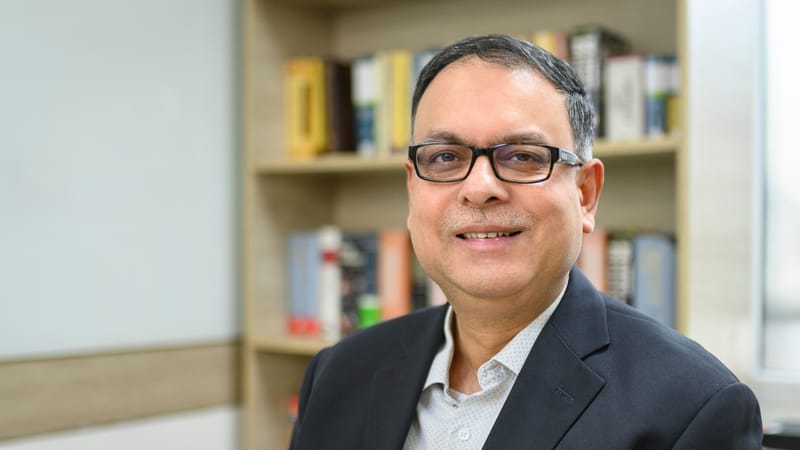
This is what human resources thinkers increasingly call the “seniority trap”: a leadership pipeline that prizes years served over capacity to transform. And according to Udaiy Khanna, Chief Human Resources Officer at Dalmia Bharat Limited, it’s a trap that can quietly but decisively kill culture.
“We cherish our heritage, but leadership today must be defined by merit, performance, and the ability to drive transformation. Seniority alone cannot be the measure of readiness anymore,” Khanna tells me in an interview with People Matters.
His words carry a certain weight. Dalmia Bharat is no scrappy start-up—it is one of India’s oldest industrial houses, with over eight decades of history and a presence across multiple industrial heartlands. If a company steeped in legacy can attempt to rewrite the rules of succession, perhaps others can too.
The Paradox of Seniority
The seniority trap is tricky because it is born of good intentions. It reflects trust, loyalty, cultural belonging. In heritage firms, these values are almost sacred. A person who has spent 20 years in the same company has deep institutional knowledge and a proven commitment to the brand.
But the trap emerges when tenure is mistaken for transformation readiness. Leaders promoted primarily on seniority may lack the agility or vision required to respond to today’s volatility.
Worse, it creates frustration among younger, high-potential talent who see their contributions sidelined until they have “waited their turn.”
The consequences are easy to imagine:
Stalled innovation
Talent disengagement
A culture of caution over courage
How Dalmia Is Rewiring the Pipeline
Khanna does not mince words about the need to break free. Dalmia Bharat has deliberately shifted from a tenure-first system to a merit-first culture. And crucially, it has done so without discarding its values.
Fast-Track for High Potentials
The DRIVE initiative is a centrepiece of this change. Think of it less as a classroom course and more as a launchpad. It identifies high-potential talent early, subjects them to rigorous training that sharpens both technical expertise and leadership agility, and then accelerates their journey into pivotal roles.
“Younger professionals now have structured avenues to climb fast, prove themselves, and lead transformational change—effectively neutralising the seniority trap,” Khanna explains.
This is not tokenism; it’s a structural redesign. Talent is no longer asked to bide their time until the 20-year mark. If you demonstrate aptitude, you get the stage.
Data Over Gut Feel
Another striking shift is the use of performance analytics and continuous feedback in leadership decisions. Legacy companies often leaned heavily on instinct and informal reputation when selecting leaders. Dalmia, in contrast, insists that data should decide.
Performance is tracked in real time. Feedback loops capture not just what a person achieves but how they achieve it. Contribution, not chronology, becomes the basis for advancement.
Breaking Silos Through Mobility
Khanna is also keen on cross-functional and cross-regional mobility. Leaders are rotated across functions and geographies, ensuring they don’t become comfortable specialists but rather adaptable generalists. It’s the antidote to turf wars and the breeding ground for interdisciplinary thinking.
This mobility serves a deeper cultural purpose: it signals that leadership is about solving problems across boundaries, not guarding turf.
Preserving Heritage in the Midst of Change
But here lies the tightrope: how do you modernise without hollowing out the values that give a legacy company its soul?
Khanna is clear that Dalmia Bharat’s core values—Integrity, Trust, Respect, Humility, Commitment—are not up for negotiation. Instead, they are woven into every leadership programme.
“Our leaders are developed not only to lead change but to carry forward the enduring ethos of Dalmia Bharat. We harmonise tradition with forward-thinking strategies,” he says.
In practice, this balance shows up in three ways:
Mentorship from legacy leaders, who act as cultural anchors
Purpose-driven leadership that links business goals with social and environmental responsibility
Reflective learning that ensures leaders don’t just absorb skills but understand their ethical weight
It’s an attempt to prove that values and velocity can co-exist.
One Size Does Not Fit All
Dalmia’s footprint stretches across India’s industrial heartlands—from Tamil Nadu to the North-East. These are regions where cultural, linguistic, and operational realities differ widely. And leadership development that ignores these nuances risks irrelevance.
Khanna is candid: “A one-size-fits-all approach can overlook critical differences, resulting in disengagement or misalignment with local realities.”
So the company tailors programmes to local needs:
On-the-ground training designed for context
Digital platforms that provide exposure where physical access is limited
Cross-regional exchanges to ensure leaders think beyond their geography
The ambition is inclusivity. A rising leader in Jharkhand should have just as much of a pathway as one in Delhi.
Guardrails for Transition
One of the most fragile moments in any organisation is leadership transition. A seasoned functional head being asked to step into a broader business role can trigger resistance, power struggles, even cultural fracture.
Dalmia handles this with an unusual blend of rigour and empathy. Outgoing leaders collaborate with incoming ones through structured handovers. Mentorship is offered not only internally but also through external advisors who bring fresh perspective.
And crucially, governance frameworks provide clarity, ensuring that no leader is left floundering in ambiguity.
“We place great emphasis on stability and alignment. Leaders must be able to step into larger roles without the organisation missing a beat,” Khanna says.
This is succession planning not as a formality, but as a carefully choreographed handover of both power and trust.
Training for Volatility
The cement industry is not for the faint-hearted. It faces regulatory scrutiny, ESG obligations, and market shocks on a routine basis. For Khanna, this makes volatility training a non-negotiable part of leadership development.
Scenario-based simulations prepare leaders for regulatory shifts and environmental crises. Coaching emphasises adaptability, strategic foresight, and the ability to lead through ambiguity.
But there’s another layer: ethical decision-making. Leaders are asked not just how to navigate crises, but how to align decisions with sustainability and integrity.
It’s a subtle but powerful point: resilience without ethics is merely survival. Resilience with values is transformation.
Rethinking the KPIs of Leadership
How do you know if all of this is working? Khanna rejects the old metric of counting promotions. Leadership effectiveness, he argues, must be measured more holistically.
Dalmia tracks:
Behavioural shifts—are leaders actually practising agility and collaboration?
Team impact—are productivity, engagement, and retention improving under them?
Succession depth—is the bench stronger, more mobile, more versatile?
Cultural alignment—do leaders embody the company’s values?
Feedback scores and sustained learning retention add another layer of evidence. It’s a more complex scorecard, but one that reflects reality more honestly.
There’s also a certain irony here. Seniority-based promotions were designed to protect culture, but left unchecked, they can erode it. What Khanna proposes is not rebellion but recalibration. Keep the heritage. Lose the hierarchy. Anchor leaders in values but unleash them on transformation.
In his words: “Leadership mobility, cross-functional collaboration, and purpose-driven growth—these are the ways we remain forward-thinking, while staying anchored in who we are.”
For heritage companies everywhere, that might just be the blueprint for survival.
Topics
Author
Loading...