







Organisational Culture
Why mandates are failing collaboration strategies: Rockwell Automation HR head





As hybrid work settles in, collaboration in Indian workplaces is being reshaped by culture, trust and everyday experience.
As Indian organisations prepare for 2026, collaboration is no longer being debated as a question of attendance or flexibility. Instead, the focus is shifting to something harder to mandate and slower to build: culture.
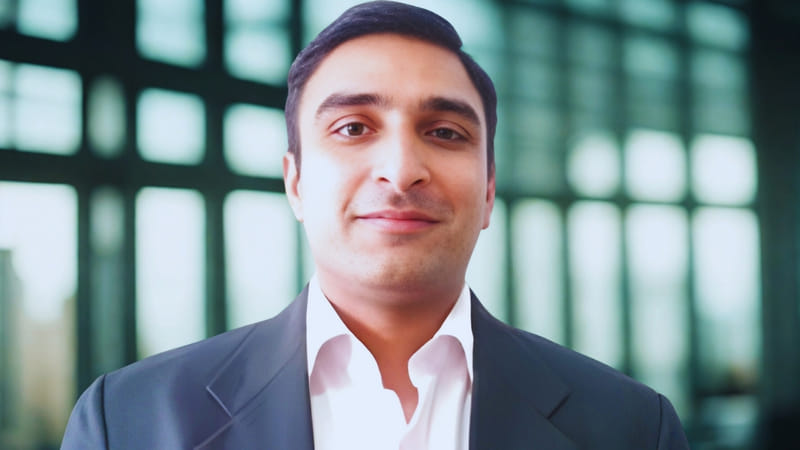
After years of remote work experiments, hybrid adjustments and policy resets, collaboration in Indian workplaces is entering a more deliberate phase—one shaped less by controls and more by how people connect, learn and trust one another. Abhishek Misra, Head of Human Resources, India and LCS Asia Pacific HR Business Partner at Rockwell Automation, sees 2025 as the year that shift became unmistakable.
“In 2025, the most notable shift was the evolution of collaboration from being incidental to becoming intentional and outcome driven,” Misra said.
During the pandemic, virtual work models kept businesses running. But over time, he noted, something intangible began to erode. “Many employees experienced a loss of connection—particularly the informal, in-person interactions that foster trust, enable quick problem-solving, and support learning by observation.”
From hybrid flexibility to collaboration intent
As offices reopened and uncertainty eased, organisations across India began reassessing not just where people worked, but how collaboration actually happened. The result was a spectrum of hybrid models—from limited in-office days to fully flexible arrangements.
Yet by late 2025, especially in IT and IT-enabled services, Misra observed a clear correction. “We observed a clear shift toward increased office presence, with some companies formalizing five-day workweeks or linking incentives to physical attendance,” he said.
The underlying logic was not nostalgia for the office, but a growing acceptance that “collaboration, innovation, and talent development thrive in thoughtfully designed shared spaces.”
At Rockwell Automation, the response was deliberate rather than directive. “The focus was never on attendance for its own sake,” Misra said, “but on enabling richer conversations, stronger team cohesion, and deeper learning—especially for early-career talent and critical roles.”
Instead of a uniform mandate, employees were encouraged to determine the right balance with their managers and HR partners. “This approach reinforced trust and accountability rather than imposing a one-size-fits-all mandate,” he said.
The lesson, Misra added, was clear: “Effective collaboration is less about rigid structures and more about designing environments—physical, cultural, and relational—that allow people to connect, innovate, and grow together.”
Wellbeing moves from benefit to backbone
If collaboration became more intentional in 2025, wellbeing became more central.
“Employee wellbeing—across physical, mental, emotional, and financial dimensions—emerged as a critical driver of how teams showed up, collaborated, and sustained performance,” Misra said.
Rather than being treated as a support function, wellbeing became foundational. “A healthy organization creates the conditions for innovation, trust, and meaningful work,” he said.
At Rockwell Automation, this translated into broader access to medical cover, accident and life insurance, OPD benefits, mental health platforms, employee assistance programmes and pension options. Misra emphasised that these interventions were not isolated perks but part of a wider effort to create psychological safety.
“Collectively, these interventions strengthened trust, psychological safety, and a shared sense of care—creating an environment where people could collaborate more effectively and sustainably,” he said.
Employee expectations, too, evolved during the year. Misra described a shift “from engagement being largely transactional to becoming far more relational, flexible, and growth oriented.”
Social connection increasingly extended beyond formal teams, with Employee Resource Groups enabling interaction across roles, functions and lived experiences. At the same time, expectations of leadership communication rose.
“Employees looked for greater transparency, access, and dialogue with leaders,” Misra said, pointing to the growing importance of open forums, town halls and question-led interactions.
Flexibility remained important, but with clearer intent. “Flexibility is not a privilege, but a practical enabler of sustained performance,” he said, noting structured accommodations for caregiving and medical needs.
Learning also became non-negotiable. Leadership development across career stages, self-directed platforms and manager capability-building gained prominence. Alongside this, Misra noted, “AI literacy became a given,” prompting the launch of foundational training on AI concepts, governance and standards.
Why everyday experiences will define collaboration in 2026
The physical workplace, long treated as a cost or constraint, was reimagined in 2025 as a strategic asset.
“We saw workplace design evolve from being a functional necessity to a strategic enabler of collaboration and connection,” Misra said.
Offices shifted from task-focused environments to spaces designed for interaction, learning and problem-solving. Open collaboration zones encouraged informal exchanges, while wellness and recreation spaces helped employees reset during the workday.
“When employees feel physically and mentally supported, the quality of collaboration naturally improves,” Misra said.
Agile seating and technology tools further encouraged cross-functional interaction, turning the office into what Misra described as “a destination for collaboration rather than a default requirement.”
Looking ahead, Misra believes collaboration in 2026 will depend less on policies and more on leadership behaviour and values.
“Effective collaboration… will depend less on structures alone and more on the cultural and leadership foundations that shape how people work together,” he said.
Trust, he added, is central—particularly in hybrid environments. Communication, empowerment and leadership visibility will matter more than ever, especially as organisations integrate AI and operate at higher speed.
“Empowerment goes beyond autonomy, it requires trust, clarity, and the right tools,” Misra said.
Finally, he pointed to the quiet but powerful role of everyday experiences. “Shared meals, casual conversations, or brief moments of recognition create emotional connection and trust,” he said, describing them as essential to collaboration under pressure.
As organisations move into 2026, the conclusion is increasingly hard to ignore: collaboration cannot be engineered through controls alone. It must be built—through culture, leadership and the lived experience of work.
Topics
Author
Loading...