







Talent Management
Inside the data race for talent: How AI is reshaping GCC hiring



 ||
||

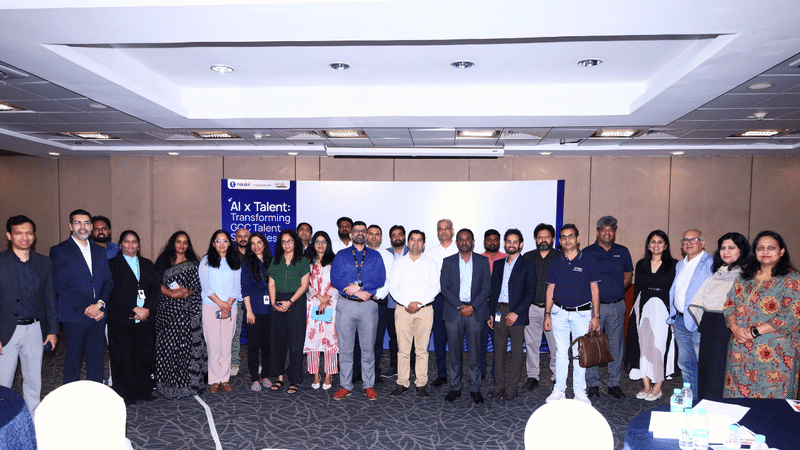
As GCCs compete for scarce skills and evolving workforce expectations, AI-powered intelligence is helping leaders move from reactive hiring to informed, data-led talent strategies.
In India’s rapidly expanding global capability centre (GCC) ecosystem, talent strategy is entering a more complex phase amid a competitive and fluid workforce landscape. More than 50% of GCC leaders cite talent retention as a top concern, while over half of GCC professionals are actively considering new job opportunities, as per recent research.
For organisations building technology, engineering, and analytics teams at scale, this creates a dual challenge of attracting the right talent while ensuring long-term retention. Leaders are also recognising that traditional hiring approaches alone cannot address these pressures. AI-driven talent intelligence is emerging as a critical capability, helping organisations understand talent supply, benchmark competition, and design more targeted hiring strategies.
These themes formed the core of a closed-door roundtable hosted by People Matters in collaboration with Naukri.com at the Novotel Hyderabad Convention Centre. CHROs, talent acquisition heads, and business leaders explored how labour-market data and AI-powered insights are helping organisations navigate the evolving GCC talent landscape.
India’s workforce funnel: where the talent pool narrows
India is often perceived as having an abundant talent pool. Yet a closer look at the structure of the professional workforce reveals a much sharper funnel at higher compensation levels.
Dr Jatin Thukral, Chief Scientist and Chief Product Officer at Naukri.com & Info Edge, broke this down during the discussion.
“The actual workforce of India is 63 crore people, and from that, roughly 5.5 crore are white-collar professionals in the private sector. Among them, only 1.5 crore professionals fall in the ₹5 lakh to ₹50 lakh salary range,” he explained.
The funnel narrows even further at higher salary brackets. Only 17.3 lakh professionals earn more than ₹30 lakh, and the numbers shrink dramatically when organisations look for leadership talent.
“Within leadership hiring, the number comes down to roughly one lakh people,” he noted. “And within that one lakh, maybe 20,000 people change jobs in a year.”
For organisations hiring senior or specialised talent, the active hiring market is therefore far smaller than headline workforce numbers suggest.
GCC growth and the need for talent visibility
As global capability centres expand, understanding where specialised talent exists and how competitive those markets are has become central to hiring strategy.
Companies building teams in engineering, AI, cybersecurity, and analytics require a deeper visibility into labour-market dynamics before entering a location or scaling operations.
AI-powered talent intelligence tools are enabling organisations to analyse talent distribution, identify skill clusters, and benchmark hiring activity across companies and cities. For GCC leaders, this visibility helps assess talent supply and competitive intensity before launching large-scale hiring initiatives.
The rising competition for premium talent
In high-value roles in technology, engineering, and specialised functions, competition is increasingly concentrated at the top end of the talent funnel.
Dr Jatin Thukral explained that one way to approximate this segment is via compensation, targeting the 30 lakh bracket, for instance. But again, this falls short in fully defining premium talent. “We also look at people who may not yet be earning more than ₹30 lakh but have the potential to become leaders,” he explained. “For example, professionals from IITs or IIMs, or people working in specialised skills where demand is very high.”
But a key challenge here is that much of this talent is not actively seeking new roles. For organisations, this shifts hiring strategies toward identifying and engaging passive talent, rather than relying solely on inbound applications.
AI and the shift toward intelligence-led hiring
Access to labour-market intelligence is thus a competitive advantage for organisations hiring in specialised talent segments.
AI-driven platforms allow companies to analyse workforce data, track talent movement, and identify potential candidates beyond traditional applicant pools. For GCCs building technology and engineering teams in India, this insight helps leaders understand where talent exists, how competitors are hiring, and how candidate movement is evolving.
As a result, hiring strategies are gradually shifting from being reactive vacancy filling toward data-informed workforce planning.
The next phase of GCC hiring
In India’s GCC ecosystem, leadership-ready professionals and specialised experts represent only a small share of the overall workforce. Thus, with rising hiring demand, organisations are placing greater emphasis on understanding the talent market before entering it.
For many GCC leaders, visibility into talent supply, skill clusters, and competitor hiring activity is becoming essential to building sustainable hiring strategies.
AI-powered talent intelligence, therefore, is not only improving recruitment efficiency but fundamentally reshaping how organisations plan, compete, and grow. In a market where the actionable talent pool is far narrower than it appears, the ability to see, anticipate, and act on talent data is fast becoming a defining competitive advantage for GCCs in India.
Author
Loading...