







Recruiting & Onboarding
AI is reading you, not your resume: The new rules of being hireable





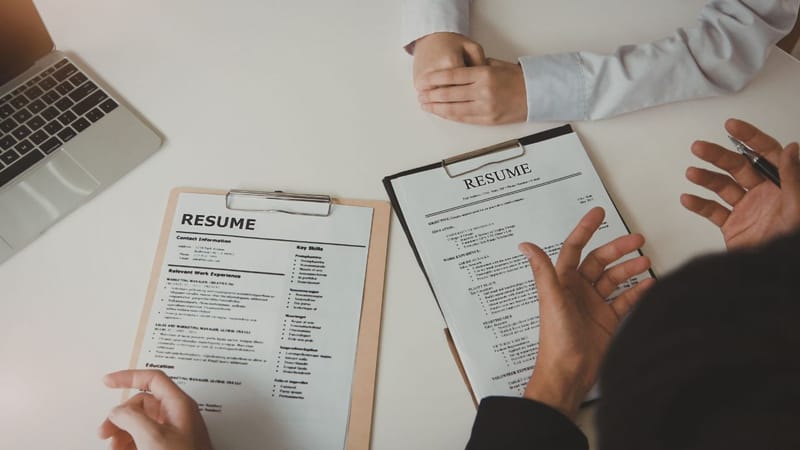
As AI transforms the talent landscape, traditional résumés are losing relevance. Discover how algorithms now evaluate curiosity, empathy, adaptability, and learning agility and why the future of recruitment belongs to organisations that embrace AI-driven, skills-first hiring.
For decades, the resume has been treated as the definitive marker of talent, a one-page summary presumed to contain the essence of a human being’s potential. But as technology, work models, and market cycles shift faster than ever, it has become clear that the resume no longer captures what matters most.
Today’s hiring landscape requires something richer, more dynamic, and more predictive than a static checklist of skills and credFor decades, the resume has been treated as the definitive marker of talent, a one-page summary presumed to contain the essence of a human being’s potential. But as technology, work models, and market cycles shift faster than ever, it has become clear that the resume no longer captures what matters most.
In a world where AI can analyse millions of data points about how someone thinks, learns, adapts, and collaborates, the future of hiring won’t be about what you’ve done, it will be about how you will thrive next.
Why the resume is losing its power
The signals coming from global research are unequivocal: skills are shifting too rapidly for traditional hiring methods to keep pace.
The World Economic Forum’s Future of Jobs Report forecasts that 23% of jobs will change within just five years, driven by AI, automation, and evolving business needs.
Six in ten workers will require reskilling by 2027 as organisations prioritise analytical thinking, technological literacy, and creative problem-solving.
LinkedIn reports that skill sets for jobs have changed by 25% since 2015, and will shift by 65% by 2030.
If the skills required for success evolve this quickly, a resume anchored in the past, becomes a fragile and incomplete indicator of future fit. It captures history, not potential. It showcases experience, not adaptability. It prioritises credentials, not capability. This is precisely the gap AI is designed to fill.
AI Is already rethinking recruitment
AI has quietly become one of the most influential forces in talent acquisition:
A McKinsey global survey found that nearly one-third of organisations now use generative AI for HR tasks.
The market for AI recruitment technologies is valued at over USD 650 million and projected to almost double by 2030.
In India, 75% of recruiters are directing a significant portion of their hiring budgets toward AI-enabled platforms.
But beyond automation and efficiency, AI brings something more transformative: the ability to detect traits humans cannot easily quantify.
Recruitment algorithms can now infer:
Curiosity from learning patterns and exploration behaviour
Adaptability from nonlinear career moves or skill transitions
Collaboration from communication cues
Empathy from interaction style and situational responses
Learning agility from upskilling history and problem-solving tendencies
These qualities rarely appear on a resume but they define success in complex, rapidly changing environments.
From bias reduction to better hiring decisions
AI does not simply speed up hiring; it changes how decisions are made. Gartner notes that generative AI is reaching a ‘tipping point’ in talent acquisition, allowing organisations to evaluate candidates more comprehensively and equitably. Meanwhile, Deloitte’s Human Capital Trends report highlights that although leaders acknowledge the limitations of traditional performance and hiring metrics, only 17% feel equipped to measure human capabilities effectively.
AI helps bridge this gap. When designed responsibly, AI can:
Minimise unconscious biases linked to name, gender, school, or background
Recommend ‘adjacent talent’ with transferable skills
Identify unconventional career pathways
Screen more potential candidates without diminishing quality
However, the social landscape is nuanced. Research shows that while most people expect AI to deeply impact workers, a significant majority still prefer humans to have the final say in hiring decisions.
This underscores a powerful truth: AI may shortlist, but humans must still choose.
What AI values most in the future workforce
Across global studies from WEF, McKinsey, EY, and IBM, the same pattern emerges: AI elevates the importance of human traits that machines cannot easily replicate. These include:
Analytical and critical thinking
Creative and innovative problem-solving
Emotional intelligence and empathy
Active learning and growth mindset
Resilience and adaptability
Collaboration and leadership skills
AI can detect signals of these traits more effectively than the traditional resume, but it cannot embody them. That is why the future of work belongs to humans with deeply human skills and organisations that know how to recognise them.
A new hiring contract: Transparency, fairness, accountability
As recruitment becomes more AI-driven, new responsibilities emerge:
Transparency: Candidates must know when and how AI is used in their evaluation.
Explainability: Organisations must be able to articulate why a candidate was selected or rejected.
Accountability: HR and leadership, not the algorithm, own the hiring decision and its consequences.
Equity: AI must expand access to opportunity, not shrink it through automation of historical bias.
The companies that lead the next decade will be those that use AI not to replace human decision-making, but to elevate it by providing deeper, richer, more equitable insights into human potential.
The future is not AI vs humans, it’s AI for human potential
We are witnessing the emergence of a new hiring paradigm:
One where the resume becomes just one signal among many.
One where potential matters more than pedigree.
One where technology amplifies fairness and sharpens human judgment.
One where qualities like empathy, creativity, and adaptability become strategic differentiators.
AI isn’t hiring perfect profiles, it’s hiring people who can learn, unlearn, collaborate, and grow. And that shift has already begun.
Call to action: Register for People Matters TechHR Pulse Mumbai 2026
If you want to understand how AI is rewriting the rules of hiring, from predictive assessments to capability intelligence and from ethical AI governance to human-centric decision-making, register now for People Matters TechHR Pulse Mumbai 2026.
Join global experts, CHROs, founders, policymakers, and innovators who are defining the future of talent in the age of AI. Because the future of hiring is not coming, it’s already here. And the organisations that understand it first will lead the next decade of work.
Author
Loading...