







Strategic HR
'Count the mangoes, not the trees': BankBazaar CHRO on measuring performance






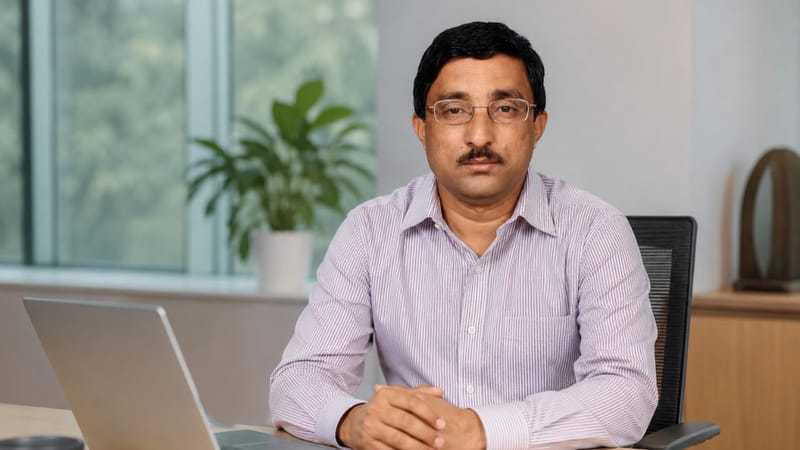
Throughout the conversation, Sriram highlighted that trust, accountability and employee empowerment are becoming more valuable than traditional workplace controls.
As hybrid work continues to mature, many HR leaders are beginning to question whether these measures still reflect productivity or simply reward visibility.
In a conversation with People Matters, Sriram V, CHRO at BankBazaar, believes the future of work depends on shifting the focus away from monitoring employees and towards measuring meaningful outcomes.
Throughout the conversation, he highlighted that trust, accountability and employee empowerment are becoming more valuable than traditional workplace controls.
Beyond attendance
The debate around hybrid work often centres on where employees should work. Sriram believes this is the wrong conversation. Instead of monitoring attendance or location, organisations should ask whether employees are delivering results.
"Personally, I don't believe in this tracking. It doesn't matter if someone works three hours a day or two hours a day, as long as he or she delivers what they're supposed to deliver. Someone can deliver smarter or faster,” he noted.
He mentioned that business outcomes should remain the primary measure of success. If organisations are growing, customers are being served and employees are performing well, there is little value in tracking how or where work gets done.
"Stop tracking the employees. Track only output... You don't count the trees, you count the mangoes."
Trust over control
For Sriram, trust is not simply an employee benefit. It is a business strategy.
He believes organisations should begin with the assumption that employees are responsible professionals who can decide how they work best. When people are trusted, they are more likely to take ownership of their work and remain accountable for their outcomes.
"We have immense trust in our people. We treat them and believe they are equally responsible as anyone else. Employees will decide. As long as they deliver, we don't question."
It was also recognised that certain industries have contractual, regulatory or security requirements that necessitate closer oversight. However, he warns against allowing those exceptions to shape every workplace policy.
"What I don't want as a standard is to believe that employees will deliver only when they are monitored or physically controlled."
A different role for HR
If organisations are to move beyond outdated workplace metrics, HR must also rethink its own role.
Rather than acting primarily as the keeper of policies, Sriram believes HR should create systems that employees actively contribute to and believe in. He recalls that when workplace policies were first introduced, employees were directly involved in shaping them.
"We drafted a policy and asked employees to vote on their opinion. Unless 80% agreed, the policy would not be enforced."
Involving employees in policy making creates a stronger sense of ownership and makes workplace practices feel less imposed.
"The policies are not seen as HR policies. The policies are employee policies."
Measuring growth, not rankings
The same thinking extends to performance management.
Many organisations continue to rely on annual ratings and rankings to evaluate employees.
Sriram questions whether these systems genuinely improve performance or simply encourage internal competition.
"There's no appraisal. There's no rating system. There's only feedback."
He believes continuous feedback provides employees with clearer direction while encouraging collaboration rather than comparison.
Trust takes consistency
Building a high-trust culture cannot be achieved through a single policy or announcement.
Employees develop trust through consistent organisational behaviour over time.
"Trust takes time to form... You have to be very consistent and true. Then only they will form trust. Transparency alone is not enough. Employees need to feel included in decisions that shape their working lives,” Sriram mentioned
He further elaborated, "Transparency is just saying what you're doing... Involve them. The moment you involve them, they believe you are trusting them. Then they start trusting you."
Redefining workplace success
As AI transforms jobs and organisations continue to adapt to new ways of working, Sriram believes the next evolution of HR will not be determined by where people work or how closely they are monitored.
Instead, it will depend on whether organisations are willing to replace outdated workplace metrics with measures that reflect real business outcomes.
The future of work may not require more tracking. It may simply require better judgement about what is worth measuring.
Author
Loading...