







Strategic HR
HR’s AI-impact conundrum: Growing investments but low readiness?



 ||
||

The use of advanced, AI-powered platforms is increasing across APAC and ME. SHRPA 2025 Global Report looks at how HR can solve critical challenges
Three years later, HR and talent leaders part of the SHRPA State of HR Industry Report 2025: Global Executive Insights say adopting AI is critical for business success and remains one of the top high-impact business challenges to solve in 2025. The trust in AI has been rising and an increasing number of businesses are looking at the technology to become more efficient and contribute to business growth.
Rising investments and innovation in AI solutions
In the past year, AI has seen a growing usage across HR. Its implementation across areas like making HR workflows more efficient, improving the talent life-cycle and enhancing HR’s ability to make strategic decisions have attracted interest and investments across APAC. And in response, HR tech companies are innovating to embed AI and create better, more impact focused solutions for talent leaders to use.
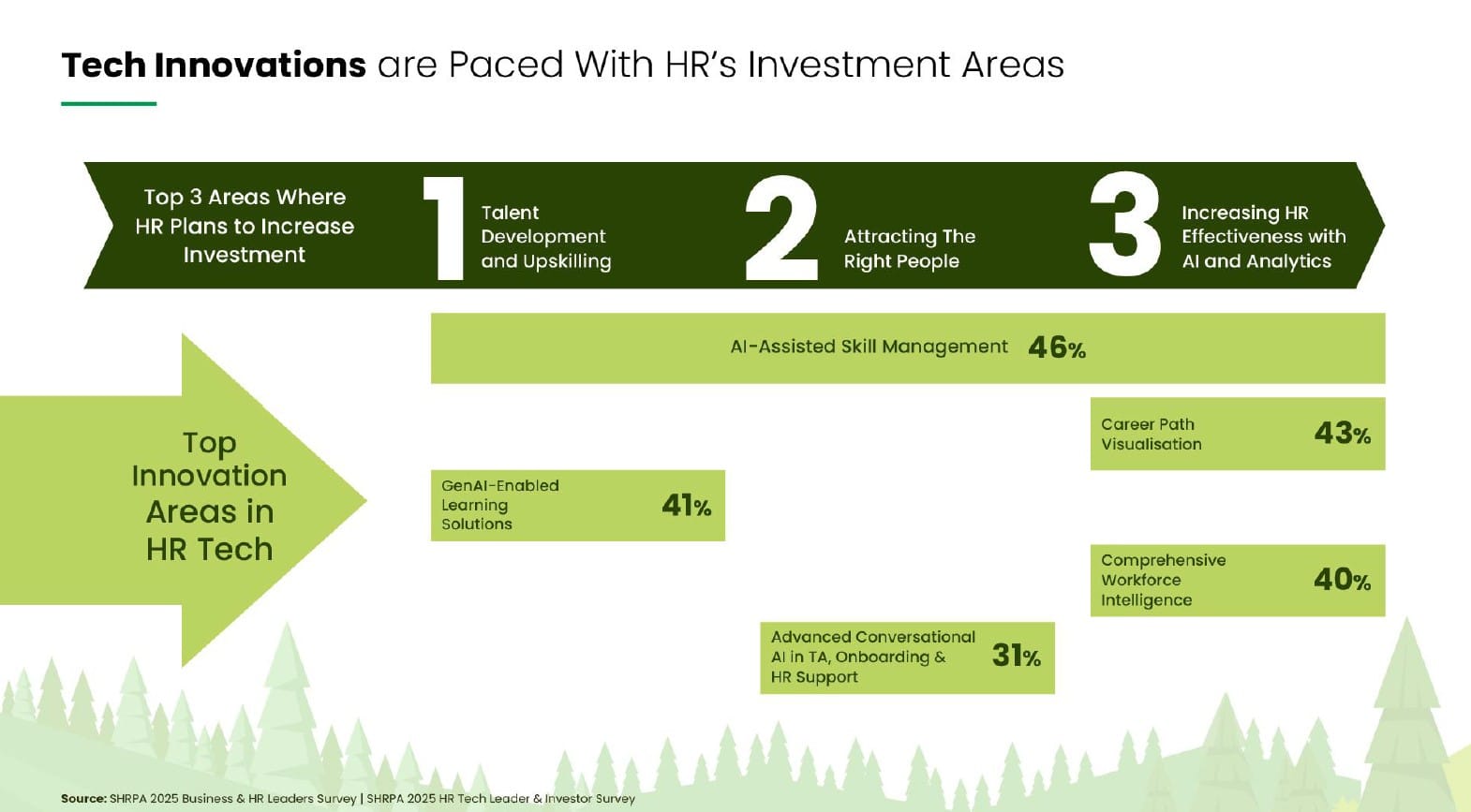
The SHRPA 2025 report notes a high degree of alignment in areas where HR is going to invest in the coming 12 months and tech innovations entering the market. Investments into AI and analytics solutions that improve HR efficiency is only behind skilling and attracting the right talent in areas which will see largest growth in investments.
But as the HR industry sees a convergence in how and where it invests, questions on HR’s AI readiness remain a critical point of contention.
Low AI readiness and missed opportunities
Going back to the example of Gen AI, while its use cases across talent functions have risen in the past few years, only 24% of businesses say they have fully adopted Gen AI. The top barrier to this has been the lack of internal expertise on implementing the technology. It's no surprise then that for 6 in 10 companies Gen AI usage is either stuck in pilot stages or moderately adopted.
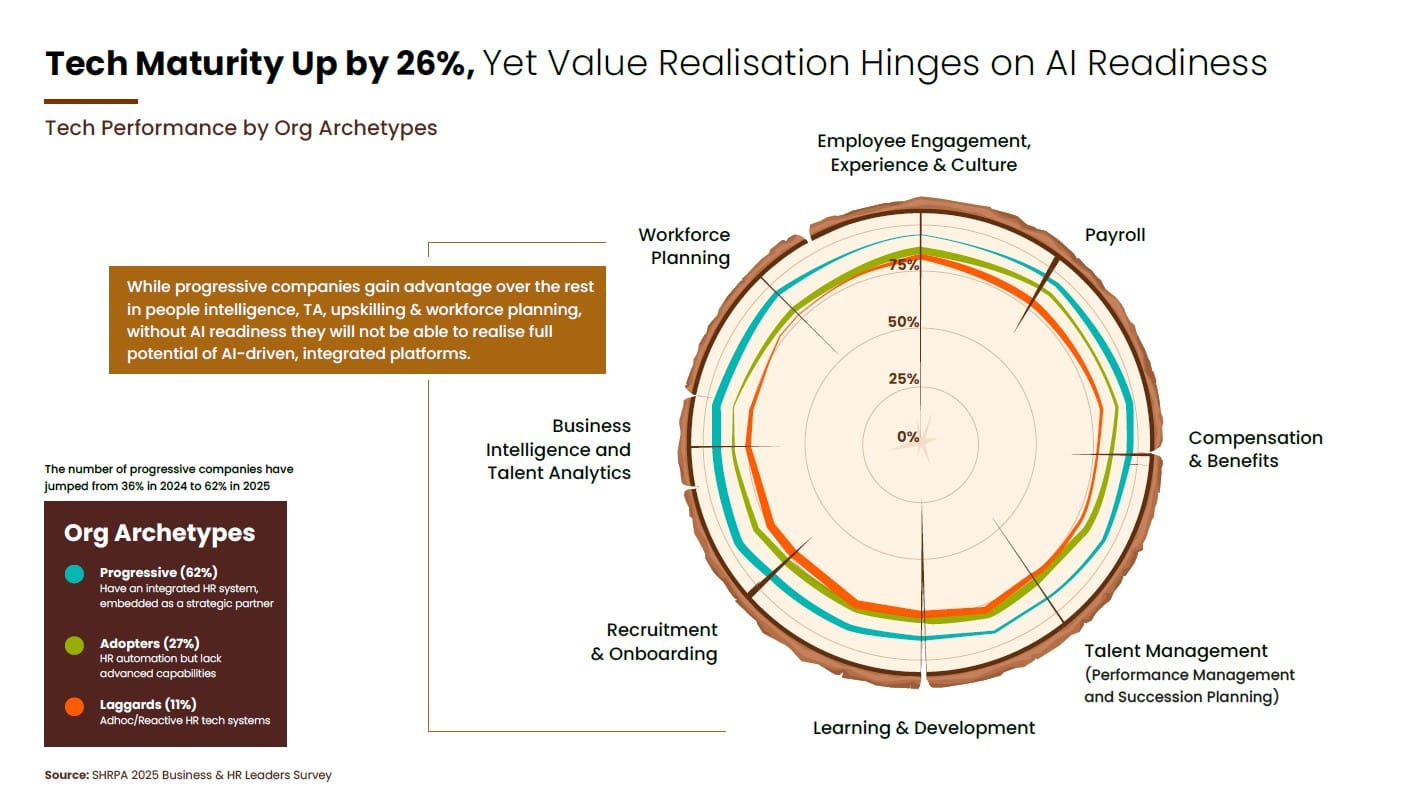
The low adoption of AI across HR has a domino effect in how effective the function is in dealing with change. Looking at various change readiness parameters, businesses across APAC and ME rate high on their ability to adapt and build an agile HR function. But parameters like leveraging AI and analytics for better decision making, augmenting work with AI for better productivity, and streamlining workflows with agentic AI all fall at the bottom of the scale.
Today, change readiness for HR needs to be synonymous to its AI readiness.
AI-readiness as a start-to-end capability mandate
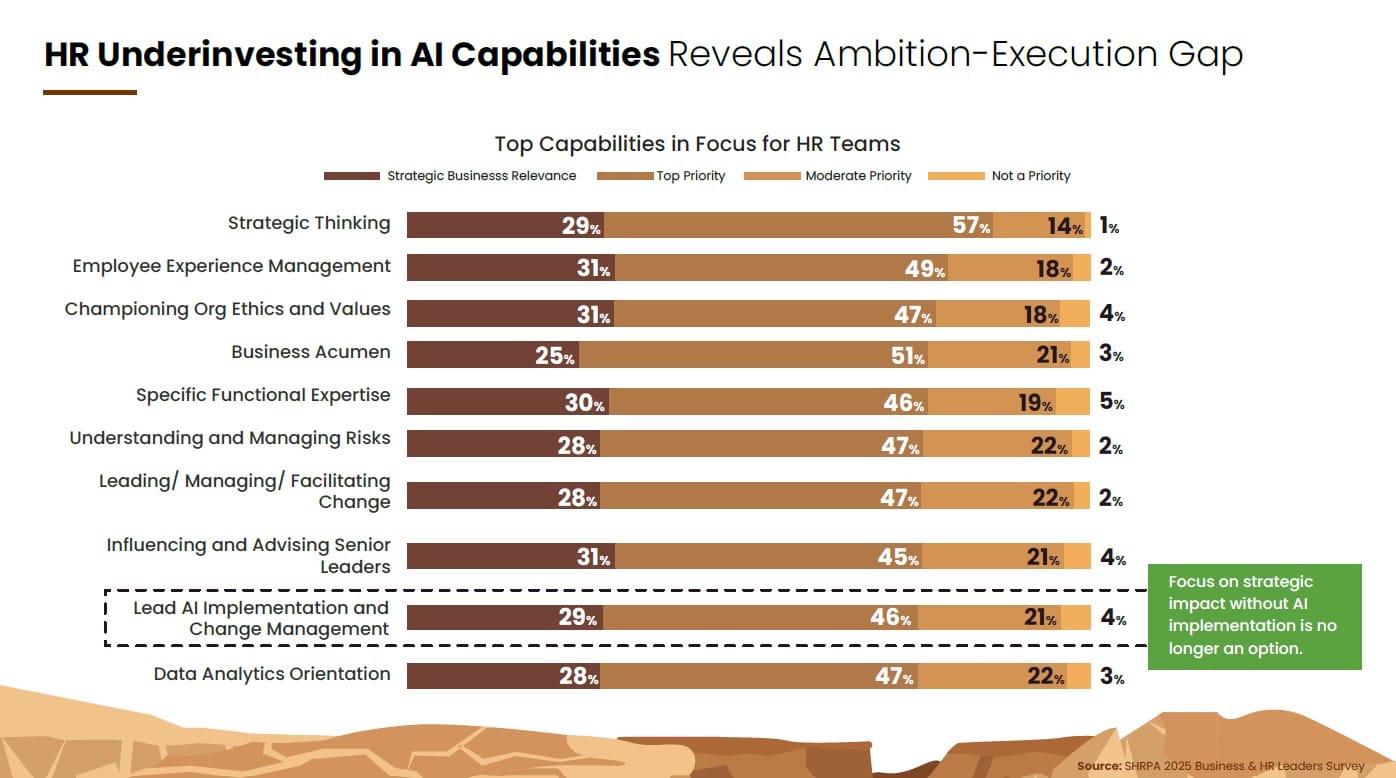
A critical first step to addressing this gap is ensuring HR capabilities match expectations. Currently AI implementation and change management capabilities remains a low focus area. With AI becoming a key part of how other verticals within the organisation are becoming more efficient and strategic, the lack of focus on building the right implementation capabilities hampers HR’s ability to deliver impact.
Creating a culture of AI-readiness
To further strengthen AI readiness, HR will have to make it a part of the organisation's culture. A shift that starts right from the leaders, links to the organisation's values and goals, and looks at humanising the use of AI to overcome change resistance and drive results. To do this effectively HR leaders will have to focus on three key dimensions: people, processes and technology.
AI readiness in HR begins with people. Building a growth mindset and strong leadership sponsorship is critical to foster confidence and adoption. Across the organisational hierarchy — through leaders to managers and employees — it’s important to see AI as an enabler rather than a threat, which requires psychological safety, transparent communication on how AI is used, and ongoing opportunities to build “AI literacy.” Upskilling through training, certifications, and workshops ensures HR teams and managers are equipped to use AI responsibly. Just as important is empathy – while AI automates routine tasks, HR professionals should redirect their focus towards strategy, culture, and employee relationships.
On the process and technology fronts, readiness requires redesigning HR operations to embed AI seamlessly and ethically. Organisations need to integrate clean, high-quality data, update policies for governance and compliance, and adopt agile cycles to test and refine AI use cases. Robust technology foundations – including HRIS, ATS, and learning systems – must be connected to AI platforms, supported by automation and secure data infrastructure.
Over time, firms should move from isolated pilots to a fully integrated HR architecture, where AI drives insights across recruitment, learning, workforce planning, and performance. This combination of people capability, process alignment, and technology integration lays the foundation for sustainable AI readiness in HR.
Author

Loading...