







Strategic HR
Why retirement at 60 may no longer mean the end of a career





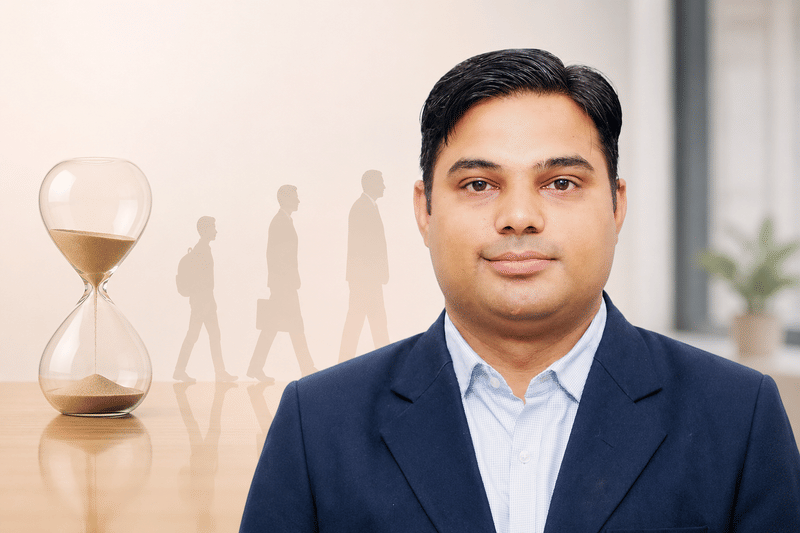
As working lives stretch, Shriram General Insurance Head-HR Arun Kumar Singh says companies may need to rethink retirement, learning and what career growth looks like across generations.
For decades, the career clock in India followed a fairly familiar rhythm. Join the workforce, move up the ladder and, somewhere around 58 or 60, retire.
That timeline may be losing its rigidity.
“Traditionally, careers in India were often viewed as a journey that culminated around retirement at 58 or 60,” says Arun Kumar Singh, Head-HR, Shriram General Insurance.
But longer lives, better healthcare and changing financial aspirations are altering the equation. For employers, this raises a bigger question: what happens when careers become longer, but workplace structures remain built for shorter ones?
Age may matter less than contribution
Singh expects the relationship between age and career to become far less fixed.
“In my view, age and career will no longer have the rigid relationship they once had,” he says. “However, increasing life expectancy, better healthcare, and changing financial aspirations are encouraging people to remain professionally active for much longer.”
The next chapter may not always look like an extension of the first. Professionals could move into second careers, consulting, entrepreneurship or mentoring after formal retirement.
“I believe the future workplace will place greater emphasis on skills, adaptability, and contribution rather than age,” Singh says.
“Age will become less of a barrier and more of a source of experience and perspective.”
The shift sounds simple. The workplace redesign behind it is not.
Singh believes Indian companies are moving in this direction, but remain some distance from being fully prepared.
“Many of our HR policies, career structures, and workforce planning models were designed for a different era when career spans were shorter and retirement was considered the natural end point of professional life.”
For organisations, longer careers could require a rethink across several areas:
- Continuous learning throughout an employee's career
- Flexible work arrangements for different career stages
- Phased retirement options
- Advisory and mentoring roles for experienced professionals
- Multiple career pathways beyond traditional leadership positions
“Those organisations that adapt early will have a significant advantage in retaining knowledge and building a more resilient workforce,” Singh says.
The ‘older workers cannot adapt’ stereotype
There is another barrier, and it has little to do with policy.
“One misconception that still exists is that older employees are less adaptable to change or technology,” Singh says.
His experience, he adds, has been “quite the opposite”.
“Given the right opportunities and support, professionals with decades of experience can be equally enthusiastic learners.”
The same applies to assumptions around ambition and productivity.
“Another misconception is that senior employees are less ambitious or less productive.”
Singh points to maturity, judgement, crisis management, customer understanding and mentoring as capabilities experienced professionals bring to the workplace.
“Particularly in sectors like insurance and financial services, where trust and relationships matter greatly, experienced professionals continue to add tremendous value.”
Career growth cannot mean promotion alone
Longer careers also create an uncomfortable problem for the traditional corporate ladder. Not everyone can keep moving upwards. Nor does everyone necessarily want to.
Singh believes organisations need to challenge two familiar assumptions.
“I believe organisations need to move away from the notion that learning is only for young professionals and leadership roles are the only measure of growth. Learning must become a lifelong process.”
The alternative is a career model with more than one route.
“Some employees may seek leadership positions, while others may prefer specialist, advisory, or project-based roles.”
For HR, this means designing development around aspirations, strengths and career stages rather than offering one standard path.
“Organisations should create multiple growth pathways and encourage continuous reskilling throughout an employee’s career.”
Four generations, one workplace
Longer careers also mean more generations working alongside each other.
“In India, it is not uncommon to find employees from four different generations working together,” Singh says.
Their expectations may not always neatly align.
“Younger employees often seek flexibility, faster growth, and meaningful work, while experienced employees may prioritise stability, collaboration, and long-term impact.”
The HR challenge is not to declare one set of expectations right and the other outdated. It is to create a workplace capable of holding both.
“The challenge lies in creating policies and workplace cultures that accommodate these diverse expectations without compromising organisational objectives.”
Singh sees mentoring and reverse mentoring as one way to bridge the divide.
“Senior employees can share business wisdom, industry knowledge, and practical insights, while younger employees can bring fresh thinking, digital expertise, and new perspectives.”
As he puts it: “Experience and innovation should not be viewed as competing forces.”
If careers get longer, HR's old playbook cannot stay the same
The implications stretch from hiring and learning to wellbeing and performance management.
“If longer careers become the norm, organisations will need to fundamentally rethink how they attract, engage, develop, and retain talent,” Singh says.
His priorities are clear: “We will need more flexible career models, continuous learning ecosystems, stronger health and wellbeing programmes, and age-inclusive workplace policies.”
Performance systems may also need a reset.
“Performance management systems will need to focus more on capability, contribution, and outcomes rather than tenure or age.”
Perhaps the bigger shift is in how companies define workforce diversity itself. Singh believes age and experience need to become a more visible part of the conversation.
“Most importantly, organisations will need to embrace diversity not only in terms of gender and background but also in terms of age and experience.”
The traditional career may once have had a fairly predictable finish line. If people remain professionally active for longer, retirement at 58 or 60 may increasingly mark a transition rather than an ending.
For employers, the question is no longer simply whether people will work longer. It is whether the workplace is ready to give a longer career somewhere meaningful to go.
Topics
Author
Loading...