







Strategic HR
Why Tata Motors is re-engineering HR for 2026 — and what it signals for Indian industry





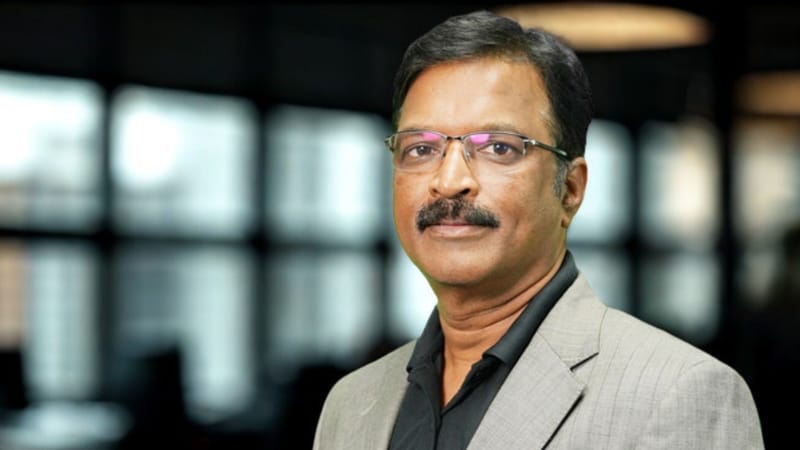
As 2026 approaches, Tata Motors’ CHRO argues that HR’s real mandate is no longer people support, but enterprise capability.
For decades, HR sat adjacent to business strategy. That separation is now breaking down.
As organisations accelerate digital transformation and rework operating models, the function once associated with compliance, hiring and policy is being pulled into the centre of decision-making. At Tata Motors, that shift is no longer theoretical. Sitaram Kandi, Chief Human Resources Officer, describes HR today as “a strategic powerhouse driving business growth and organisational readiness.”
“HR has evolved from a support function into a strategic powerhouse driving business growth and organisational readiness,” Kandi said. “As digital transformation accelerates within organisations, our role centres on three pillars: Culture, Structure, and Capability, enabling people to learn, grow, and compete effectively in the pace of technological evolution.”
The framing reflects a wider recalibration underway across large enterprises, where the pace of technological change is compressing planning cycles and exposing capability gaps faster than organisations can traditionally respond. In that context, HR’s distance from business execution has become a constraint rather than a safeguard.
Why HR can no longer operate on the sidelines
Kandi argues that incremental change is no longer sufficient. What is required, he said, is a structural rethink of how HR is positioned inside the organisation.
“Delivering on these priorities requires a fundamental shift in how HR operates,” he said. “HR leaders should be embedded within business units, involved from project inception to address capability requirements and skill gaps simultaneously with technology decisions.”
The expectation that HR anticipates capability needs — rather than reacting after technology or strategy choices are made — significantly raises the bar for the function. It also demands new skills from HR leaders themselves.
“Leaders would need to adapt new competencies, including applying talent insights to shape learning, creating frameworks to tap AI-enabled skills, and developing the business acumen to anticipate tomorrow’s capability demands,” Kandi said.
This repositioning mirrors a broader reality confronting large organisations: technology investments without parallel capability building are increasingly failing to deliver returns. As automation, AI and software-driven models spread across sectors, people strategy is becoming inseparable from business strategy.
Building capability at scale, not in silos
At Tata Motors, the response has been to place learning and capability-building at the centre of transformation rather than treating it as an adjunct. Kandi said the company now functions “as a parallel university,” with learning tightly linked to business priorities.
“At Tata Motors, this approach is reflected in how we are building a future-ready workforce,” he said. “We function as a parallel university, investing substantially in learning programs and upskilling employees across Connected, Electric, Safe, and Shared technologies, Industry 4.0, and AI/ML capabilities, among others.”
Crucially, learning is not being positioned as abstract skill-building.
“Every program links directly to measurable business outcomes, with participants completing real-time projects on actual business challenges for certification,” Kandi said.
The emphasis reflects a recognition that the automotive sector is being reshaped as much by software and digital capability as by traditional engineering.
“We are also simultaneously building a robust internal software capability pipeline, recognising software as a critical vertical for the automotive sector,” he added.
What will define HR leadership in 2026
Looking ahead, Kandi is clear that HR’s relevance will depend on its willingness to lead rather than follow.
“Looking ahead in 2026, the HR functions that will lead enterprise transformation are those that drive change rather than respond to it,” he said.
That leadership, in her view, comes from integration — embedding people strategy into business planning, not layering it on afterwards.
“An integrated approach can transform HR professionals into the architects of organisational capability,” Kandi said.
“When professionals embed HR policies in strategic planning, invest in continuous learning at scale, and build the competencies to anticipate business needs, they create organisations where innovation becomes instinctive, and people are equipped to shape the future they want to be part of.”
As companies prepare for the next phase of disruption, the question confronting HR is no longer about relevance, but about execution — and whether the function can deliver capability at the speed business now demands.
Topics
Author
Loading...