







Sustainability & ESG
As India battles fuel pressures, EV factories face a growing skills gap





India’s automotive industry is rapidly rebuilding factory talent for the electric vehicle era, but manufacturers say the biggest challenge is no longer machinery or production capacity. It is workforce readiness.
India’s push towards electric mobility is beginning to reshape the country’s manufacturing workforce at a fundamental level.
As policymakers and businesses intensify efforts to reduce fuel dependence and accelerate EV adoption, automotive factories are confronting a parallel challenge: preparing workers for an entirely different production environment.
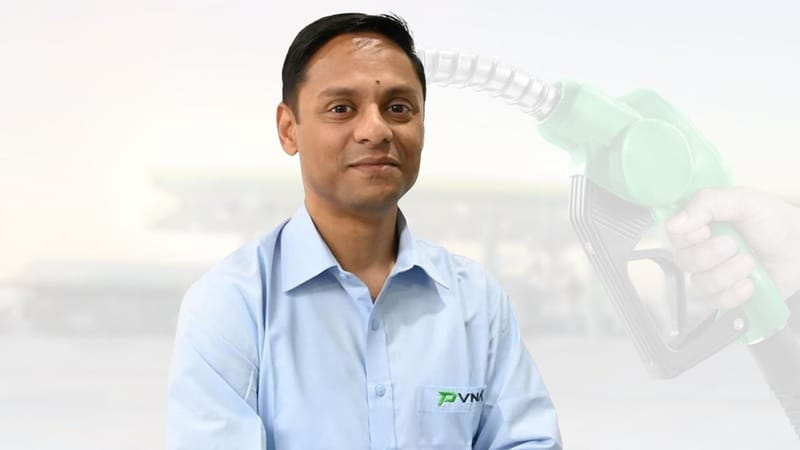
According to Sumeet Bhowmick, Chief Human Resource Officer at PVNA Group, the transition from internal combustion engine manufacturing to electric vehicle production is changing not only technical requirements on the shopfloor, but also the operating culture inside factories.
“The transition from ICE to EV technologies is redefining shopfloor competence, shifting from traditional mechanical expertise to rapidly evolving technical skills,” Bhowmick told People Matters.
He said EV manufacturing environments now require continuous learning because technical knowledge becomes outdated far more quickly than in conventional automotive assembly.
Traditional factory skills are no longer enough
The shift towards EV production is forcing manufacturers to rethink the skills historically associated with automotive assembly work.
For decades, mechanical precision and process familiarity formed the backbone of shopfloor operations in component manufacturing. EV production, however, increasingly demands competence in electronics, software-enabled systems and data-driven manufacturing environments.
Bhowmick said the challenge is particularly visible among experienced factory operators transitioning from conventional automotive systems.
“Electronics fundamentals: understanding circuit behaviour, voltage tolerances, EMI, and insulation resistance, represent a genuine challenge for operators who have spent careers in a mechanical paradigm,” he said.
“These are not skills you can develop through a weekend workshop.”
According to Bhowmick, EV production also requires workers to operate within digitally integrated manufacturing systems where data interpretation and real-time monitoring are becoming routine operational expectations.
The skills challenge now extends beyond assembly execution to:
- Responding to manufacturing execution system alerts
- Interpreting quality monitoring data
- Managing traceability requirements
- Operating within digitally connected production systems
Companies prioritise reskilling over replacement
Despite rapid technological changes, manufacturers are not replacing existing workers at scale.
Instead, companies are increasingly attempting to preserve operational continuity by retraining experienced factory staff.
Bhowmick said replacing long-serving operators entirely would create fresh operational risks.
“Experienced shopfloor operators carry institutional knowledge that cannot be replicated quickly,” he said.
“They understand process nuances, quality deviations, safety behaviours, and production rhythms.”
At PVNA Group, the focus has shifted towards reskilling existing employees while managing anxieties linked to automation and changing technologies.
Key workforce challenges identified by the company include:
- Digital literacy gaps
- Workforce anxiety during transition
- Rapid EV production ramp-ups
- Adapting traditional assembly practices to EV precision standards
The biggest challenge is mindset, not technology
While electronics and software integration remain significant barriers, Bhowmick argued that the deeper challenge is cultural.
He described the transition from traditional automotive assembly to EV manufacturing as a shift from a “fit and forget” mindset to one centred on precision, documentation and traceability.
“EV manufacturing demands that every action is documented, every component is traceable, and every deviation is escalated,” he said.
According to Bhowmick, building this operating discipline requires sustained leadership engagement and continuous communication rather than standalone technical training initiatives.
“Building this operating culture takes longer than any technical training programme.”
The change reflects broader shifts underway across global automotive manufacturing, where quality compliance, software integration and battery safety are becoming increasingly critical to production systems.
Learning models are being rebuilt inside factories
Manufacturers are also redesigning training systems to keep pace with rapid technology changes.
Bhowmick said older training approaches built around periodic classroom sessions and annual certifications are proving inadequate for EV production environments.
Instead, companies are attempting to integrate learning directly into production workflows.
At PVNA Group, this includes:
- Embedding learning into shift briefings
- Using visual management tools as learning prompts
- Deploying digital work instructions that evolve with production changes
- Increasing cross-functional exposure between operators and engineering teams
- Creating internal technical academies reviewed quarterly
The company is also developing internal technical coaches to accelerate peer-led learning on factory floors.
“This peer learning model travels faster through the organisation than top-down training,” Bhowmick said.
However, he acknowledged that maintaining long-term investment in learning systems remains difficult in production-intensive environments where operational pressures often compress training time.
India faces a talent-readiness gap
Bhowmick said the automotive sector’s challenge is not a shortage of workers, but a lack of deployable EV-ready talent.
“India faces a talent-readiness gap rather than an absolute shortage,” he said.
According to him, outdated academic curricula continue to limit industry readiness, particularly in electronics and embedded software disciplines.
He added that engineering and technical institutes have not fully aligned with the pace of change in EV manufacturing requirements.
PVNA Group is planning collaborations with technical institutes to co-develop EV-focused training modules intended to create “ready-to-employ pathways” for future workers.
Workforce trust becoming critical during automation shift
As automation and new technologies reshape factory roles, industrial relations dynamics are also changing.
Bhowmick said workforce sentiment increasingly depends on whether employees believe companies are investing in their long-term growth rather than preparing to replace them.
“Shopfloor sentiment hinges on trust during technology transitions,” he said.
According to him, transparency, communication and workforce involvement are becoming essential to maintaining operational stability during technological transformation.
Future factories will demand learning agility
Looking ahead, Bhowmick believes future-ready automotive workers will be defined less by fixed technical expertise and more by adaptability.
“Learning agility will define a future-ready workforce as specific technical competencies continue to shift,” he said.
He identified three capabilities that will increasingly shape manufacturing employment in the EV era:
- Digital fluency
- Cross-domain systems awareness
- Stronger quality consciousness around precision and traceability
At the leadership level, he said automotive companies would also need managers capable of balancing operational discipline with organisational change management.
As India accelerates its push towards cleaner mobility amid rising fuel concerns and energy transition pressures, the transformation underway inside automotive factories suggests the EV transition is becoming as much a workforce challenge as an industrial one.
Topics
Author
Loading...