







Sustainability & ESG
India’s clean energy shift is creating jobs, but not enough job-ready talent: Green Power International






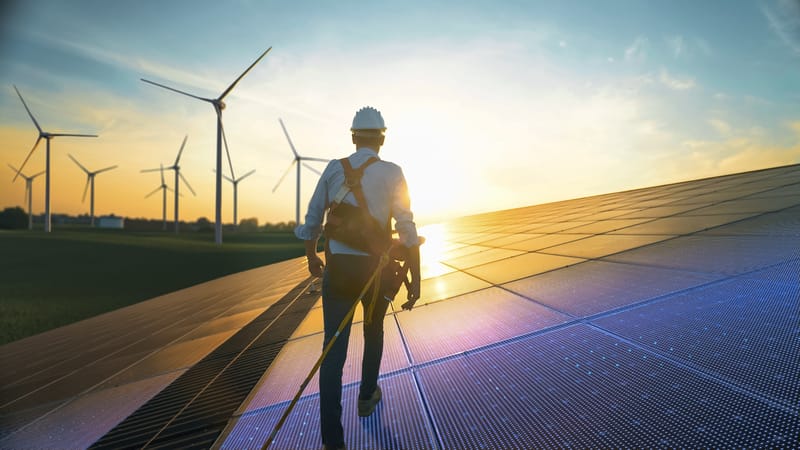
As energy systems evolve, the workforce is struggling to keep pace with new skills and technologies.
India’s clean energy story is often told through big numbers. Capacity additions. Investment pipelines. Net zero targets.
But speak to people on the ground and a different story emerges. One that is less about megawatts and more about manpower. Or more precisely, the lack of the right kind of manpower.
“The clean energy transition is moving faster than workforce readiness,” says Sandeep Das, Global HR Leader at Green Power International.
It is a deceptively simple observation. Yet it cuts to the heart of a growing problem. India is creating jobs in clean energy, but not enough people are ready to do them.
The problem is not people. It is skills
For years, conversations around employment in infrastructure sectors have centred on shortages. Not enough workers. Not enough engineers. Not enough technicians.
Das flips that narrative.
“And the real challenge is not the availability of manpower, but largely skill readiness and adaptability,” he says.
That distinction matters. India does not lack workers. It lacks workers who can move between old and new systems. Workers who understand both legacy plants and modern, automated setups.
“As we are still in the transitional phase, there is a shortage of people who can work across conventional and clean systems,” Das explains.
This is not just a technical gap. It is also a behavioural one.
“Professionals trained in conventional systems do struggle with modern technologies and systems used in cleaner operations,” he says.
The shift, he adds, is not incremental. It is structural.
“Transitioning from stable, legacy operations to dynamic, efficiency-driven environments requires a significant mindset shift.”
That phrase comes up repeatedly in conversations with industry leaders. Mindset. Not just skill.
Because what is being asked of workers is not just to learn new tools, but to think differently about how energy systems operate.
From machines to systems
In traditional power plants, roles were clearly defined. Mechanical. Process-driven. Stability was the goal.
Cleaner energy systems do not work that way.
“Traditional power generation roles have largely been mechanically intensive, and process driven. They have focused on maintaining stability,” Das says.
“Cleaner energy, in contrast, differs significantly.” The difference shows up in job descriptions. And in expectations.
Workers now need to understand multiple domains at once. Mechanical. Electrical. Instrumentation. And increasingly, digital systems.
“With the development of technology and AI, systems have become more automated,” he notes. “So workers also need a working knowledge of automation, control systems, and performance optimisation.”
In other words, the job is no longer just about operating equipment. It is about managing performance.
“As energy generation systems are moving from equipment operators to system and performance managers, workers need to be upskilled accordingly.”
That transition is already visible in gas-based systems, where automation is more deeply embedded.
“Technicians trained in conventional systems need additional exposure to automated control environments before they can operate effectively,” Das says.
The implication is clear. The energy workforce of the future will look very different from the one that built the past.
Why companies are not replacing workers
When industries transform this quickly, there is often an assumption that old roles will disappear and new ones will take their place.
That is not quite what is happening here.
“From our experience, success lies in integration, not replacement,” Das says.
The logic is straightforward. Legacy workers understand how plants behave. They know how systems respond under stress. That knowledge cannot be easily replicated.
“The legacy workforce brings a deep operational understanding of plant behaviour, which is critical during retrofitting,” he explains.
But that experience needs to be paired with new capabilities.
“New systems require updated technical and digital capabilities.”
So companies are taking a blended approach. Train the old. Hire the new.
“We focus on structured reskilling programmes for existing teams and selective hiring for specialised and digital roles,” Das says.
It is a slower path. But arguably a more sustainable one.
“We believe that real value is created when organisations blend experience with new-age capability.”
The quiet shift in hiring philosophy
There is another shift underway. Less visible, but equally important.
The industry is rethinking how it hires.
“At present, there is no clear shortage of ready-to-deploy talent in emerging clean energy roles,” Das says.
That might sound surprising, given the skills gap. But it reflects a deeper change.
Companies are no longer waiting for perfectly trained candidates to appear. They are building talent themselves.
“We are also building talent internally to help conventional workers adapt to evolving technologies,” he says.
This is where training models come in.
On-the-job learning. Project-based exposure. Continuous technical development.
The old idea of hiring someone who is already fully equipped for the role is fading.
“In this technology-driven era, the industry is moving from a ‘hire-ready talent’ mindset to a ‘build-and-scale talent’ approach.”
It is a subtle shift. But one that could reshape how the sector grows.
The geography problem no one can ignore
If skills are one challenge, location is another.
Energy projects are rarely in city centres. They are in remote or industrial zones. Places that are harder to access and harder to live in.
“Location indeed continues to be a practical challenge, especially for specialised roles,” Das admits.
Money alone does not solve it.
Instead, companies are trying something else.
“Our experience shows that attraction and retention improve when organisations go beyond compensation.”
What does that mean in practice?
Better site infrastructure. Clear career paths. A sense of purpose.
“Providing clear career progression pathways, and reinforcing the purpose-driven nature of clean energy work,” he says.
It is a reminder that people do not just choose jobs. They choose environments.
“When employees connect with both growth and purpose, retention becomes more sustainable.”
Even in places that are not easy to live in.
Where technology changes everything
If there is one force accelerating all of this, it is digitalisation.
Energy systems are becoming smarter. More connected. More data-driven.
Das points to the increasing use of SCADA systems, automation, remote monitoring and predictive maintenance.
“This convergence has increased the need for tech-enabled engineers,” he says.
Not just engineers who can operate machines. But those who can interpret data and optimise performance.
“The future workforce will not just run equipment; it will manage intelligent, data-driven energy systems.”
That line captures the shift better than any statistic. The job is no longer physical. It is analytical.
What the next five years could look like
Looking ahead, the changes are likely to deepen.
“As India’s clean energy transition accelerates, workforce planning is expected to become significantly more skill-centric and forward-looking,” Das says.
That means moving away from rigid job roles.
Towards flexible, skill-based deployment.
It also means closer collaboration between industry and training institutions.
“Increased adoption of flexible and project-based workforce models, along with deeper collaboration between industry and skilling institutions,” he says.
The goal is to build a pipeline that can keep up with the pace of change.
Because the pace is not slowing down.
The bigger picture
India’s clean energy transition is often framed as a technology story. Solar panels. Wind turbines. AI-driven systems.
But beneath that is a human story.
One about workers learning new skills. Companies rethinking hiring. Entire job categories being redefined.
Das sums it up in a line that is both simple and difficult.
“The clean energy transition will not be won by technology alone; it will be defined by how effectively we can transform, reskill, and future-proof our workforce.”
That is where the real work lies.
And for now, the gap between ambition and readiness remains.
Topics
Author
Loading...