







Sustainability & ESG
Move over AI. Flipkart says emissions accounting is becoming a critical workforce skill


 ||
||

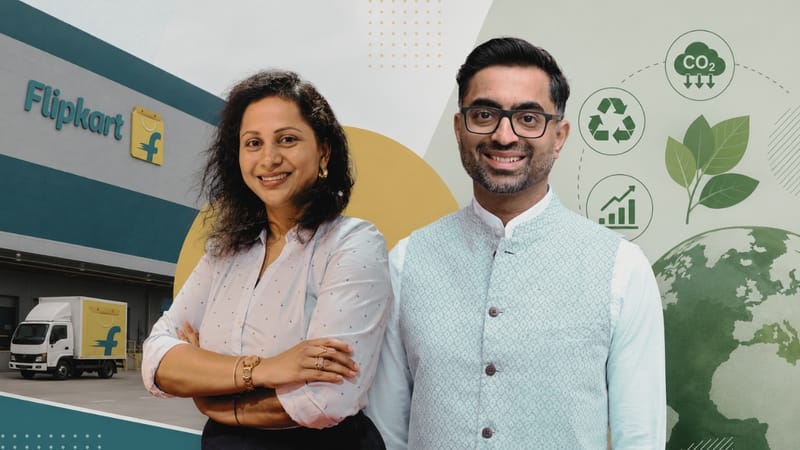
Sustainability is no longer just the responsibility of specialist teams. In an interview with People Matters, Flipkart's sustainability and HR leaders explain why emissions accounting, data literacy and change leadership are becoming critical workforce capabilities.
Everyone is talking about AI.
Boards want AI strategies. Employees want AI training. Recruiters want AI talent.
But inside organisations, another skill is quietly gaining importance. It rarely makes headlines, most employees do not list it on LinkedIn, and yet companies increasingly need people who can do it.
That skill is emissions accounting.
During an interaction with People Matters, Nishant Gupta, Head of Sustainability, Flipkart Group, and Yogita Shanbhag, Vice President, HR, shared how sustainability is changing workforce requirements across logistics, supply chains, procurement, fulfilment centres and frontline operations.
And if there is one takeaway from the conversation, it is this: sustainability is no longer becoming a separate function. It is becoming part of everybody's job.
The biggest workforce shift is not the creation of new jobs
Most conversations around sustainability eventually turn to green jobs.
But Yogita Shanbhag believes something more fundamental is happening.
"One of the most significant shifts is not necessarily the creation of entirely new roles, but the evolution of existing ones," she tells People Matters.
That evolution is already underway across business functions.
According to Nishant Gupta, professionals across operations, supply chain, procurement, facilities and technology are building sustainability expertise alongside their core responsibilities and incorporating sustainability considerations into everyday decision-making.
The shift is visible throughout Flipkart's operations.
As the company works towards its EV100 goal of transitioning its entire last-mile delivery fleet to electric vehicles by 2030, logistics teams are finding themselves involved in conversations that would have seemed unfamiliar a few years ago.
"Sustainability has always been an integral part of how we operate, and as our business continues to scale, it is becoming increasingly embedded into the way different functions plan, execute, and make decisions," says Gupta.
"In logistics, teams are not only focused on deliveries and operational efficiency but are also playing an important role in advancing electric mobility."
That means engaging with EV manufacturers, charging infrastructure providers and delivery partners to improve EV adoption and accessibility.
The same pattern is emerging elsewhere.
"In fulfilment centres, sustainability is becoming an important operational lever alongside traditional priorities such as inventory management and processing efficiency," Gupta explains.
Meanwhile, procurement teams are taking a broader view of sourcing decisions, looking beyond quality and cost to examine supplier practices, environmental compliance and the sourcing of materials used across operations.
Why emissions accounting is suddenly becoming important
While AI dominates talent conversations, Gupta points to a different capability that is becoming increasingly valuable.
"Most large companies now do an extensive GHG emissions accounting, which requires deep technical expertise," he says.
It is a deceptively simple observation.
As sustainability targets become more sophisticated and environmental reporting becomes increasingly important, organisations need professionals who can measure, analyse and manage environmental performance across operations and value chains.
According to Gupta, sustainability measurement and emissions accounting are among the areas seeing the biggest increase in demand.
"Organisations increasingly require expertise to measure, analyse, and manage environmental performance across operations and value chains, making data-driven sustainability management a critical capability."
The implication for HR leaders is significant.
Sustainability now speaks the language of data
When asked which capabilities are becoming most important, Gupta repeatedly returns to data.
"One of the most important capabilities is data-driven decision-making," Head of Sustainability says.
"Whether it is fuel consumption, packaging efficiency, energy use, or waste generation, we need to be able to use data to identify opportunities, measure impact, and drive action."
That requirement reflects a broader change in how organisations approach sustainability.
Alongside data literacy, Gupta highlights growing demand for expertise in circularity and sustainable materials.
"We are also seeing growing demand for expertise in areas such as circularity and sustainable materials."
Teams increasingly need a stronger understanding of material innovation, lifecycle impacts and circular design principles.
But the challenge goes beyond identifying sustainable alternatives.
"The challenge is not just identifying more sustainable alternatives, but ensuring they can be adopted at scale while meeting performance, cost, and customer requirements."
Why change leadership is becoming a sustainability skill
One skill repeatedly overlooked in sustainability conversations is change leadership. Shanbhag believes that needs to change.
"Another critical skill is change-leadership."
The VP HR's reasoning is straightforward.
"Many sustainability initiatives involve the adoption of new technologies, processes, or ways of working."
"Success depends on helping teams adapt to these changes while continuing to meet operational priorities."
For HR teams, this presents a familiar challenge. Technology alone rarely drives transformation. People do.
And that is exactly where capability building becomes important.
Teaching sustainability without making it feel like another initiative
For Yogita Shanbhag, one of the biggest challenges is also helping employees see sustainability as part of their existing jobs rather than an additional responsibility.
"Building sustainability capabilities starts with helping employees understand how sustainability connects to their day-to-day roles and responsibilities," she says.
To support that effort, Flipkart has conducted organisation-wide Capacity Development Sessions designed to build awareness around sustainability topics and help employees identify opportunities to integrate sustainability into their everyday work.
The company has also organised thematic sessions focused on global trends, emerging practices and function-specific priorities.
For frontline teams, Gupta says practical exposure has proved particularly valuable.
He points to initiatives such as EV Mela, where delivery partners can interact directly with EV manufacturers, understand the economics of electric mobility and experience vehicles through test rides.
One lesson has become increasingly clear.
"One of the biggest focus areas has been helping teams understand that sustainability is not separate from operational performance."
Whether the goal is reducing waste, improving resource efficiency, optimising logistics or adopting new technologies, sustainability tends to succeed when it aligns closely with business objectives.
Sustainability works when employees believe it is their job too
One theme appears repeatedly throughout the conversation.
Infrastructure matters. Processes matter. Technology matters.
But none of them deliver results on their own.
"One of the things we have learned is that sustainability cannot be driven through infrastructure and processes alone," Shanbhag says.
"Long-term progress depends on how people engage with those systems and make them part of their day-to-day work."
The Head of Sustainability points to Flipkart's Bengaluru headquarters, which earned LEED Platinum certification.
While infrastructure investments played an important role, employee participation also contributed to the outcome through actions such as reducing single-use materials, adopting reusable alternatives and practising responsible waste segregation.
The company has also seen strong engagement through its internal sustainability community known as the Planeteers.
"One of the biggest lessons for us has been that sustainability outcomes are often strongest when employees feel they have a role to play," Shanbhag says.
"When people understand how individual actions contribute to larger goals, behavioural change becomes easier to sustain and scale across the organisation."
What HR leaders should watch over the next five years
Looking ahead, Gupta and Shanbhag believe sustainability is about to undergo a significant workforce transformation.
"Over the next three to five years, sustainability will transition from being a specialised area of expertise to becoming a core business capability," says Gupta.
They expect organisations to continue building expertise in sustainability measurement, renewable energy, circularity, sustainable packaging and resource efficiency.
But perhaps the bigger change will be where those skills sit.
"Sustainability considerations will increasingly become part of everyday decision-making across operations, supply chain, procurement, logistics, technology, and facilities management, rather than being limited to dedicated sustainability teams," highlights Gupta.
At the same time, Shanbhag expects skills such as data literacy, analytics, systems thinking and environmental performance management to become increasingly important.
As companies navigate electric mobility, renewable energy adoption and circularity initiatives, success will increasingly depend on their ability to collaborate closely with suppliers, logistics partners, technology providers, recyclers, financiers and policymakers.
Topics
Author
Loading...