







Talent Management
Beyond the payslip: How BFSI can build rewards around moments that matter





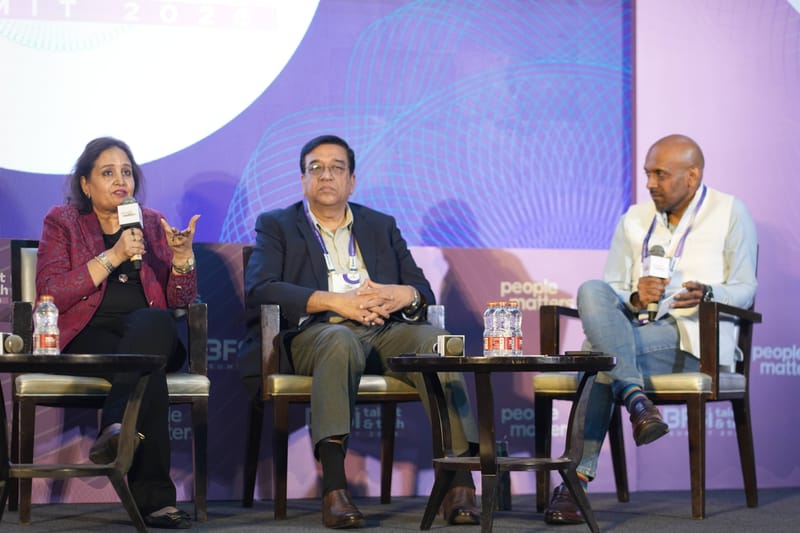
At the People Matters BFSI Talent & Tech Summit 2026, leaders explored why relevance, personalisation and human experience must sit at the centre of rewards.
BFSI organisations have some of the most sophisticated compensation architectures in the corporate world. Grades, pay bands, deferred bonuses, benefits and tightly governed reward processes are deeply embedded across the sector. Yet sophistication on paper does not always translate into an experience employees remember.
That tension shaped the Think Tank Panel, “Beyond Policies and Platforms: Building Rewards & Benefits Systems for a New Economy.” Moderated by Milap Shah, Co-founder and Chief Product Officer, Mandaala, the discussion featured Madhavi Lall, Managing Director, Head – HR India, Deutsche Bank, and Atul Mathur, Executive Vice President – HR, Aditya Birla Capital.
An audience poll at the session reinforced the shift underway: meaningful experiences emerged ahead of higher pay, faster growth and flexibility. Employees are no longer evaluating value only through compensation. They are asking whether work feels relevant, whether the organisation supports them at critical moments and whether recognition reflects what matters to them personally.
Relevance must come before reward design
The first challenge is moving beyond the assumption that a well-structured rewards programme is automatically a meaningful one.
“Beyond structures, what is really important is relevance,” said Atul. In a multi-generational workforce, employees increasingly want to understand whether their work matters, how it connects to the organisation and whether they are building capabilities that will remain valuable.
This is particularly important as AI reshapes roles across BFSI. Employees are not only asking what they will earn, but whether their jobs will continue to exist and how their skills must evolve. At Aditya Birla Capital, this has placed capability building at the heart of the employee value proposition. Upskilling helps shift the conversation from anxiety about displacement to confidence about contributing differently.
For Madhavi, relevance is also closely tied to career opportunity. “People stay with us not because of compensation, but because we have been able to provide them the career path they wanted,” she said.
Highly regulated compensation structures limit how far BFSI organisations can customise monetary rewards. However, they can personalise the broader experience through career mobility, learning, manager support, wellbeing and recognition. Total rewards, therefore, can no longer be treated as a compensation exercise alone. It must reflect the complete value employees receive from the organisation.
Design around the moments employees remember
The panel identified several overlooked moments across the employee lifecycle where relatively small interventions can have a disproportionate impact. Atul highlighted the period between accepting an offer and joining the organisation. In many companies, this phase is marked by “radio silence” except for requests for documentation. Aditya Birla Capital redesigned this experience through Project Epoch, using carefully timed WhatsApp nudges to introduce new hires to the group, its culture, policies and employee benefits.
The next vulnerable phase comes after induction. While organisations often provide support during the first 30 days, attention can drop just as performance expectations begin to rise. Atul pointed to the 45-to-90-day window as critical, when new employees need support from managers, HR and learning teams to understand ways of working, build confidence and secure early wins.
For a sales-led workforce, this can be tracked through practical outcomes such as whether new employees begin earning incentives. It also shifts accountability towards managers. At Aditya Birla Capital, managers are assessed not only on their own target achievement but also on the performance spread across their teams.
Madhavi drew attention to the other end of the lifecycle: departure. “When the employee decides to leave the organisation, we focus on exiting and offboarding the person. That is something that needs a little more care,” she said.
An employee leaving today could return as future talent, refer another employee or become a client. A respectful farewell can therefore have value beyond the final working day.
The same principle applies when performance temporarily declines. Instead of moving immediately towards formal performance management, Madhavi advocated understanding the reason behind the dip and supporting recovery.
“When an employee is going through a downtime, the organisation rallies around that person,” she said, describing the caring culture that contributes to long tenures at Deutsche Bank.
Combine scale with symbolism and prove the value
Technology enables rewards and recognition to reach more employees, more frequently and with stronger governance. But digital delivery cannot fully replace physical experience.
“Digital is for frequency and scale,” said Atul. “But for milestones or a significant achievement, it has to be physical.”
A certificate displayed at a workstation, an award presented by the CEO or a keepsake shared with family carries symbolic value that an e-voucher may not create. Madhavi described Deutsche Bank’s India Excellence Awards, where winners receive physical recognition signed by the CEO.
The strongest approach is not physical versus digital, but a deliberate combination of both. Digital platforms support reach, consistency and auditability. Physical recognition creates memory, pride and social visibility.
The final test is whether these programmes survive budget pressure. Atul suggested anchoring the case in measurable outcomes such as regrettable attrition, productivity loss, early exits and rehiring costs. Madhavi added that external market data can demonstrate where an organisation is falling behind and what inaction may cost.
Ultimately, rewards systems for the new economy will not be judged by the number of policies, platforms or awards an organisation offers. They will be judged by whether employees experience them as relevant, timely and human.
For BFSI leaders, that means replacing the one-size-fits-all mindset with a more useful question: at each moment that matters, what will make this employee feel seen, supported and valued?
Author
Loading...