







Talent Management
Employer branding is no longer owned: Navigating talent perception in a transparent market



 ||
||

As employer narratives shift beyond organisational control, branding is being shaped by employee voice, candidate experience, and continuous digital visibility.
86% of job seekers research company reviews and ratings before deciding where to apply, research shows, underscoring how candidate decisions are influenced as much by peer insights as by organisational messaging.
This shift is fundamentally changing how organisations attract talent. Employer perception is now shaped across multiple touchpoints, many of which sit beyond the organisation’s direct control, rather than being defined by a single recruitment campaign.
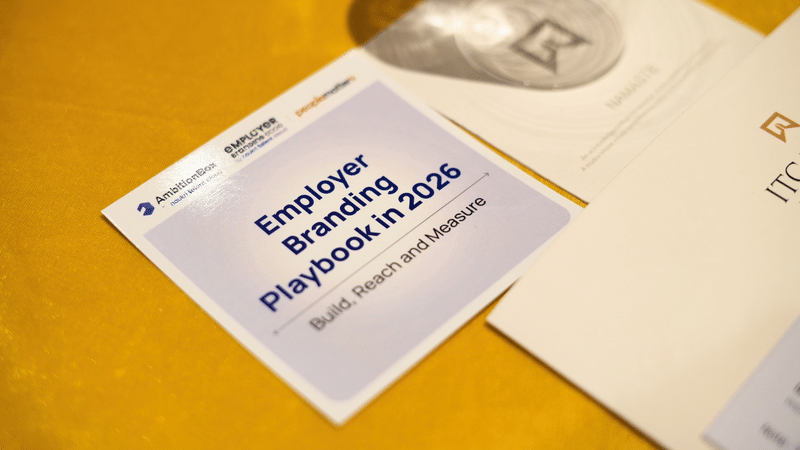
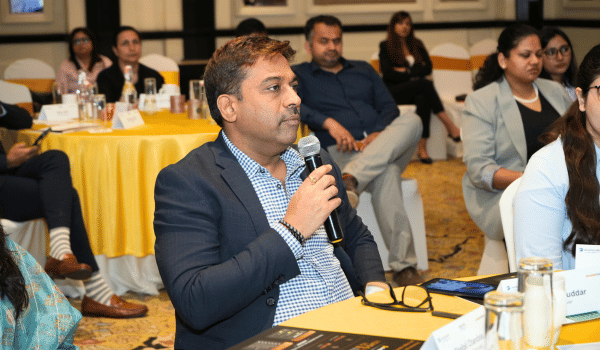
It was against this backdrop that, in the closed-door roundtable, “Employer Branding Playbook in 2026: Build, Reach and Measure,” hosted by People Matters in collaboration with Naukri at ITC Maratha, Mumbai, CHROs, employer branding heads, and talent acquisition leaders came together to examine how organisations are responding to a more transparent and candidate-driven talent market.
The discussion was anchored by perspectives from Swati Vashistha, EVP and Head of Employer Branding at Naukri.com, and Mayur Mundada, Founder and Business Head at AmbitionBox by Naukri Talent Cloud, who brought in platform-led insights on how employer perception is being shaped in real time.

Candidates evaluate employers before applying
One of the most visible shifts in hiring today is the reversal of how candidates engage with organisations. Earlier, candidates typically discovered organisations after applying. That sequence has now reversed.
Candidates actively research organisations through workplace reviews, peer feedback, and platform signals before deciding whether to engage at all. As highlighted during the discussion, platforms like AmbitionBox and Naukri have effectively become the starting point of this journey, influencing candidate decisions even before formal interaction begins. This means that by the time a recruiter reaches out, perception is often already formed.
Employer value propositions must move beyond documentation
Employer value propositions (EVPs) remain central to how organisations define themselves, but their effectiveness depends on how visibly and consistently they are experienced.
As Mayur Mundada pointed out, “More often than not, this is a very beautiful paper in the inbox of HR. It doesn’t really go to the top level.”
The gap between articulation and experience is where many employer brands weaken. He further emphasised the need for alignment between promise and reality: “Whatever it is that you're promising externally, does your actual lived experience connect? It comes out in the shape of reviews.”
For EVPs to influence candidate decisions, they must move beyond static frameworks and show up consistently across hiring conversations, leadership communication, and employee advocacy.
Visibility matters as much as messaging
Crafting the right narrative is only part of the equation. Ensuring it reaches the right audience at the right time is equally critical.
Large talent platforms today act as continuous discovery engines, where both active and passive candidates engage with employer content. Presence on these platforms is no longer optional; it directly impacts familiarity and consideration.
As Swati Vashistha noted, this requires sustained effort. “Branding is like a constant long-term investment. You cannot do it one time,” she said.
In this environment, employer branding is less about episodic campaigns and more about maintaining consistent visibility across the talent ecosystem.
Candidate experience shapes employer perception
The hiring process itself has become a defining moment in how candidates evaluate organisations.
From application to interview closure, every interaction contributes to perception. Even small inefficiencies such as delays, lack of communication, or unclear feedback can significantly influence how candidates rate their experience.
Insights shared during the discussion highlighted that extended hiring timelines often lead to a sharp drop in candidate satisfaction.
As hiring experiences are increasingly shared on public platforms, recruitment processes move beyond operational workflows to become visible extensions of the employer brand.
Workplace reviews are becoming a credibility signal
The growing influence of workplace review platforms is redefining how employer credibility is established.
Employee-generated content, whether it is on culture, leadership, or growth opportunities, offers candidates a level of transparency that traditional messaging cannot replicate.
Platform data shared during the discussion revealed a behavioural pattern: while employees may give positive ratings, detailed feedback often emerges more strongly in areas of dissatisfaction. This makes it important for organisations to actively engage with and respond to reviews, rather than passively monitor them.
More broadly, it reinforces a shift: employer brand is no longer what organisations say about themselves, but what employees collectively experience and share.
Employer branding is now a continuous effort
The roundtable concluded with a shared understanding that employer branding is no longer a one-time initiative.
Building trust with talent now requires sustained visibility, consistent communication, and alignment between internal experience and external messaging.
In an increasingly transparent talent market, employer branding is shifting from a function-led exercise to an organisational reality that is being reshaped by employee voice, candidate experience, and platform visibility.
As a result, companies no longer fully control their employer brand. Those who align what they say with what employees actually experience will ultimately stand out to talent evaluating their next career move.
Author
Loading...