







Talent Management
Inside ACKO’s AI-Native talent operating system: Why leaders must become doers






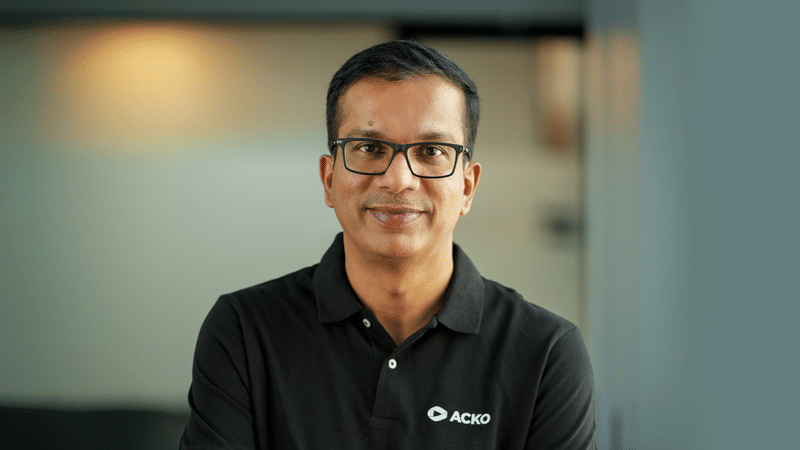
In a conversation with People Matters, Satheesh KV, CPO of Acko, shares how leadership, capability, and decision-making are being rethought.
Artificial intelligence is rapidly reshaping how
organisations operate, but much of the conversation still centres on tools:
copilots, automation layers, or productivity assistants. The deeper question
for leaders is structural: if intelligence becomes abundant, how should
organisations themselves be redesigned?
Across industries, companies are beginning to realise that AI does not simply accelerate existing workflows. It changes the assumptions on which organisations were originally built, from how decisions are made to how teams collaborate and how leadership is defined.
In traditional organisations, information moved slowly and
expertise was concentrated at the top. Hierarchies emerged to manage that
scarcity. But when AI systems can analyse data, generate insights, and support
execution at scale, the role of human leaders shifts fundamentally. Judgment,
context-setting, and problem framing become more valuable than task supervision
or functional review.
At ACKO, this shift is being approached as an organisational design problem rather than a technology adoption exercise. The company has been rethinking its operating model through pod-based execution, full-stack capability development, and a leadership philosophy centred on decision ownership.
In this conversation, Satheesh K V, Chief People
Officer explains how ACKO is redesigning its operating system for an
AI-enabled future and why the real competitive advantage may lie not in
intelligence, but in the quality of judgment across the organisation.
Redesigning work for an AI-native organisation
“AI-native” is a term used widely but often loosely
today. What does AI-native mean to you? And in practical terms, what changes
when AI is embedded into how work, decisions, and leadership are structured
rather than added as a layer?
AI-native has become a loose phrase in many organisations.
For us at ACKO, we’ve tried to be deliberate about what it actually means. For
us, AI-native is not about adopting tools. It starts with a fundamentally
different assumption about how work gets done.
Historically, organisations were designed assuming
intelligence was scarce, slow, and expensive. Decision-making authority was concentrated
at the top because information had to move upward before it could be
interpreted. That assumption no longer holds.
“If intelligence is abundant, the real question becomes: what should humans actually be doing?”
When AI is embedded into systems rather than added as an
incremental layer, work itself begins to change.
It also changes the scale of ownership. A smaller team can now handle work that previously required multiple handoffs, functional layers, and review loops. In practice, AI-native organisations are able to compress work layers, push decisions closer to the problem, and expect individuals to operate with broader end-to-end accountability.
Humans spend less time processing and coordinating work, and more time interpreting signals, making trade-offs, resolving ambiguity, and owning decisions.
Leadership changes as well. Leaders are no longer valued for
reviewing output or being the smartest functional expert in the room. Their
real value lies in framing problems clearly, creating context for teams, and
exercising judgment when the data is incomplete or conflicting.
When AI is embedded into the system rather than added as a
layer, work itself gets redesigned. We’re moving from task-heavy roles to
decision-heavy roles. In that sense, AI-native is not a technology strategy
for us. It is an organisational design philosophy.

Lean organisations require wise leaders
As
organisations aim for leaner, more talent-dense models, what trade-offs emerge
between speed, depth of capability, and resilience, and how do you navigate
those choices while scaling?
Leaner organisations certainly move faster. AI makes that possible at a new scale. When information processing, synthesis, and first-draft execution can happen instantly, organisations no longer need the same number of layers to move work forward. But that only works when leadership quality is high enough to absorb the complexity that hierarchy once managed.
But they also
expose weaknesses much more quickly. If hiring quality slips, if judgment is
uneven, or if decision rights are unclear, the system breaks faster because
there’s very little slack to absorb mistakes.
Speed without clarity can easily turn into chaos. At ACKO,
we navigate this by being deliberate about where we optimise for efficiency and
where we optimise for resilience.
At the execution edge, where work actually happens, we run lean. But at the system level, we
invest heavily in leadership capability, shared context, and operating
discipline.
For example, we spend disproportionate time aligning leaders
on intent and principles rather than just on targets. When leaders understand
the “why” deeply enough, they can make good decisions locally without waiting
for instructions.
We also invest in clear decision forums and operating
rhythms. On paper these can look like overhead, but in practice they provide
the stability that allows a lean system to move quickly without fragmenting.
Scaling, for us, is not about adding capacity. It’s about
raising the quality of judgment per person. Or as we often say internally: “We’re
not trying to build a bigger organisation, we’re trying to build a wiser one.”
Hiring for judgment rather than pedigree
There is
increasing emphasis on hiring for judgment and the ability to handle complexity
rather than narrow specialisation. How does this shift influence hiring and
retention decisions?
This shift has been uncomfortable but necessary. For many
years, leadership potential was evaluated primarily through functional
expertise and intellectual capability. But that model works best in stable
systems. When systems themselves are changing, expertise alone is not enough.
Functional excellence helps in stable environments.
Judgment matters when the system itself is evolving.
Judgment, however, is difficult to assess. It rarely appears
clearly in resumes or traditional interviews. Two candidates can have identical
professional histories but completely different levels of decision maturity.
Because of this, we’ve moved away from hiring purely for
pedigree, scale of experience, or narrow specialisation. Instead, we try to
understand how people think.
We ask questions such as:
• How do they frame ambiguous problems?
• How do they make trade-offs when there is no obvious right answer?
• How do they reflect on decisions that didn’t work?
The real signal we look for is awareness of one’s own
thinking. People who recognise their assumptions, question them, and revise
them when reality disagrees tend to develop stronger judgment over time.
This approach also changes retention dynamics. People rarely
stay in organisations simply because of titles or compensation. They stay when
their judgment is trusted and when they are given meaningful complexity to
solve.
When people know their decisions matter, they become far
more invested in the outcome.
Full-stack capability as organisational DNA
Full-stack
capability is often framed as an individual skillset. How do you think about it
as an organisational expectation?
At ACKO, we think about it as an organisational expectation
enabled by the operating system we’ve designed. We are deliberately moving
toward building full-stack capability across the organisation, but we do not
expect people to arrive fully formed.
What we look for are signals that someone can grow into that
level of ownership over time.
One of the strongest signals is customer obsession. People who naturally seek the ground truth of the customer journey tend to think beyond functional boundaries. They focus on outcomes rather than defending scope.
Another critical signal is truth-seeking communication.
In a horizontal operating model, speed comes from shared context. People who
surface assumptions early, write clearly, and communicate openly reduce
uncertainty across teams.
At ACKO, this is built deliberately through writing. Decisions are documented, assumptions are made explicit, and thinking is captured in a way that others can engage with asynchronously.
This creates what we think of as “truth-seeking communication” where ideas are evaluated on clarity and logic rather than hierarchy. Over time, this becomes a structural advantage. Teams move faster not because they communicate more, but because they communicate with greater precision.
People who surface assumptions early and communicate with precision reduce uncertainty across teams and improve decision quality.
Collaboration is equally essential. Full-stack
capability does not develop in silos. People who engage laterally and debate
problems rather than personalities tend to scale much more effectively in
cross-functional environments.
Finally, craft mastery itself is evolving. Today, being
strong in craft also means being fluent in AI-enabled workflows. People
who actively redesign how work gets done using AI tools, rather than simply
adopting them, are far better positioned to take end-to-end ownership.
At a leadership level, this combination becomes what we call
system leadership, the ability to think across technology, operations,
customer journeys, and governance simultaneously.
In AI-native systems, writing becomes core infrastructure for decision-making.

PODs as leadership development engines
POD-based
execution models are meant to drive ownership and faster decision-making. What
has this structure enabled from a leadership development perspective?
Pods have become one of the most powerful leadership
development mechanisms at ACKO. When decision authority moves closer to the
work, leaders cannot rely on escalation or hierarchy anymore.
If something breaks inside a pod, whether in customer
experience, operational flow, or system logic, the signal becomes immediately
visible. Someone has to own the problem.
That forces leaders to operate end-to-end rather than within
narrow functional boundaries. The learning cycles become much faster because
the consequences of decisions are visible almost immediately through customer
feedback, operational signals, or cross-functional dependencies.
Pods, therefore, develop what we call system leadership. But pods only work at speed when communication is disciplined. In a distributed ownership model, writing becomes infrastructure. Clear problem statements, written decisions, visible assumptions, and documented ownership reduce coordination drag and help teams act with confidence.
Leaders must think across customer journeys, technology constraints,
operational realities, and regulatory boundaries. They must communicate
clearly, surface assumptions early, and collaborate across functions rather
than pushing issues upward.
However, pods also introduce risks. Without strong operating
discipline, pods can fragment the organisation. Leaders might optimise locally
rather than for the broader system.

As we often say internally:
“Speed without clarity is just chaos.”
That is why autonomy within pods is always paired with
non-negotiables, clear problem statements, written decisions, explicit
ownership, and shared principles such as customer obsession and decision
hygiene.
When pods work well, they do more than accelerate execution.
They create leaders who can influence without authority and take accountability
for outcomes rather than effort.
The human role in an AI-enabled organisation
As AI
increasingly supports analysis and execution, how do leaders ensure
accountability remains human-led?
AI can analyse data, generate insights, and even execute
workflows at scale. But accountability must always have a human name attached
to it. At ACKO, we are very explicit about this distinction. AI can assist
decisions, but it can never own them.
One of the behavioural risks with powerful AI systems is
that leaders may stop examining their own thinking. They may begin accepting
outputs without questioning the assumptions behind them.
That is when learning quietly shifts from being human-led to
system-deferred. To prevent that, we emphasise strong decision hygiene. Every
meaningful decision has a clear owner, is documented explicitly, and is
revisited when necessary. AI informs the decision, but the human leader owns
it.
AI is extremely good at surfacing patterns. It is far less
effective at evaluating context, intent, competing values, or customer trust. Those
responsibilities remain human. Ultimately, the goal is not to build an
organisation that runs on AI.
The goal is to build one where AI sharpens human judgment. In an AI-enabled world, intelligence may become abundant. But judgment, and the willingness to own decisions, will remain the scarcest capability of all. That discipline matters even more in AI-enabled systems, where speed can otherwise outpace reflection.
Author
Loading...