







Wellbeing
Delhi’s severe AQI is forcing firms to rethink workplace wellness — Here’s how


 ||
||

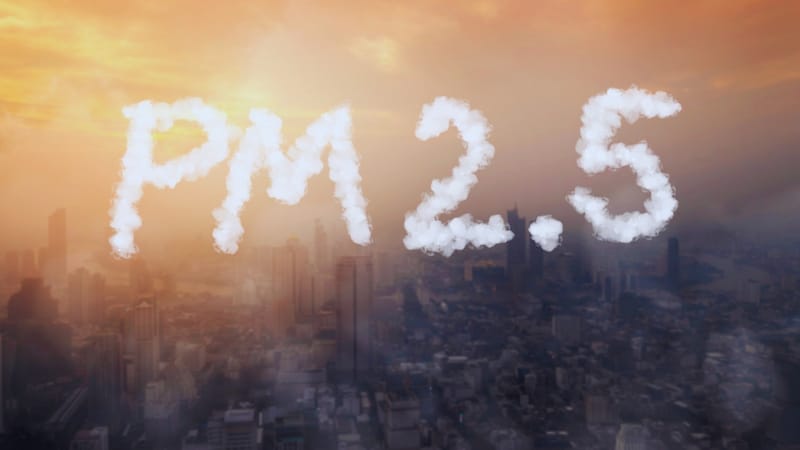
As Delhi’s air crisis deepens, a new breed of employers is turning wellness into infrastructure, culture and leadership—reshaping how work is designed.
As a toxic haze settled over Delhi and Air Quality Index readings plunged into “severe” zones, NDTV reported that the Supreme Court questioned why lawyers were still appearing in person when virtual hearings were available. A judge called the situation “very serious” and warned that masks alone could not shield people from the chemical stew in the air.
When one of India’s oldest institutions is nudged to rethink the physicality of its work, employers no longer have the luxury of treating air pollution as background noise. Outdoor air pollution from all sources already accounts for more than 2 million deaths a year in India, according to a modelling study in The BMJ.
A more recent Lancet-linked analysis estimates around 1.72 million deaths annually from human-caused fine particulate pollution, with India responsible for nearly 70% of global air-pollution deaths. For companies operating in these cities, wellness is no longer a soft benefit. It is a survival strategy.
Across a cluster of emerging firms—from engineering and fintech to gifting start-ups and co-working operators—a quiet redesign is underway. Their leaders are treating health resilience as infrastructure, not HR décor. What they are building, often with limited budgets and high exposure to urban risk, offers a glimpse of what employer responsibility might look like in the age of climate and air crises.
From perks to “guaranteed care”
Few leaders frame this shift as starkly as Radhika Arora, CHRO at Isgec Heavy Engineering. For too long, she argues, companies treated health as a transactional perk, “a benefit to be claimed”. That model is collapsing under the combined pressure of post-pandemic fatigue, hybrid work and younger workers’ demands for values-driven employers.
At Isgec, Arora describes a move from reactive benefits to what she calls a “Culture of Guaranteed Care”. The phrase is deliberate. Rather than assuming people will look after their own health outside the office, the company is trying to eliminate risks within its control.
Central to that is a simple but radical standard: clean air as an operational guarantee. Isgec has turned its facilities into “Clean Air Sanctuaries”, equipped with electrostatic air-cleaning filters and continuous indoor air-quality monitoring. The company does not merely promise “better air”; it aims to keep AQI levels consistently below 20 inside its premises—dramatically lower than typical urban readings that can soar into the hundreds. In an era where Delhi’s PM2.5 levels can reach more than 20 times the World Health Organization’s safe threshold, that is a striking design decision.
The effort extends beyond machines. Arora talks about socialised safety nets that transform “collective responsibility into action”. Isgec’s internal “Robin Hood Army” mobilises colleagues in medical emergencies—organising blood donations, accompanying co-workers to hospital, and providing immediate, personal support. CSR clubs run tree-plantation drives and community initiatives, tying environmental action to everyday corporate life.
In this model, wellness is not a poster on a wall. It is air filters, dashboards and peer networks designed to make sure, as Arora puts it, that “no colleague stands alone in a crisis”.
Designing for a polluted world
If air pollution is a structural condition, not a seasonal glitch, work itself has to be redesigned. Here, employers are experimenting with tactics that blend infrastructure, scheduling and education.
At Isgec, the “Clean Air Sanctuary” is only one layer. Employees are equipped with a preventative health toolkit: virtual sessions on pollution-related illnesses, workshops on anti-inflammatory and detoxifying diets, and lung-function check-ups through health camps and the company’s “Fit to Fab” challenge. Leaders are trained in what Arora calls “empathetic scheduling”—the expectation that managers will respond flexibly to health issues during high-pollution periods, adjust workloads and allow adaptive timings without stigma.
At Consortium Gifts, a corporate gifting firm in the Delhi NCR region, Managing Director Gaurav Bhagat talks about health as “part of the company’s DNA, not an afterthought”. The company’s response to winter smog is pragmatic and two-track. For office-based teams in marketing, accounts, HR and PR, remote work becomes the default during peak pollution phases. The logic is straightforward: every avoided commute is fewer hours spent breathing roadside exhaust.
For production and logistics, which cannot go fully remote, the company invests in high-capacity air purifiers and indoor AQI monitoring, aiming to keep work zones as clean as possible. Bhagat also nudges behavioural change: carpooling and public transport are encouraged to reduce both emissions and commute stress. These are not grand gestures, but they are the kind of small, cumulative design choices that, in his view, “build a more adaptive, health-conscious workplace” in a city where the air itself is hostile.
Fintech player airpay applies similar principles with a sharper focus on rhythm. Global People Officer Priyanka Dalvi describes well-being as “a way of life”, not a programme. Hybrid work is built to minimise exposure on high-AQI days, with employees encouraged to work from home or adjust hours to avoid peak pollution. Office locations are selected with air quality in mind, backed by real-time monitoring, purification and adaptive ventilation. When air quality suddenly deteriorates, staff are urged to work near home rather than endure long commutes through dense smog.
“We build for human sustainability,” Dalvi says. “Excellent work happens when people can breathe easy, feel safe and stay healthy.” In polluted cities, that is not a slogan—it is an operational benchmark.
Culture as a respiratory system
Infrastructure matters. But in each of these organisations, culture is the deeper respiratory system. Without it, air purifiers and flexible policies remain unused or unevenly applied.
Co-working operator Spring House Workspaces, led by founder and CEO Mukul Pasricha, attempts to hardwire wellbeing into the physical and social architecture of work. The company’s philosophy—“work well, grow well”—shows up in natural light optimisation, biophilic design, and the use of sustainable, low-VOC materials. Multiple smaller locations allow members to work closer to home, cutting commute exposure when the air outside is visibly grey.
Equally important are the conversations. Pasricha argues that “well-being is a leadership responsibility, not an HR function”. Leaders are expected to sense fatigue, encourage mental reset days, and give people the autonomy to shape their workday. Feedback sessions and community events create space for members to raise concerns—from stuffy rooms to stress levels—before they become crises.
Oxford International India, an education-focused organisation, leans heavily on emotional resilience and connection as a buffer against environmental and work pressure. Vice President Ms Prerna Upadhyay describes an internal “Gratitude Diary” that prompts employees to end each week with small wins and reflections, building mindfulness into the company’s rhythm. “Wellness Fridays” use light movement and music to provide a collective reset, while informal “Fika” sessions break down hierarchy and rebuild community in a hybrid environment.
The organisation’s second consecutive Great Place to Work certification is not presented as a trophy but as a signal that consistent, small practices—women’s health workshops, nutrition awareness, mental health conversations—have begun to shape how people work and relate to one another. For Prerna, wellbeing is “absolutely” a leadership competency: managers are expected to normalise discussions about stress, recovery and balance rather than treat them as private struggles.
Staffing firm NLB Services takes a similarly integrated view. CEO Sachin Alug insists that physical fitness has to sit alongside mental health in any credible wellness strategy. From healthier cafeteria offerings to programmes that promote active living, the company positions health as “a leadership mindset woven into how we work”, not a standalone initiative.
Alug is blunt about the context: as long as organisations operate in geographies where “the fight against pollution continues”, wellbeing leadership will remain a critical capability. It is built into strategic planning, budget allocation and performance metrics, not just internal campaigns.
Listening first, then acting
A recurring pattern across these firms is the premium placed on listening. In polluted cities, where symptoms can escalate quickly and impacts vary widely—children, the elderly and those with respiratory conditions are particularly vulnerable—leaders cannot rely on annual engagement surveys to understand risk.
Consortium Gifts uses monthly team-leader meetings under the EOS Traction System to surface employee experiences, supplemented by suggestion boxes and an open-door HR policy. The intent is to catch wellbeing and pollution-related concerns early, whether it is a rising number of sick days or anxiety about travelling in dense smog.
At airpay, Dalvi describes a philosophy of “proximity, empathy and open communication”. Daily check-ins are designed to go beyond deadlines, making space for employees to talk about stress, discomfort or external issues such as air quality. When concerns are raised, she says, leaders are expected to respond quickly—by adjusting schedules, offering remote options or redistributing workloads. The underlying rule: no one should feel obliged to endure discomfort in silence.
Oxford International’s programmes, from financial planning workshops to peer chats, are shaped by employee feedback rather than top-down design. That feedback loop has helped the company recalibrate workloads during high-stress periods and build “low-cost, high-impact interventions” that fit what people actually need.
NLB Services uses regular check-ins, town halls and engagement forums to keep leadership close to the lived realities of staff in different cities. In the context of air pollution, that proximity helps the company refine flexible work policies and target air-quality improvements where they are most urgent.
In each case, the listening mechanisms matter as much as the air filters. Without them, even well-intentioned policies risk missing the people they are meant to protect.
Employer brands built on trees, data and safety nets
If health resilience is becoming a pillar of employer branding, as many of these leaders suggest, what does that look like in practice? The answers are quietly inventive.
Consortium Gifts has turned its sustainability agenda into a measurable, public-facing commitment. For every ₹10 lakh of business generated, the company plants a tree under its “Tree Initiative”. Each sapling is geo-tagged and given a scannable QR code so employees and clients can track its growth, linking commercial performance to environmental renewal in a transparent way.
Isgec’s “socialised safety nets” are another form of brand signal. For younger workers, particularly Gen Z, a peer-to-peer support network that can mobilise in hours may be more persuasive than glossy wellness brochures. As Arora frames it, “the ultimate measure of an employer is not the size of its benefit package, but the strength of its social safety net”.
At airpay and Spring House, employer branding is increasingly about the environments people inhabit: the confidence that they can work close to home, breathe cleaner indoor air, and raise wellbeing concerns without risking their career. For Oxford International, it is the promise that employees will be seen as humans first, with gratitude, mental health and community woven into the workweek.
Alug believes this shift has already crossed a threshold. Health resilience, he argues, is no longer a niche differentiator but “an integral part of employer branding” with the potential to shape how organisations attract and retain talent. Boards and leadership teams, in his view, will have to treat wellbeing as a business imperative, not a discretionary cost.
The next design brief for work
India’s polluted cities are now part of a global story. A recent report by Swiss air-quality firm IQAir, covered by international media, found that only a handful of countries met the World Health Organization’s guidelines for fine particulate pollution; India remains among the most polluted, even as some improvements are recorded.
The WHO estimates that air pollution kills around seven million people worldwide each year.
Against that backdrop, the experiments of emerging employers in Delhi and other Indian cities are more than HR case studies. They are early drafts of a new design brief for work: air as a basic condition, not a variable; wellbeing as a leadership skill, not a soft add-on; flexibility and proximity as safeguards against environmental risk.
These companies cannot clean the skies alone. That remains the job of governments, regulators and systemic shifts in energy, transport and agriculture. But within the walls they control—and on the screens they now use—they are redrawing the boundary between what is considered “personal health” and what is squarely an employer’s responsibility.
In the long run, the most attractive workplaces in polluted cities may not be the ones with the flashiest offices or the fattest benefits. They will be the ones that can credibly say: here, your lungs, your mind and your community are part of the design, not an afterthought. Wellness, in that world, is not a perk. It is the architecture of survival.
Topics
Author
Loading...