







Wellbeing
The care shift: Why employee wellbeing is the strategic pivot for what’s next





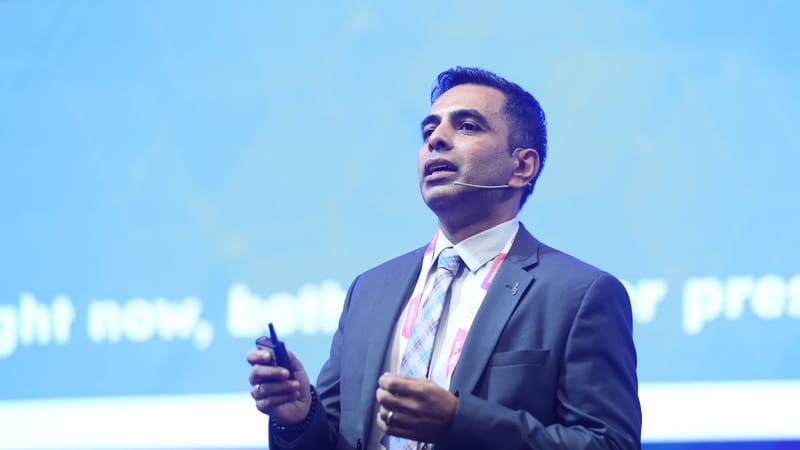
At TechHR India 2025, Anurag Bhatnagar declared: the true future of work isn’t tech, it’s care. Employee wellbeing is now a business advantage.
The next big disruption in business isn’t artificial intelligence. It isn’t restructuring, automation, or even market reinvention. It’s something far quieter, more human, and far more powerful.
It’s care.
In a keynote address at the recently concluded People Matters TechHR India 2025 that silenced the usual chatter about technology-first futures, Anurag Bhatnagar, Chief of Institutional Business at MediBuddy, delivered a striking truth: “The health of your workforce is the health of your business.”
Behind the polished surfaces of corporate transformation, Bhatnagar argued, lies an invisible crisis. Employees are burning out, struggling with anxiety, and facing chronic illnesses a decade earlier than their global peers. Productivity is slipping, not because people aren’t showing up but because too many are present in body and absent in mind. And unless organisations make the shift toward genuine, everyday care, they risk eroding the very foundation of resilience and growth.
The Invisible Crisis
To bring the issue home, he began with a simple video. Its message was disarmingly clear: the risks that undermine our people, stress, anxiety, chronic illnesses, are often invisible. They don’t show up in boardroom dashboards until it’s too late.
But the data, he warned, tells a sobering story. According to the latest CII–MediBuddy Wellness Report, Indian employees are experiencing chronic lifestyle diseases like diabetes and hypertension nearly a decade earlier than their global peers. 86 percent are battling some form of stress or anxiety. And presenteeism, employees physically present but mentally disengaged, costs organisations around INR 1.12 lakh per person per year.
“These are not outliers,” Bhatnagar said. “They are systemic realities that shape the resilience and competitiveness of our businesses.”
What Employees Really Value
The findings of the report also make it clear that wellbeing is no longer a perk; it is an expectation. After compensation, it is the single most valued benefit employees look for. But here lies the paradox: despite companies investing in wellness initiatives, very few employees even know what’s on offer. Only 8 percent of employees surveyed said they understood their company’s benefits fully. Meanwhile, 72 percent of corporates admitted that claims often go unfiled because of cumbersome processes, multiple vendors, and the endless back-and-forth of reimbursements.
“We think we’re doing enough by ticking the boxes,” Bhatnagar reflected. “But when only a fraction of employees can access or even understand the benefits, we are failing at the most basic level, accessibility.”
Employees, he stressed, are asking for something far more direct. They want therapy sessions without HR gatekeeping. They want dependents to be covered, especially for outpatient care which is affordable and impactful. They want preventive health checks instead of superficial perks like discounted gym memberships. And above all, they want care to be immediate. “When I need a doctor, I need them now, not in two days, not in two weeks. That is the real test of care,” Bhatnagar said.
From Periodic Perks to Everyday Care
At the heart of his argument was a call for a shift, from episodic, one-off initiatives to integrated, everyday wellbeing. Wellness, in his framing, is not a calendar event or an HR tick-box, but a cultural infrastructure that supports employees continuously.
He described how Flexi-Wallets, customisable health and wellness allowances, can transform how organisations deliver care. Instead of generic check-ups divided into age and gender brackets, wellness should be personalised to the realities of different employee cohorts: the sales executive constantly on the move, the factory worker exposed to physical strain, the office professional battling screen fatigue. “We should stop reducing people to age brackets. Needs are far more diverse, and so must be our solutions,” he argued.
Technology, he suggested, can be an enabler rather than a barrier. MediBuddy’s Sherlock system, for example, uses a 22-point check to identify fraudulent claims, right down to spotting tampered PDF files by reading metadata. Such innovations reduce misuse, but more importantly, they rebuild trust in the system so that genuine needs are met without friction.
Stories From The Field
What made the keynote particularly engaging were the stories behind the data. One company plagued by coordinated reimbursement fraud, where the same bill was tampered with and circulated among employees, shifted to a cashless-first model with Sherlock’s support. The result was not just the elimination of fraud but also smoother employee experiences.
In another example, on-site dental and vision camps detected serious conditions in nearly 8 percent of participants, conditions that, if left unchecked, could have escalated into expensive interventions like surgeries or root canals. Prevention, in these cases, became not just a health benefit but a cost-saving strategy.
But perhaps the most compelling story came from MediBuddy’s Maternal Care Program. Expecting mothers were paired with a team of specialists, a gynecologist, a nutritionist, a psychologist, and a physiotherapist, who supported them through pregnancy and postpartum recovery. The impact was measurable: 42 percent of women returned to work earlier, and retention among participants was 19 percent higher compared to those without the program. “How can we expect women to thrive as professionals and mothers if we don’t support them holistically during this critical life stage?” Bhatnagar asked. The program, he suggested, offered not just health benefits but also dignity and reassurance.
From Cost to Competitive Advantage
For skeptics who still see wellness as a soft issue, Bhatnagar offered hard numbers. Companies with robust wellness programs report 20 to 25 percent lower absenteeism, 1.6 times higher retention, and a 6 to 8 percent boost in productivity. These gains, he argued, are not marginal, they are the very levers of sustainable growth.
“Let’s stop calling wellness a benefit,” he concluded. “It is a business advantage. Your employees want it. Your company thrives on it. This is the care shift, and it is the strategic pivot for what’s next.”
Leading the Next Curve of Growth and Wellness
The keynote ended with a challenge. Imagine if companies could predict chronic illnesses five years before they manifest. Imagine reducing insurance claims by 20 percent. Imagine unlocking latent productivity simply by embedding care into the rhythm of work.
These are not hypotheticals; they are already happening in organisations that have embraced integrated models of wellbeing. And as disruption becomes the new normal, Bhatnagar argued, the organisations that endure will not be those with the slickest processes or the fastest algorithms, but those that put care at the center of their culture.
In a business landscape obsessed with speed, efficiency, and disruption, his message was both timely and timeless: organisations that learn to care will not just survive change, they will lead it.
Author
Loading...