







Wellbeing
What 2026 will demand from employers on workplace wellbeing: HCL Healthcare’s Sudeep Sharma





As workforce health becomes a business system, employers are being forced to move from intent to outcomes.
By the end of 2025, many employers had reached an uncomfortable conclusion: their approach to workforce health was no longer keeping pace with the realities of scale, complexity and risk.
Wellness programmes had multiplied, budgets had grown, and participation dashboards looked healthy. Yet the underlying outcomes — resilience, productivity, sustained engagement — remained uneven. Health was no longer a side conversation. It had become a structural business issue.
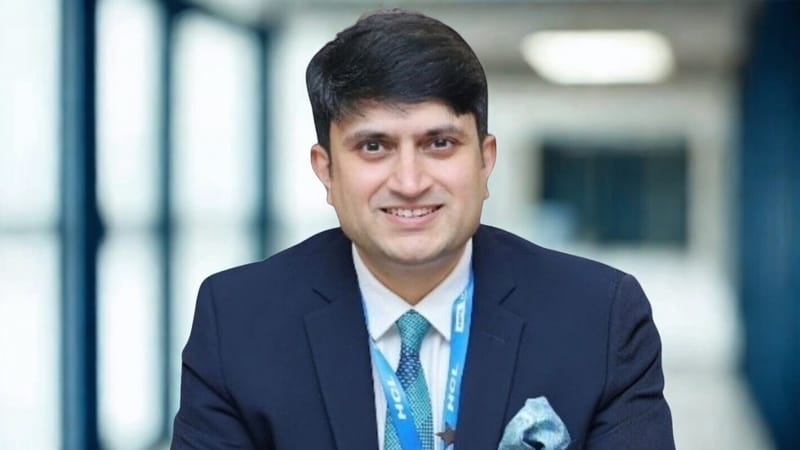
“2025 was another milestone in the evolution of employer perspective on workforce health as a series of wellness programs to a strategic business priority tied to productivity, resilience, and long-term cost management,” said Sudeep Sharma, Vice President & Head – People, Learning & Culture at HCL Healthcare.
For large, distributed organisations, the gap between effort and impact became hard to ignore.
“Large, distributed organisations begin realizing that occasional fitness sessions or mental health webinars were no longer sufficient,” Sharma said.
What followed was a gradual but significant shift — away from symbolic wellness and towards health as part of everyday working life. Preventive care, early risk detection and access to healthcare began to matter more than campaign-style interventions.
“There was a shift towards more focus on preventive health, early detection of risks and incorporating healthcare access into the daily life of employees instead of seeing it as a side offer,” Sharma said. “The emphasis moved from intent to accountability.”
Where employer health strategies start to strain
As organisations expanded health programmes across locations and employee groups, structural weaknesses surfaced.
“With the expansion of health programmes geographically and to a wide range of employees group, some of the gaps became even more apparent,” Sharma said.
One of the most visible was the lack of personalisation. Uniform benefits struggled to reflect different life stages, job roles and risk profiles.
“Uniform benefits often fail to address varied risk profiles, life stages, and job roles,” he said.
Another issue was measurement. Employers invested in multiple health solutions, but struggled to understand whether those investments translated into real change.
“Another challenge is fragmented data, where employers make investments in numerous health solutions but struggle to measure real outcomes such as reduced absenteeism, improved chronic disease control, or sustained engagement.”
Participation, meanwhile, remained fragile — particularly in areas such as preventive screening and mental health.
“Poor health literacy and lack of trust have also diminished the involvement especially in preventive screening and mental health provision,” Sharma said.
Why 2026 changes the rules
Sharma believes 2026 will force a sharper rethink — not incremental improvement, but a change in frame.
“The year 2026 will require the employers to re-evaluate their strategies that revolve around activity-based wellness to outcome-based health plans,” he said.
That shift means designing benefits around prevention, continuity of care and early intervention, and backing them with data that connects health investments to workforce outcomes.
“This implies formulating benefits that focus on prevention, continuity of care and early intervention backed by data that connects health investments to workforce outcomes,” Sharma said.
It also means stepping away from episodic engagement.
“Employers will need to move beyond annual campaigns and embed health into the employee lifecycle from onboarding to leadership development while ensuring access is simple, stigma-free, and inclusive.”
Trust will matter more than participation
By 2026, Sharma said, participation metrics on their own will lose relevance.
“The participation and impact will be focused on preventive care, health literacy and trust,” he said.
Employees engage more consistently when they understand their risks, know how to navigate benefits, and trust how their data is handled.
“Employees would be more inclined to participate when they are aware of their health risk factors, they are reassured how to navigate benefits, and trust that their data is used ethically and confidentially.”
That trust, he added, does not build itself.
“The ability to develop that trust will be reliant on transparent communication, culturally relevant health education, and normalisation of care-seeking behaviour led by the employer.”
In the end, Sharma said, employers who succeed will stop thinking of health as a programme altogether.
“Productive workforce health practices in 2026 will be defined by measurable outcomes rather than participation metrics alone,” he said. Employers who get this right will view health as an integrated system — one that supports not just a healthier workforce, but a more sustainable organisation.
Topics
Author

Loading...