







Wellness
The Great Wellbeing Shift Indian Corporate Health Study 2026




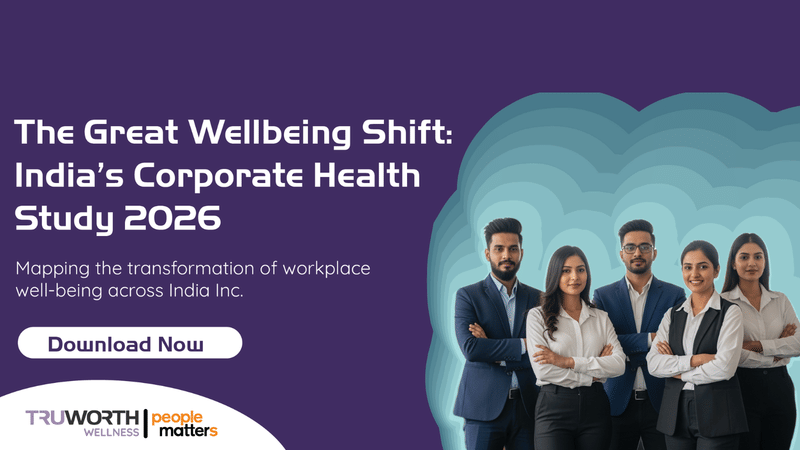
The Great Wellbeing Shift: India's Corporate Health 2026 surveyed more than 300 companies across different industries and spoke with over 10 leaders to build a comprehensive and in-depth report on the realities and challenges of employee and organisation wellbeing.
Workplace wellbeing in India has reached a decisive moment. Rising lifestyle risks, workforce fragmentation, medical inflation and increasing expectations of psychological safety have made wellbeing a strategic business priority. As organisations prepare for 2026, leaders are recognising that wellbeing is no longer a collection of activities. It is a core organisational capability, shaping resilience, productivity and long-term value creation.
The Great Wellbeing Shift: India’s Corporate Health Study 2026 brings together insights from more than 300 organisations and conversations with senior HR and business leaders across sectors. The study examines how wellbeing has evolved into an enterprise-wide system, how governance and measurement are maturing, where capability gaps persist, and what differentiates organisations that are building healthier, stronger and more future-ready workforces.
This report offers an integrated view of the forces reshaping corporate wellbeing in India, covering prevention, mental health, chronic care, leadership behaviour, digital ecosystems, and precision wellbeing. It serves as a practical roadmap for leaders designing the next generation of wellbeing systems: predictive, personalised and embedded into the flow of work.
Key Themes: What the Report Explores
1. From HR-Led Programs to Enterprise Wellbeing Systems
Organisations are moving towards structured, policy-backed wellbeing frameworks with shared leadership ownership and deeper integration with governance, culture and business priorities.
2. Evidence-Based Interventions Expanding Across the Wellbeing Stack
Preventive care, mental well-being, lifestyle risk management and family well-being have become foundational, yet chronic care remains the largest capability gap.
3. Precision Wellbeing and Segmented Design
Employees expect tailored, life-stage-sensitive wellbeing pathways. Organisations are responding with hybrid models, gender-responsive programs and early-stage personalisation.
4. Engagement Barriers vs Enablement Gaps
Strong communication does not guarantee action. Participation collapses when programs demand sustained behaviour change, signalling the need for low-friction, habit-forming interventions.
5. Advancing Measurement and Predictive Intelligence
Organisations are evolving from basic participation metrics to ROI/VOI indicators, but predictive analytics and integrated wellbeing intelligence remain in early stages of adoption.
What Leaders Will Gain from the Report
- A clear picture of well-being maturity across India Inc
- Insight into systemic gaps affecting prevention, chronic care and engagement
- A view of how governance, leadership and culture shape wellbeing outcomes
- Evidence-backed strategies for building integrated, intelligence-led wellbeing systems
- Practices and innovations leading organisations are using to strengthen workforce health
- A roadmap for evolving from activity-led wellness to a coherent, business-aligned wellbeing architecture
Download the report now and recalibrate wellbeing as part of your core organisational strength.
Topics
Author
Loading...