







Workforce Planning
Preparing for 2030: UGRO Capital CPO on the skills India’s lending workforce must build today
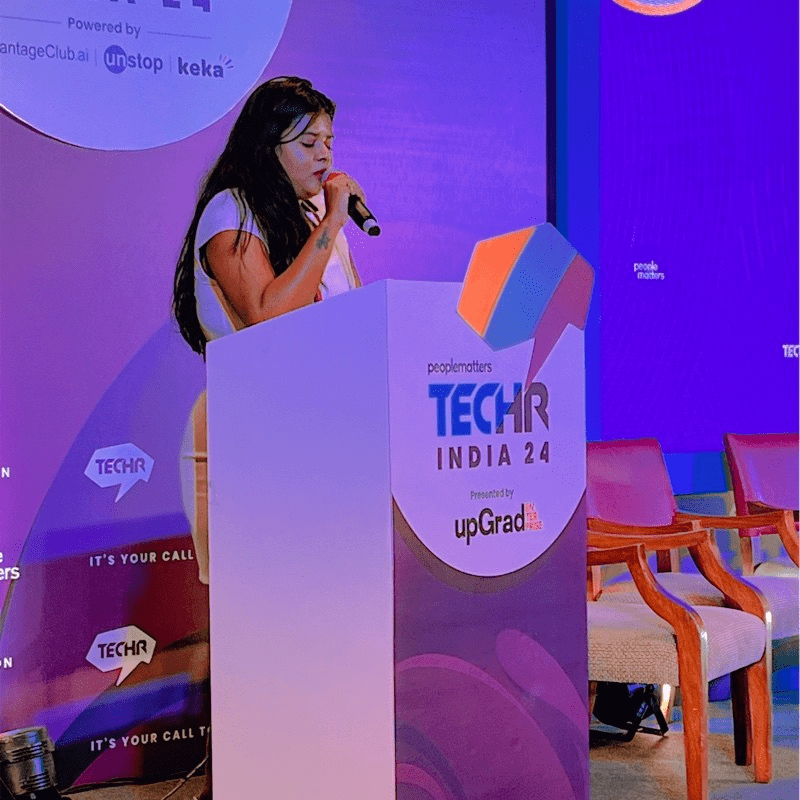



As AI and automation reshape lending operations, UGRO Capital’s Chief People Officer Rajni Khurana highlights the need for digital fluency, domain expertise and human judgement to prepare the workforce for 2030.
The next five years could reshape how India’s lending workforce operates, shifting employees from routine processing towards technology-enabled decisions, analytical responsibilities and deeper customer engagement.
In an interview with People Matters, Rajni Khurana, Chief People Officer at UGRO Capital, says automation is transforming activities across onboarding, underwriting, collections and portfolio monitoring. However, she emphasises that technology alone will not define the future of lending, particularly in the micro, small and medium enterprises (MSME) segment, where local market knowledge and customer understanding remain important.
Khurana brings more than 20 years of experience in human resources management and strategic business advisory, with a background spanning financial services and organisations including IndoSpace, CRISIL, Birla Sun Life Insurance, HDFC Bank and WNS.
Lending jobs will move beyond routine processing
Automation is expected to change the nature of several established roles, particularly those centred on repetitive administrative work. According to Khurana, routine data entry, document scrutiny, verification and basic processing are among the activities likely to be increasingly automated.
Operations teams will need to focus more on exception management and data validation, while collections professionals will increasingly use predictive insights to prioritise accounts and improve recovery outcomes.
Khurana says the workforce response should centre on redesigning jobs and redeploying employees rather than simply reducing headcount. As routine responsibilities diminish, employees can move towards work requiring greater analysis, problem-solving and customer understanding.
The shift will also affect teams involved in sales, credit, technical valuation and legal functions. Khurana expects these professionals to make greater use of AI, data analytics and geographic insights to improve decision-making.
For lenders serving MSMEs, this transition will require a balance between technology and an understanding of local business dynamics. The ability to interpret a business’s circumstances, beyond the data available on paper, will remain relevant to lending decisions.
The capabilities lenders will need to develop
As technology becomes more central to lending, organisations will need to strengthen capabilities across analytical, technical and risk-related functions.
Khurana identifies several areas likely to become increasingly important:
Credit analytics and AI-led underwriting: Using data and AI tools to support lending decisions.
Fraud detection and model validation: Identifying risks and assessing the reliability of analytical models.
Portfolio intelligence: Developing insights to support portfolio monitoring and decision-making.
Governance and cybersecurity: Strengthening oversight and security as technology becomes more embedded in lending operations.
Digital product management and responsible AI: Building and managing technology-enabled lending capabilities with appropriate safeguards.
Khurana says professionals who combine lending knowledge with analytical and technological skills will be particularly valuable. Understanding the underlying business, alongside the insights generated by data, will become increasingly important as lenders adopt more sophisticated tools.
Why human judgement will remain central to MSME lending
While technology can help teams work faster, anticipate customer needs and identify risks earlier, Khurana says its outputs still need to be interpreted in context.
In MSME lending, understanding the local market, an entrepreneur’s business and the circumstances behind the numbers remains essential. Technology may flag a potential opportunity or risk, but employees often need to assess what the signal means for the borrower and the lending decision.
“The future will be shaped by a combination of technological efficiency and human empathy, negotiation and decision-making,” Khurana says.
This places relationship-building alongside digital capability as a core workforce requirement. Employees will need to understand how to use AI and data tools while retaining the ability to assess situations independently, engage with customers and exercise commercial judgement.
Khurana identifies three broad capabilities for employees seeking to remain relevant: domain expertise, digital fluency and strong human skills. Critical thinking, adaptability, problem-solving and cross-functional collaboration will also matter.
Reskilling must connect to changing business needs
For HR teams, preparing for these changes begins with understanding how work is evolving across the organisation. Khurana advocates skills-based workforce planning that distinguishes between tasks suitable for automation, responsibilities that technology can augment and work that continues to require human judgement.
Reskilling programmes, she says, should be targeted and practical rather than treated as a general learning exercise. Her examples include:
Training operations employees in exception management.
Building credit teams’ capabilities in portfolio analytics.
Developing proficiency in AI-assisted decision-making.
Establishing clear career pathways as roles and responsibilities change.
Khurana also stresses the importance of continuous learning linked to business outcomes. Transparent communication and clear career pathways can help employees understand how their roles may evolve as technology adoption increases.
The approach places responsibility on both workforce planning and implementation. Identifying the skills needed for future roles is one part of the process; helping existing employees acquire those capabilities and move into changing roles is another.
What a lending professional in 2030 will look like
Looking towards 2030, Khurana expects successful lending professionals to combine financial expertise with data-informed decision-making and strong customer relationships.
They will need to understand credit, risk and customer needs, while using AI and other digital tools effectively. Equally important will be independent judgement, accountability and the ability to adapt as business requirements change.
For lenders, the implications extend beyond introducing new technology. Workforce strategies will need to account for changing job responsibilities, emerging skill requirements and the continued importance of customer understanding, particularly in MSME lending.
Khurana’s central point is that technology will be only part of the equation. The ability to combine digital tools with financial knowledge, sound judgement and an understanding of people and businesses will help define the lending workforce of 2030.
Author

Loading...