







AI & Emerging Tech
After Accenture, TCS tells senior staff to get hands-on with AI





CEO K Krithivasan says leaders must build with AI, even if automation cuts billing, as IT firms race to adapt to market disruption.
Tata Consultancy Services has told its senior employees to actively build and experiment with artificial intelligence tools, signalling a sharper push to embed AI into leadership accountability.
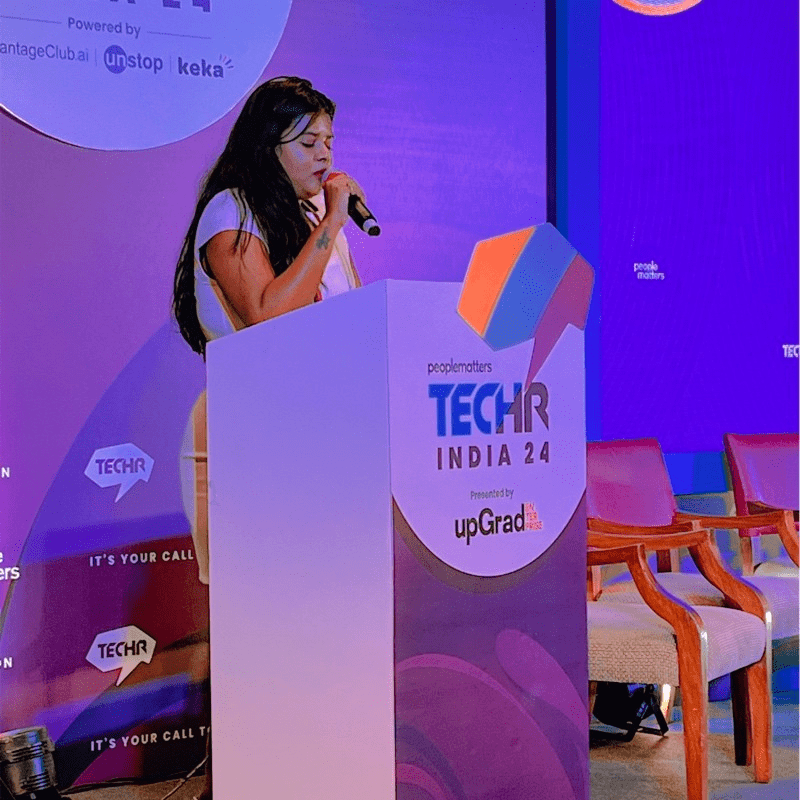
Speaking at the Nasscom Technology Leadership Forum in Mumbai, chief executive K Krithivasan said senior leaders must move beyond theory and start using the technology themselves. “We are insisting that every senior folk has to build something,” he said, arguing that AI adoption cannot remain confined to junior teams.
The message comes days after Accenture made regular use of internal AI tools a condition for promotion to senior leadership roles. According to the report, associate directors and senior managers were informed that visible AI adoption would now factor into talent and promotion discussions. An Accenture spokesperson confirmed the policy to CNBC, describing AI capability as central to the firm’s strategy.
TCS is not formally tying promotions to AI use. But its stance reflects a similar urgency. Krithivasan said the company is encouraging employees to deploy AI in client projects even if it means “cannibalising revenue streams”.
“We are not afraid this technology will take away our livelihood,” he said. Staff are being asked to tell clients that AI can deliver work faster, better and cheaper — even if that reduces billing in the short term.
The remarks come at a delicate moment for the IT services sector. Global and Indian technology stocks have been under pressure amid fears that generative AI could disrupt traditional outsourcing and software services models. Bloomberg reported that a Jefferies trader described the recent sell-off in software stocks as a “Saaspocalypse”, reflecting investor concerns over pricing power and long-term growth.
Recent product launches have intensified those anxieties. Market volatility increased after Anthropic introduced new plugins for its Claude AI tool, prompting worries that large portions of coding and IT services work could be automated.
Rather than resist that shift, TCS appears to be leaning into it.
Krithivasan said AI access is being extended across the organisation to build familiarity and experimentation at scale. He acknowledged that younger associates are often more comfortable with emerging tools, while senior leaders risk remaining removed from hands-on use.
“What we find is our associates at junior level are more comfortable and proficient in technology. As people go to senior level, they hear a lot of technology but they do not dirty their hands,” he said.
TCS has also deepened its AI partnerships. The company recently announced that OpenAI would become the first customer of its new data centre business. The collaboration will begin with 100 megawatts of capacity and could scale to one gigawatt under OpenAI’s Stargate initiative, according to company statements.
For large IT services firms, the stakes are structural. AI threatens the labour-arbitrage model that has underpinned decades of growth, where revenue scales with headcount and billable hours. Automation compresses that equation.
Yet executives are increasingly framing AI as a productivity multiplier rather than a headcount reducer. The competitive risk, they argue, lies not in deploying AI too aggressively, but in hesitating.
Accenture’s approach suggests AI fluency is fast becoming a prerequisite for leadership in consulting. TCS’s directive indicates the same shift is under way in India’s largest IT exporter.
The question now is whether clients will reward faster, cheaper delivery with deeper strategic partnerships — or simply demand lower prices. For the industry’s senior leaders, getting hands-on with AI may no longer be optional.
Topics
Author
Loading...