







AI & Emerging Tech
After cutting 21,000 jobs, Oracle says AI's biggest challenge isn't people anymore






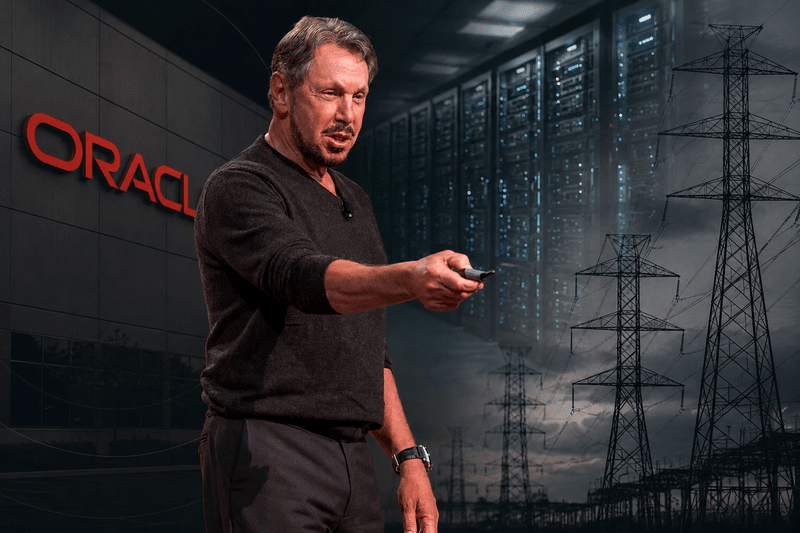
After one of its largest workforce reductions linked partly to AI adoption, Oracle is warning investors that infrastructure, not talent, could become the biggest barrier to the next phase of artificial intelligence.
Oracle's AI strategy has entered a new phase. After reducing its global workforce by around 21,000 employees during fiscal 2026, with AI adoption cited as one of the factors behind the restructuring, the technology giant is now warning investors that the biggest obstacle to AI growth is no longer people.
Instead, Oracle's latest annual report identifies a growing list of infrastructure risks, ranging from power shortages and GPU constraints to delays in building data centres, regulatory hurdles and rising energy costs, signalling that the race to scale AI may increasingly depend on physical capacity rather than workforce availability.
The disclosures, made in Oracle's annual filing and highlighted by technology publication Gizmodo, offer a detailed view of the operational challenges facing companies investing heavily in AI infrastructure.
Separately, media reports noted that Oracle eliminated approximately 21,000 jobs globally during fiscal 2026, with AI adoption among the factors contributing to the restructuring.
From workforce restructuring to infrastructure bottlenecks
Oracle spent much of the past year reshaping its organisation as it accelerated investments in cloud computing and artificial intelligence.
According to reports by The Economic Times and LiveMint, the company:
- Reduced its workforce by around 21,000 employees globally, representing roughly 13% of its workforce.
- Allocated $1.84 billion towards severance and restructuring costs during fiscal 2026, compared with $374 million a year earlier.
- Identified AI deployment, alongside management, product and strategic changes, as one of the factors behind the workforce reduction.
- Reportedly eliminated around 10,000 roles in India, including approximately 1,000 positions at Oracle Financial Software Services.
The restructuring reflected a broader trend across the technology industry, where companies are simplifying organisational structures while redirecting investment towards AI infrastructure and cloud capabilities.
Oracle's AI warning shifts the conversation
While workforce restructuring dominated headlines earlier this year, Oracle's latest filing suggests the company is increasingly concerned about a different set of challenges.
The company said expanding Oracle Cloud Infrastructure (OCI) requires substantial investment in computing capacity and warned that several factors could slow or derail its AI ambitions.
Oracle stated in its filing: "To grow our OCI business, which requires increased computing capacity, we must incur significant capital and operating expenditures."
The company outlined numerous risks associated with its AI expansion, including:
- Power shortages
- GPU shortages
- Delays in building data centres
- Construction and permitting delays
- Supply chain disruptions
- Increasing energy costs
- Environmental and data security regulations
- Grid capacity constraints
- Shipping disruptions and tariff changes
- Cybersecurity threats
- Weak customer adoption
- Geopolitical instability
Oracle also warned investors that rapidly changing economic and technological conditions introduce risks that are difficult to predict or control.
Capital spending reaches record levels
Oracle's concerns come alongside an unprecedented increase in AI-related spending. According to its annual report:
- Capital expenditure reached $55.7 billion in fiscal 2026, compared with $21.2 billion in the previous year.
- The company expects to invest between $90 billion and $95 billion during fiscal 2027.
Much of this spending is directed towards expanding AI-ready cloud infrastructure to meet growing demand from customers developing and deploying large language models.
Oracle has signed major cloud agreements with companies including OpenAI and Meta, while continuing to expand its data centre footprint globally.
Stargate raises the stakes
Oracle is also one of the companies behind Stargate, the large-scale AI infrastructure initiative announced alongside OpenAI, SoftBank and the US government last year.
The project has outlined plans to invest up to $500 billion in AI infrastructure over the coming years, making access to computing capacity, energy and specialised hardware increasingly critical.
Oracle's latest filing suggests delivering projects of this scale depends on far more than software development.
The company highlighted risks including excess capacity, customer defaults, fixed-price contracts, volatile electricity costs, export controls, hardware obsolescence, service outages, privacy concerns and legal liabilities associated with AI deployment.
Customer finances are also a concern
Oracle's filing also identified another emerging challenge.
The company warned that some customers may face financial pressures that could affect their ability to meet contractual obligations.
It said customers with high debt levels remain exposed to operational and regulatory risks, creating the possibility of delayed payments or contractual non-performance.
The observation is notable because several leading AI developers continue investing heavily in infrastructure while remaining unprofitable.
A broader signal for the AI industry
Oracle's latest disclosures underline how the AI conversation is evolving.
Much of the focus over the past two years has centred on hiring AI engineers, reskilling employees and restructuring organisations around artificial intelligence.
Oracle's latest filing suggests the next constraint may lie elsewhere.
As companies commit billions of dollars to AI, success increasingly depends on securing electricity, specialised chips, land, data centres, regulatory approvals and resilient supply chains. Workforce transformation remains important, but it is no longer the only determinant of AI readiness.
For employers and business leaders, the message is clear. AI adoption is no longer just a talent strategy. It has become an infrastructure strategy requiring long-term investment, operational resilience and the ability to manage risks extending well beyond the workforce.
Topics
Author

Loading...