







AI & Emerging Tech
AI Impact Summit: Leaders say reskilling is key to future jobs
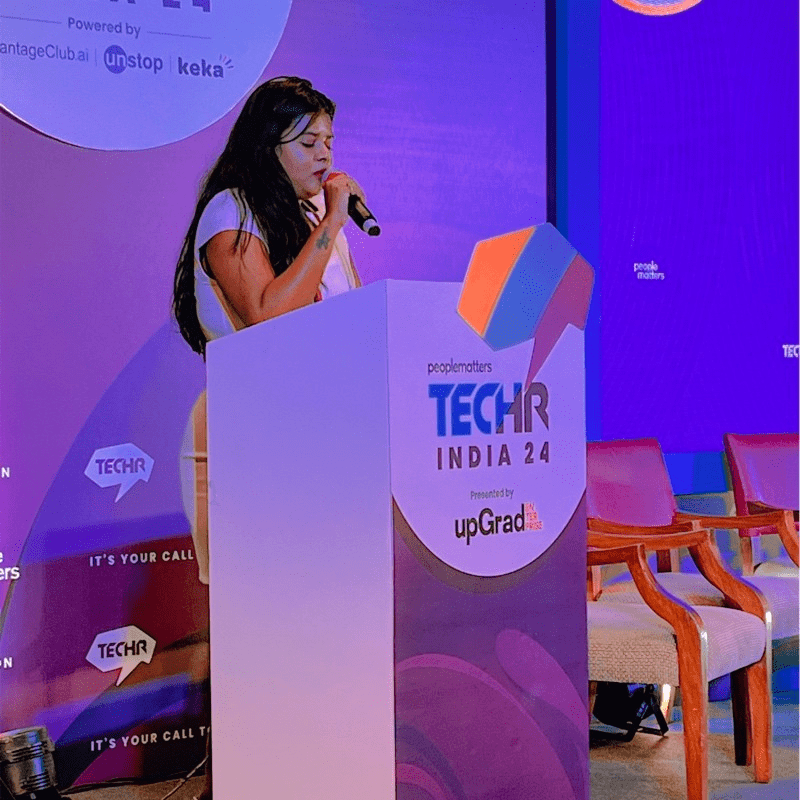





Policymakers and industry executives in New Delhi said AI will reshape work but create new roles if employees adapt through continuous reskilling.
Leaders at the India AI Impact Summit 2026 in New Delhi urged employees not to panic about artificial intelligence replacing jobs, arguing instead that reskilling and workforce readiness will determine whether AI becomes a threat or an opportunity.
Speaking at the summit, S. Krishnan, Secretary at the Union Ministry of Electronics and Information Technology (MeitY), said AI is unlikely to trigger a major negative shock to employment. “Do not expect a massive negative impact of AI on jobs—many more roles will be created because of AI,” he said, framing the technology as a net generator of work rather than a destroyer.
Krishnan also pointed to the scale of global interest in India’s AI ambitions, noting that the summit has drawn more than 2.5 lakh registrations from India and abroad, reflecting growing attention on the country’s AI and semiconductor ecosystem.
Industry executives echoed the message that AI’s impact will depend on how quickly organisations and workers adapt. Srijay Ghosh, a senior executive at Temasek, said AI could help employees use their time more productively, potentially adding 20–30% more value to their work. He cautioned, however, against excessive reliance on machine-led decisions, stressing the need for continued human oversight.
Bhuvan Lodha of Mahindra & Mahindra highlighted structural gaps in preparedness, warning that “our education system is yet to catch up,” and underscoring the urgency of reform to equip future generations for AI-driven labour markets.
Manish Agarwal, President and Business Head of Kotak Mahindra Bank’s digital platform 811, said AI transformation offers significant gains in efficiency and value creation, but argued that accountability and workforce preparedness will be essential to ensure inclusive growth.
Vineet Nayar, Founder Chairman of Sampark Foundation and former CEO of HCL Technologies, took a more disruptive view, saying that while “50 per cent of current jobs will go because of AI, 50 per cent more jobs will also be created,” requiring skilled manpower to manage the transition. He described automation as an “economic inevitability” and urged professionals to acquire field-specific capabilities.
Sanjeev Bikhchandani, founder of Info Edge, which owns Naukri.com, delivered a direct message to young professionals: “Don’t worry about policy. Just think what you should do so that AI does not make you lose your job and instead help you get a job.” He encouraged workers to learn 10–15 practical AI tools to boost productivity rather than fear replacement.
The summit’s discussions reinforced a central theme: AI will reshape the labour market, but the long-term employment outcome will depend less on the technology itself and more on how governments, companies and workers invest in skills, education and adaptability.
Topics
Author
Loading...