







AI & Emerging Tech
Amazon workers question $200 billion AI push as Seattle considers data centre ban






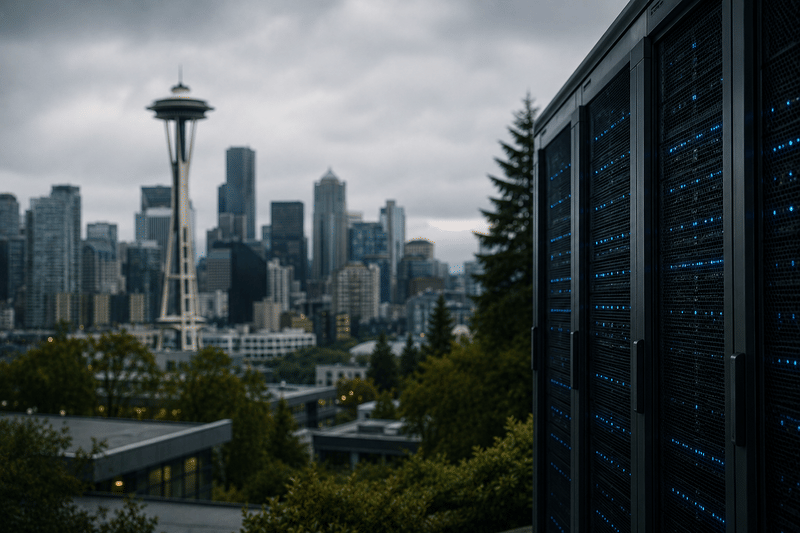
Amazon employees have publicly challenged the rapid expansion of AI infrastructure, linking the company's multibillion-dollar data centre investments to widespread job cuts as Seattle officials move to temporarily halt new large-scale projects.
The debate over artificial intelligence infrastructure is increasingly moving beyond technology strategy and into city halls.
In Seattle, a growing coalition of residents, policymakers and Amazon employees is pushing back against the rapid expansion of AI-focused data centres, raising concerns about jobs, energy consumption, transparency and community oversight.
The issue came into sharp focus this week when Seattle City Council's Land Use and Sustainability Committee unanimously approved a proposal for a one-year moratorium on new large-scale AI data centres, giving city officials time to develop regulations governing future projects.
The proposal follows mounting public scrutiny of the AI infrastructure boom, which has seen major technology companies commit hundreds of billions of dollars to new computing capacity while simultaneously pursuing workforce reductions.
Amazon employees raise concerns over AI expansion
According to reporting by CNBC, several Amazon employees spoke in favour of tighter restrictions on new AI data centres during a Seattle City Council hearing on Wednesday.
Among them was Patrick Schloesser, a software engineer at Amazon Web Services (AWS), who questioned the pace of infrastructure expansion as the company continues to reduce headcount.
Schloesser told city officials that Amazon plans to spend $200 billion in capital expenditure this year, with much of that investment directed toward AI infrastructure and data centres. At the same time, he noted that the company has eliminated approximately 30,000 corporate jobs since October.
The comments reflect a growing concern among some workers that technology companies are prioritising the race to build AI capacity while reducing employment in other parts of their organisations.
Schloesser urged city leaders to establish stronger requirements for future projects, including renewable energy commitments, greater transparency around project ownership and guarantees that new developments create quality jobs.
He also called for consideration of a tax linked to large-scale layoffs to support local employment initiatives.
Proposed projects face growing local resistance
The Seattle debate emerged after four developers approached a local utility provider with proposals for five large-scale data centre projects.
However, public opposition has already influenced the pipeline.
According to reports presented during the hearing, two developers subsequently withdrew their proposals following community resistance.
The committee's proposed moratorium would temporarily pause additional large-scale AI data centre developments while city officials examine issues including:
- Energy consumption and grid impact
- Environmental sustainability requirements
- Project transparency and ownership disclosures
- Employment and community benefits
- Long-term land-use considerations
Supporters of the proposal argue that AI infrastructure is expanding faster than local governments can assess its broader consequences.
A wider backlash against data centre growth
Seattle's move reflects a broader national trend.
As AI demand accelerates, local governments across the United States are facing increasing pressure to evaluate the economic and environmental impact of hyperscale data centres.
According to the National Conference of State Legislatures, lawmakers in 14 states are considering measures that would restrict, pause or impose additional conditions on new data centre developments.
Meanwhile, Data Center Watch reports that at least $156 billion worth of data centre projects have been delayed or blocked in 2025 due to litigation, regulatory reviews and local opposition.
The figures highlight a growing tension between national ambitions to expand AI infrastructure and local concerns over resource consumption, land use and economic benefits.
Big Tech continues to spend aggressively on AI
Despite mounting scrutiny, technology companies continue to increase investment in AI infrastructure.
According to figures cited during the Seattle discussions, Amazon, Microsoft, Alphabet and Meta are collectively expected to spend around $700 billion on capital expenditure this year, much of it dedicated to AI-related facilities and computing infrastructure.
Amazon alone announced in February that it expected to invest approximately $200 billion in capital expenditure during 2026, with AI infrastructure accounting for the majority of that spending. The company reaffirmed that forecast in April.
The investment push reflects intense competition among major technology companies to secure the computing power needed to train and deploy increasingly sophisticated AI models.
At the same time, several firms have pursued cost-cutting measures, including workforce reductions and organisational restructuring.
At Amazon, the layoffs referenced by Schloesser form part of CEO Andy Jassy's broader effort to reduce management layers and streamline operations.
Climate activists push for greater accountability
Several speakers at the hearing were members of Amazon Employees for Climate Justice, a group of current and former workers that has repeatedly challenged the company's policies on climate, labour and AI governance.
Alongside Schloesser, group members Liesl Wigand and Darius Irani addressed city officials during the hearing.
Wigand told the council that local governments should play a more active role in shaping how data centre projects are approved and developed.
The group has previously urged Amazon leadership to adopt a more responsible approach to AI deployment and to account for the environmental and social impacts associated with large-scale infrastructure expansion.
Their intervention reflects a growing trend of employee activism within technology companies, particularly around climate and AI-related issues.
A defining challenge for the AI era
The Seattle proposal remains an early-stage measure and still requires further consideration before becoming city policy.
Yet the debate highlights a challenge that is likely to become increasingly common as AI adoption accelerates.
Technology companies view data centres as essential infrastructure for future growth. Communities and policymakers are beginning to ask how that growth should be managed and who ultimately benefits from it.
As billions of dollars flow into AI infrastructure projects worldwide, the conversation is expanding beyond processing power and computing capacity to include jobs, energy use, transparency and public accountability.
For cities such as Seattle, the question is no longer whether AI infrastructure will arrive. It is how much influence local communities will have over its expansion.
Topics
Author

Loading...