







AI & Emerging Tech
China’s space station just got an AI chatbot — here’s what it does






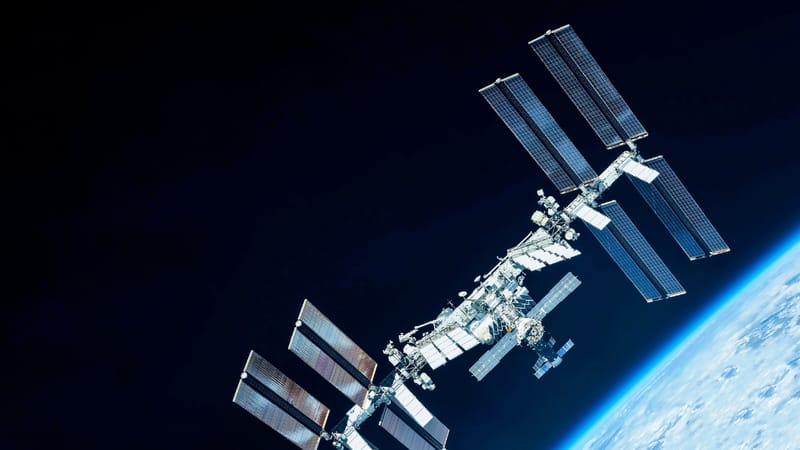
China’s Wukong AI, named after the Monkey King, is supporting taikonauts aboard Tiangong, blending artificial intelligence with orbital operations.
China has quietly added a new crew member aboard its Tiangong space station—an artificial intelligence chatbot called Wukong AI. Installed in mid-July and named after the trickster Monkey King of classical Chinese literature, the system represents the first large language model (LLM) deployed on China’s orbital platform.
According to Xinhua, Wukong AI has already assisted three taikonauts during a spacewalk, guiding them through a six-and-a-half-hour operation to install space debris protection and conduct station inspections. The technology, Chinese engineers said, was developed from a domestic open-source model and trained with aerospace flight data to meet the demands of manned space missions.
The debut of Wukong AI coincides with Beijing’s drive to position itself as a space power over the next three decades. Tiangong is central to this strategy, functioning as both a microgravity laboratory and a staging ground for more ambitious missions to the moon. Analysts note that adding AI to its toolkit gives China a potential edge in terms of efficiency and crew support.
While AI assistants have flown before—NASA’s Astrobee robots and Germany’s CIMON companion on the International Space Station—China’s system is notable for its dual-module structure. One component runs on the station, providing immediate responses, while a ground-based module handles heavier computation.
“This system can provide rapid and effective information support for complex operations and fault handling by crew members, improving work efficiency, in-orbit psychological support, and coordination between space and ground teams,” said Zou Pengfei of the taikonaut training centre, in comments reported by Xinhua.
Taikonaut Wang Jie, who interacted with Wukong during the July mission, said the system offered “very comprehensive content” when queried about the next day’s spacewalk schedule. Chinese media described the chatbot as a question-and-answer platform customised to the unique environment of orbital work.
The introduction of an AI assistant in orbit is more than a technical experiment. It signals Beijing’s intent to integrate artificial intelligence into human spaceflight as a long-term feature. For astronauts, such systems promise practical benefits: quick fault diagnosis, step-by-step mission guidance, and psychological support during periods of isolation.
Strategically, China’s deployment of Wukong AI reflects its bid to close the technology gap with rivals. According to space policy analysts cited by state media, combining AI with crewed space operations could reduce reliance on ground control and enable more autonomous missions—an asset if China pursues a permanent lunar base in the 2030s.
Despite the optimism, uncertainties remain. Wukong’s full capabilities are still largely undisclosed, with most information coming through official channels. The reliance on a ground-based module for deeper analysis raises questions about latency and resilience in more distant missions.
Internationally, comparisons with NASA’s systems highlight both progress and limitations. While CIMON and Astrobee were designed as experimental assistants, Wukong appears positioned as a mission-critical tool. That raises the stakes: can AI in space truly shoulder responsibility under emergency conditions, or does it remain a supplementary assistant?
Topics
Author

Loading...