







AI & Emerging Tech
Elon Musk releases Grok 2.5 openly, Grok 3 slated for 2026






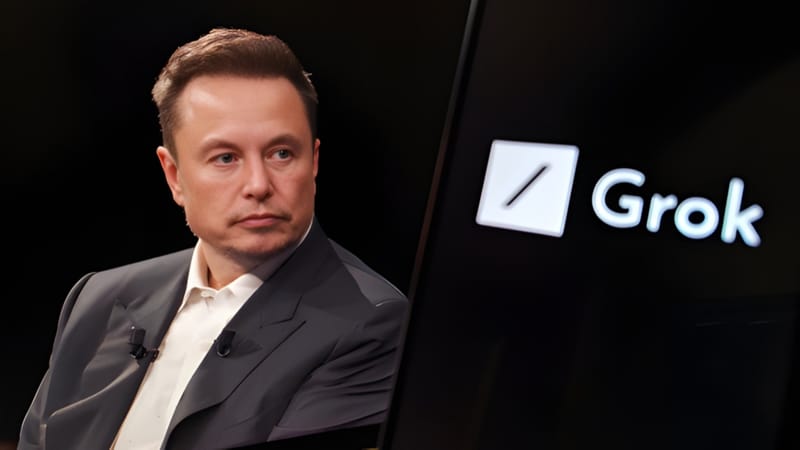
Elon Musk’s xAI has made its Grok 2.5 AI model open source and pledged to release Grok 3 under a similar license in around six months.
Elon Musk, the high-profile entrepreneur behind xAI, has announced that the company’s Grok 2.5 language model is now available as open source, according to a post on social platform X (formerly Twitter). Simultaneously, he confirmed that the newer Grok 3 model will be released under an open-source licence in approximately six months.
In his post, Musk stated: “The @xAI Grok 2.5 model, which was our best model last year, is now open source. Grok 3 will be made open source in about 6 months.”
The move continues a trend towards increased transparency in AI development—one already exemplified by earlier releases such as Grok-1 in March 2024. The release of Grok 2.5 marks the latest step in this open-source strategy.
Grok 2.5 has been made available via Hugging Face, a popular repository for AI models, enabling developers to download, run, and modify the model. However, the licence under which it is released—called the Grok 2 Community License—imposes limitations that go beyond traditional open-source norms.
Users are prohibited from using the model’s code to train competing or derivative foundation models and must include proper attribution and display of licensing terms in any deployments. An AI engineer, Tim Kellogg, described the licence as “custom with some anti-competitive terms”.
Grok is xAI’s series of large language models integrated with the social platform X and originally launched in late 2023. Grok 3—released in February 2025—is a more powerful model trained using Musk’s Colossus supercomputer, equipped with around 200,000 GPUs. xAI claims that Grok 3 outperforms leading AI models such as OpenAI’s GPT-4 on complex reasoning benchmarks, though independent verification remains limited.
The forthcoming Grok 3 open-source release suggests xAI is doubling down on its pledge to broaden external access to its most advanced models—an approach that differentiates it from rivals such as OpenAI, which retain closure over their flagship models.
This development aligns xAI with a broader movement toward open-source AI: recent reports demonstrate that the majority of large language models released in 2023 followed an open-source approach. Transparency and community-driven innovation are increasingly seen as valuable by enterprises aiming to avoid vendor lock-in and uphold regulatory accountability.
By committing to open-source Grok 2.5 and Grok 3, Musk positions xAI as a more open alternative in the increasingly competitive AI field, directly contrasting with his former company, OpenAI, which has been criticised for preserving proprietary control over its most capable models.
Topics
Author

Loading...