







AI & Emerging Tech
Google to shut down Firebase Studio, shift focus to AI tools






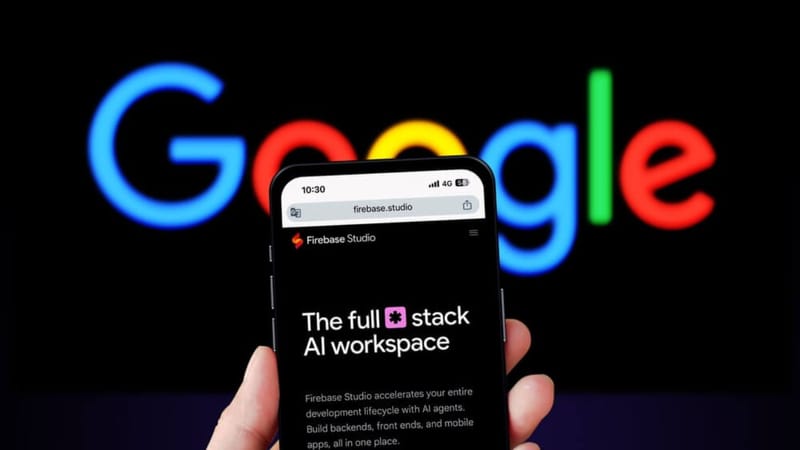
The company will phase out Firebase Studio by 2027 as it consolidates AI developer tools under Google AI Studio and Antigravity.
Google has announced it will shut down Firebase Studio by March 22, 2027, as part of a broader effort to streamline its artificial intelligence developer ecosystem and shift focus to newer platforms, including Google AI Studio and Antigravity.
The move marks a strategic consolidation of Google’s AI development tools, with the company positioning its newer platforms as the primary environments for building and deploying AI-driven applications. Firebase Studio, which launched as a preview product, will be phased out over a one-year transition period.
According to the company’s official documentation, developers will be required to migrate their projects before the shutdown date, after which all remaining data in Firebase Studio will be permanently deleted. New workspace creation will be disabled from June 2026, while existing projects can continue to operate until the final sunset.
Google said the decision is driven by lessons learned during Firebase Studio’s preview phase. The company is now integrating those capabilities into its flagship tools to provide what it describes as “clearer, more powerful paths forward” for developers.
Two platforms will anchor this transition. Google AI Studio is being positioned as the primary environment for rapid, browser-based prototyping, while Antigravity—its next-generation integrated development environment—targets code-first workflows with advanced agentic AI capabilities.
The shift reflects a broader industry trend towards embedding AI more deeply into developer tools. According to Reuters, major technology firms are increasingly consolidating fragmented platforms to simplify workflows and accelerate adoption of generative AI applications.
Importantly, Google emphasised that the shutdown applies only to the Firebase Studio development environment. Core Firebase services—including Cloud Firestore, Authentication and App Hosting—will continue to operate independently and remain unaffected by the transition.
This distinction is critical for developers, as applications already deployed on Firebase infrastructure will continue to run without disruption. The company also noted that backend services and user data will remain intact, regardless of which development environment developers migrate to.
The timeline underscores a measured transition rather than an abrupt shutdown. Migration tools have already begun rolling out, with developers encouraged to export projects and shift to either Antigravity or AI Studio depending on their workflow needs.
Antigravity is designed for local, high-control development environments, offering support for multiple AI models and autonomous workflows. In contrast, AI Studio focuses on ease of use, enabling developers to move from prompt-based inputs to production-ready applications more quickly.
The move signals Google’s intent to sharpen its competitive position in AI development platforms, where clarity and integration are becoming as important as capability. Fragmentation across tools has long been a friction point for developers, particularly in fast-evolving AI ecosystems.
Looking ahead, Google’s consolidation strategy is likely to prioritise tighter integration between development environments and backend infrastructure, while expanding agent-based capabilities. For developers, the immediate task is clear: migrate early and adapt to a toolset that reflects the next phase of AI-led software development.
Topics
Author
Loading...