







AI & Emerging Tech
India’s AI moment: Summit in New Delhi brings together world leaders, tech CEOs and startups
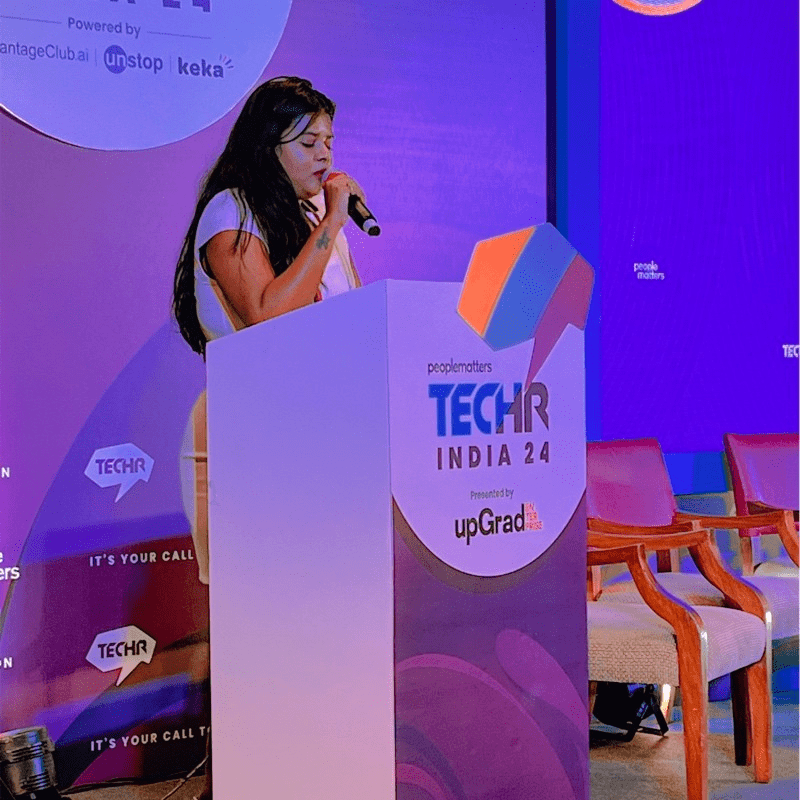





World leaders, tech CEOs and startups convene in New Delhi as India positions itself at the centre of the global AI agenda.
New Delhi this week becomes the focal point of the global artificial intelligence debate as India hosts the AI Impact Summit 2026, drawing world leaders, top technology executives and hundreds of startups to Bharat Mandapam.
The five-day summit, billed as the first global AI gathering of its scale to be held in the Global South, brings together leaders from more than 20 nations, alongside ministerial delegations from over 45 countries and representatives of international organisations, including the United Nations.
Prime Minister Narendra Modi is set to inaugurate the India AI Impact Expo 2026, a parallel showcase featuring more than 300 curated exhibition pavilions and over 600 startups.
A global gathering with geopolitical weight
Among the confirmed and expected attendees are French President Emmanuel Macron, Brazil’s President Luiz Inácio Lula da Silva, Spain’s Prime Minister Pedro Sánchez, Switzerland’s President Guy Parmelin and leaders from the Netherlands, the UAE, Mauritius, Sri Lanka, Seychelles and Bhutan.
Senior executives from global technology firms are also expected in New Delhi. OpenAI chief executive Sam Altman and Alphabet chief executive Sundar Pichai are slated to attend, along with Anthropic’s Dario Amodei and Google DeepMind chief Demis Hassabis. Nvidia chief executive Jensen Huang was earlier expected but reportedly withdrew due to “unforeseen circumstances”, according to media reports.
The presence of global technology leaders underscores India’s growing importance as an AI market. Lalit Ahuja, chief executive of ANSR, which helps companies establish offshore teams in India, described the summit as “a huge validation of the potential of the market”, adding that “India just cannot be ignored”.
The event comes at a time when India and the United States are recalibrating trade ties, adding a geopolitical dimension to the discussions.
India’s push to be a technology superpower
The summit aligns with the government’s stated ambition to position India as a leading technology hub. In recent years, New Delhi has approved approximately $18 billion in semiconductor projects in a bid to build domestic supply chains and reduce import dependence.
The government has also encouraged multinational corporations, including Apple, to expand manufacturing in India. Venture capital funding in Indian startups has remained resilient, while domestic stock exchanges have recorded a rise in initial public offerings.
Neil Shah, partner at Counterpoint Research, said government support for the sector effectively acts as “a red carpet for multinational companies to set up, expand and diversify their global operations”.
The AI Impact Summit is expected to accelerate that momentum, with analysts anticipating announcements around data centre investments and AI infrastructure. In December, Amazon, Microsoft and Intel committed to building AI infrastructure and chip capabilities in India.
Infrastructure, users and talent
The summit’s agenda reflects three intersecting priorities: computing infrastructure, market adoption and human capital.
India is one of OpenAI’s largest markets for ChatGPT usage. Rival platforms are offering free access to gain scale, positioning the country as both a growth market and a data-rich environment for model training. Notably, there is no major domestic competitor to US-based generative AI platforms, giving global firms a relatively open field.
At the same time, India’s talent pool remains a central draw. Sham Arora, chief technology officer at Tech Mahindra, described the country as an “AI talent factory” in remarks to CNBC.
The growth of Global Capability Centres (GCCs) reinforces that narrative. According to ANSR, more than 60 per cent of GCCs established in the past two years focus on AI, data, digital engineering or product development. Over 80 per cent of new GCCs expected in the coming months are projected to be AI-led.
Ahuja added that senior roles such as “chief AI officer” are increasingly being created in India, reflecting a shift from back-office execution to strategic leadership functions.
From dialogue to delivery
Organisers have framed the summit around three guiding pillars — People, Planet and Progress — intended to anchor global AI cooperation in human-centric and sustainable principles.
Discussions are structured across thematic “Chakras” covering human capital, inclusion, safe and trusted AI, science, resilience, innovation, efficiency and economic development. The first day focuses on AI for road safety, including predictive analytics and hyperlocal data models. Other sessions will address judicial reform, agriculture, employability and culturally grounded AI systems.
Prime Minister Modi, in a post on X, said it was “a matter of immense pride” that global leaders were gathering in India and described the theme as “Sarvajana Hitaya, Sarvajana Sukhaya” — welfare for all, happiness for all.
With more than 200,000 online registrations and participation from over 100 invited countries, the summit positions India as a convenor in shaping shared AI standards and frameworks.
Whether it translates into sustained investment and regulatory influence will depend on follow-through. For now, the convergence of political leadership, global capital and domestic startups signals a defining moment in India’s ambition to shape the next phase of artificial intelligence.
Topics
Author
Loading...