







AI & Emerging Tech
No internet? India's next UPI upgrade could still let you pay at stores






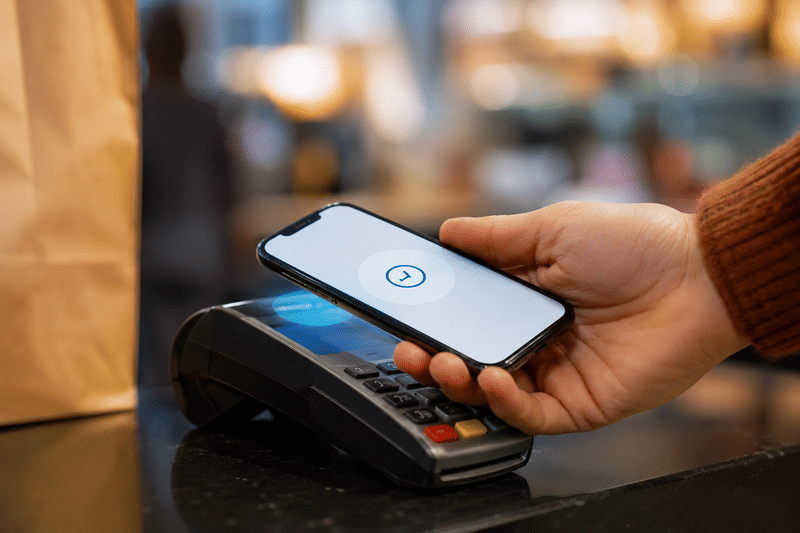
A reported NPCI initiative could enable offline tap-to-pay UPI transactions at merchant terminals, extending digital payments to locations with limited or no internet connectivity.
India's digital payments ecosystem may soon take another step towards offline commerce. The National Payments Corporation of India (NPCI) is reportedly developing a new Unified Payments Interface (UPI) capability that would allow customers to make payments at merchant point-of-sale (PoS) terminals even when both the smartphone and the payment terminal are offline.
According to a Business Standard report, citing three people familiar with the matter, the feature will rely on near-field communication (NFC) technology and could support transactions of up to ₹2,000 by tapping an NFC-enabled smartphone on a certified offline PoS terminal.
If introduced, the capability could expand digital payment acceptance in environments where internet connectivity is unavailable or unreliable, including aircraft cabins and underground metro networks.
How the proposed offline payment system would work
Under the reported proposal, customers would first add funds to their UPI Lite wallet while connected to the internet.
Once the balance is available on the device, they would be able to complete eligible transactions offline without entering a UPI PIN.
The merchant's PoS terminal would capture the payment authorisation locally and transmit it for verification after internet connectivity is restored.
A person from a fintech company familiar with the proposal told Business Standard that PoS manufacturers will require certification from NPCI before enabling offline UPI acceptance.
Banks and third-party UPI application providers are also reportedly working to integrate the capability into their mobile applications.
Building on UPI Lite X
The reported feature would extend NPCI's existing offline payment ecosystem rather than replace it.
UPI Lite X, introduced in September 2023, was designed to support fully offline payments when mobile connectivity is unavailable.
NPCI's January 2024 operational guidelines demonstrated offline:
- Person-to-person payments between NFC-enabled smartphones.
- Person-to-merchant payments using NFC-enabled QR codes, soundboxes and payment stickers.
The newly reported capability differs by allowing payments through NPCI-certified conventional PoS terminals, including when the merchant terminal itself has no internet connection.
NPCI's updated BHIM-UPI branding guidelines, issued in June 2026, also introduced design specifications for NFC-enabled static and dynamic QR codes and soundboxes featuring "Scan or Tap to Pay" instructions. However, the guidelines do not announce an offline PoS certification programme.
Transaction limits remain an open question
The reported ₹2,000 per-transaction limit differs from limits currently outlined under the Reserve Bank of India's (RBI) offline payment framework. Under existing RBI regulations:
- General offline digital payments are capped at ₹500 per transaction.
- The maximum outstanding offline balance is ₹2,000.
- UPI Lite currently supports payments of up to ₹1,000 per transaction, with a maximum wallet balance of ₹5,000.
- The National Strategy for Financial Inclusion 2025-30 specifies a ₹500 transaction limit, ₹4,000 cumulative daily limit and ₹2,000 maximum balance for UPI Lite X.
Business Standard reported that the proposed offline PoS capability is expected to allow payments of up to ₹2,000 per transaction. However, NPCI has not yet published operating rules explaining how the proposed limit would align with the RBI's existing framework.
Current RBI regulations also require customers to provide explicit consent for offline payments. Issuers must notify customers once transaction data is received, while acquiring institutions remain responsible for technical or security issues occurring at the merchant end.
Expanding UPI's reach
The proposed feature comes as UPI continues to record rapid transaction growth.
According to NPCI's official statistics, the platform processed 22.72 billion transactions worth ₹28.92 lakh crore in June 2026.
While NPCI's published data does not indicate how many transactions fall below the proposed ₹2,000 threshold, the reported feature is expected to address payment scenarios where traditional online processing is difficult.
One person familiar with the proposal told Business Standard that restrictions on card usage in certain environments, including airlines, could create an opportunity for offline UPI payments, particularly because transaction values are generally small.
If implemented, the capability could further strengthen UPI's role as India's primary retail payments infrastructure by extending digital transactions beyond areas with reliable internet connectivity.
Topics
Author
Loading...