







AI & Emerging Tech
Nvidia CEO declines Senate hearing on AI leadership and export controls





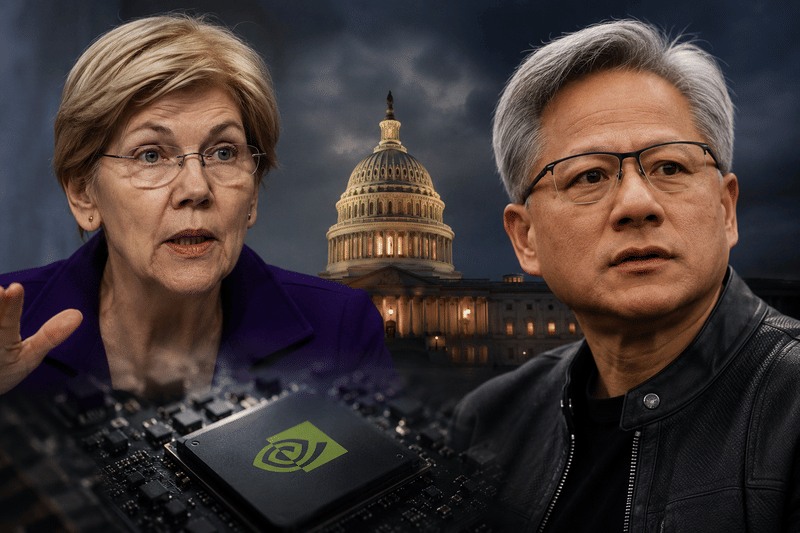
Jensen Huang has turned down a request from Senator Elizabeth Warren to testify before a Senate panel examining artificial intelligence, export controls and America's technological competitiveness, intensifying debate over Nvidia's role in the global AI race.
Nvidia chief executive Jensen Huang has declined an invitation to testify before a US Senate committee hearing on artificial intelligence, setting up a fresh clash between Washington policymakers and one of the most influential figures in the global technology industry.
According to NBC News, Senator Elizabeth Warren, a Democrat from Massachusetts, invited Huang to appear before the Senate Committee on Banking, Housing and Urban Affairs during a hearing focused on AI's impact on innovation, affordability and US technological leadership.
The hearing is expected to examine issues including AI development, national competitiveness and the export of advanced American technology to foreign markets, particularly China.
Warren sought answers on China and chip exports
Warren's invitation was aimed at gaining a better understanding of Nvidia's operations in China and the company's views on export controls governing advanced AI technologies.
The senator criticised Huang's decision not to attend, saying Nvidia occupies a central position in debates surrounding artificial intelligence, economic competition and national security.
According to NBC News, Warren questioned why Huang could attend high-profile international events and meetings but not appear before Congress to discuss issues lawmakers consider strategically important.
The scrutiny reflects growing concern among US policymakers over how advanced AI chips are sold globally and the role those technologies could play in strengthening rival nations' technological capabilities.
Huang declines appearance but offers alternative meeting
In a letter seen by NBC News, Huang informed Warren that he would be unable to attend the hearing.
The Nvidia chief said he appreciated the committee's focus on artificial intelligence and technology policy while reaffirming his confidence in America's position within the sector.
According to NBC News, Huang also offered to host Warren or other committee members at Nvidia's headquarters in Santa Clara, California, to discuss the company's technology, the broader AI ecosystem and ways to support American leadership in the field.
NBC News reported that it could not identify any record of Huang previously testifying before Congress.
Nvidia remains at centre of AI policy debate
The hearing comes as Nvidia's influence within the AI industry continues to expand.
Key facts highlighted by NBC News include:
• Nvidia is the world's most valuable company
• The company has a market capitalisation exceeding US$5 trillion
• Nvidia designs many of the advanced chips powering modern AI systems
• Huang serves on President Donald Trump's Council of Advisors on Science and Technology
The company's processors have become essential infrastructure for training and deploying artificial intelligence models, placing Nvidia at the centre of policy discussions involving technology, trade and national security.
Export controls remain a flashpoint
Huang has repeatedly called for broader access to global markets for American technology companies.
NBC News reported that Huang previously said the United States should ensure American firms maintain technological leadership while also offering competitive products to Chinese customers.
Those comments have attracted criticism from lawmakers who believe advanced AI technologies require tighter restrictions.
Warren previously warned that expanded access to advanced AI chips could strengthen China's military capabilities and weaken American technological advantages, according to NBC News.
The debate has gained additional urgency following recent action by the US Commerce Department, which moved to address what officials described as a significant export-control loophole that may have enabled advanced AI chips to reach restricted destinations.
Congress weighs tougher restrictions
The dispute highlights a broader policy divide in Washington over how AI technologies should be regulated internationally.
Supporters of broader exports contend that global sales help sustain American innovation, strengthen domestic companies and reinforce US leadership in critical technologies.
Others maintain that advanced AI chips are strategically important technologies whose potential military and intelligence applications require stringent controls.
According to NBC News, Congress is currently considering multiple legislative proposals that would further restrict the export of advanced chips and semiconductor manufacturing equipment to China and other geopolitical rivals.
The Senate hearing will proceed without Huang and instead feature experts from policy institutes, industry groups and advocacy organisations discussing the future of US AI export controls.
As lawmakers continue to shape the next phase of American AI policy, Nvidia's position at the intersection of technology leadership, commercial interests and national security is likely to keep the company under close scrutiny from both regulators and Congress.
Topics
Author

Loading...