







AI & Emerging Tech
TCS CEO: AI revenue reaches $1.5bn, growing 16% quarter-on-quarter






India’s largest IT services firm puts a hard number on AI, signalling a shift from experimentation to core business.
Tata Consultancy Services has disclosed for the first time that its artificial intelligence business has reached $1.5 billion in annualised revenue, growing 16% quarter-on-quarter, as the country’s largest IT services firm sharpens its push to become an AI-led organisation.
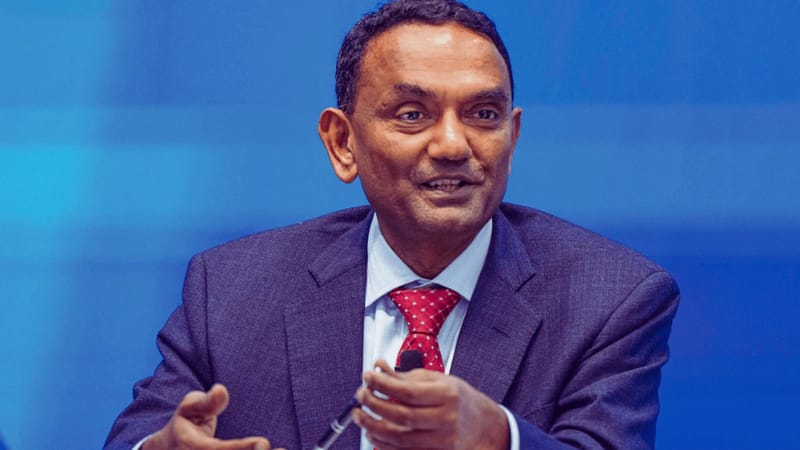
Speaking at TCS Analyst Day 2025 on Wednesday, chief executive K Krithivasan said AI-related services have moved beyond pilots and proofs of concept to become a material revenue stream for the company. The disclosure places TCS among a small group of Indian technology firms willing to quantify AI revenues rather than describe them in broad terms.
“Our AI-related services have garnered a total revenue of $1.5 billion annualised,” Krithivasan said, adding that growth in AI alone has accelerated to 16.3% quarter-on-quarter. He said 54 of TCS’s top 60 clients already use the company for AI work, while about 85% of its client base leverages AI services in some form.
The scale of adoption underlines how quickly AI has embedded itself into TCS’s delivery model. Krithivasan said the company has executed more than 5,500 AI projects and completed 209 platform deployments, indicating that AI is now being implemented at enterprise scale rather than treated as an emerging capability.
TCS has navigated several technology shifts over its history, from mainframes to client-server computing and the rise of the internet. Krithivasan argued that generative AI represents a more profound inflection point because of the speed and breadth of change it is driving across industries. Unlike earlier transitions, he said, AI is reshaping not just tools but how work itself is organised and delivered.
To respond, TCS has structured its strategy around five priorities: transforming its own operations, redesigning services, building a future-ready talent model, reimagining customer value chains and expanding its partner ecosystem. Krithivasan said the company follows an “AI-first” approach internally, treating itself as a “customer zero” and asking whether AI can perform tasks better, even if that risks cannibalising existing revenue.
He also outlined a full-stack ambition, with TCS operating across the value chain from infrastructure and chip design to models, platforms and AI agents. This breadth, he said, combined with financial strength and execution discipline, positions the company to lead clients through the transition.
The shift is already reshaping TCS’s workforce. Krithivasan said traditional team structures are changing as roles evolve from purely coding-focused positions to new profiles such as AI coaches and trainers. “We are relooking at every piece of this talent puzzle,” he said, noting that the company is revisiting training curricula, team design and delivery methods.
TCS said all customer-facing teams have been trained in AI, while more than 180,000 employees have been upskilled in advanced AI competencies. These efforts coincide with a broader investment push. In October, the company set up HyperVault AI Data Centre Ltd as a wholly owned subsidiary with an initial investment of ₹7.5 crore to build AI and sovereign data centres. In November, it announced a partnership with private equity firm TPG to invest around ₹18,000 crore in a data centre venture, following its plan to develop 1 GW of capacity requiring investments of about $6.5 billion.
By putting a concrete figure on AI revenue, TCS has signalled that AI is no longer a future bet but a present-day growth driver. How quickly that momentum translates into a reshaped revenue mix—and new operating models across India’s IT industry—will be closely watched in the quarters ahead.
Topics
Author

Loading...